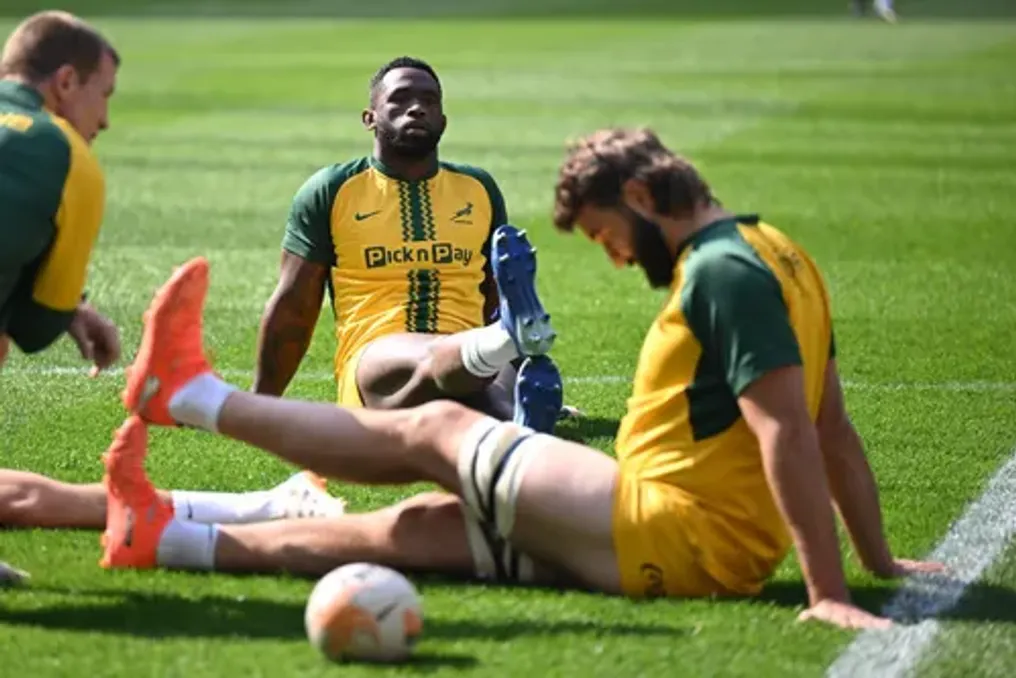
Following an unexpected 33-16 loss to the All Blacks at Ellis Park stadium, the public, including Rassey Erasmus, actively discussed the result. However, the Springboks players quickly moved past the defeat as they had another match ahead of them.
Before the second test match in Cape Town, which is a decisive game for victory, analysts identified five key areas where the team needs to work on.
Winning the ball at all costs
Springbok fans can thank the gods of rugby for the return of Siya Kolisi, whose powerful presence in the contact area can help fix the problem that led to last week's defeat. Statistics show that the team allowed the opposition to make 14 turnovers compared to their own five, which explains much. It was rarely seen for the Springbok scrum-half to be under such pressure in the battle for possession, especially Grant Williams, who received little protection while the All Blacks constantly disrupted South Africa's possession. The team must improve in securing its ball.
Avoiding predictability in kicking games
Although it was assumed that Rassey's strategy included suppressing the creativity and fast attack of the All Blacks' backline, the kicking game became too predictable. The Kiwis were clearly prepared and easily handled aerial contests. When the Springboks weren't kicking, they continuously carried the ball, for example, with Jasper Wiese, who did so effectively. Nevertheless, there was a danger that South Africa's sheer physical power became predictable: carry, carry, slow pass, turnover. Variety must be introduced, similar to what was done in the 43-10 win in Wellington last year.
Increasing the pace of the game
This is directly related to the problem in the ball contest. The All Blacks' defense was superb. Tana Umaga was a serious obstacle for the Springboks when he played, and this continues now that he is New Zealand's defense coach. The New Zealanders made an impressive 132 tackles against 86 from South Africa, but the key point was that they were repeatedly given enough time to reset their defensive line before the next attack. The Springboks need faster ball retention and more variety to prevent the All Blacks from building this defensive wall.
Stopping cheap penalties
A significant part of the good first-half performance was overshadowed in the second half due to an increasing number of errors, including a poor early shot. Discipline collapsed under pressure in the final quarter, and the Springboks finished the game with two yellow cards, allowing New Zealand to extend the deficit to 33 points and pull away significantly. Against the All Blacks, accumulating errors cannot be allowed. A missed tackle might happen. A turnover might happen. But the subsequent penalty gives the opponent another chance to punish you. The Springboks must remain composed when things go wrong.
All Blacks counter-pressing
New Zealand scored five tries, and their outside backs were once again a potent weapon, and the entire rugby world knows that counter-attacks are the foundation of the All Blacks' game. Simply put, whenever a gap appeared in the Springboks' defensive structure, New Zealand found it, often followed by a line break. If the Springboks' attack is stopped, the priority must be organizing the defensive line before the Kiwis can quickly move the ball from the turnover out wide to players like Will Jordan. The return of Jesse Kriel to the position of outside centre could help this week, as his experience and ability to organize the defensive line could prove invaluable.