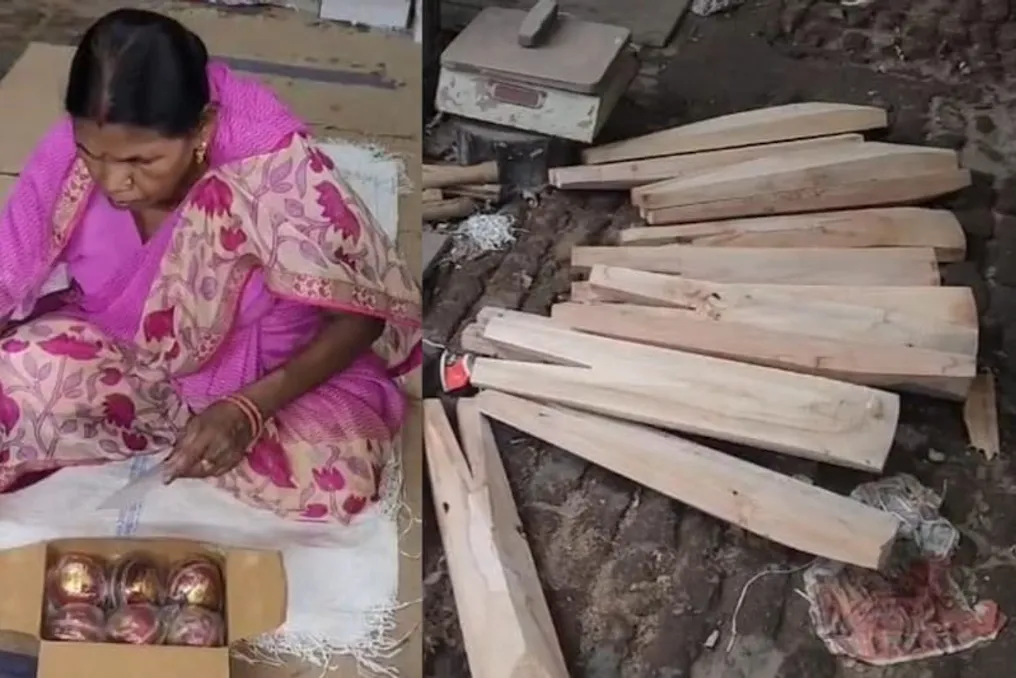
Merat's identity is no longer limited to being a city known for cricket bat production; products manufactured here are now exported both domestically and internationally. The ODP (One District, One Product) program has given a new impetus to this business.
Small entrepreneurs have received support through state initiatives. Subsidies for equipment and interest-free loans have played a significant role in business expansion. Currently, there are about 5-7 thousand small and large sports enterprises operating in Merat, and the annual export of sports goods from the district reaches approximately 975 crore rupees.
The history of sports equipment manufacturing in Merat spans about 90 years. According to the Department of Industries, the production of footballs began in some families between 1935 and 1940. After the country's division in 1947, this business was continued by people who arrived from Sialkot and Peshawar, gradually turning Merat into a major center for sports goods production.
Initially, cricket bats and footballs were made here. Over time, the range expanded: now not only cricket bats, balls, and sticks are produced, but also hockey sticks, footballs and volleyballs, tennis rackets, table chess, and sports nets. Additionally, fitness trainers, boxing gloves, sportswear, and gear bags are manufactured.
Charanjit Bhatia, owner of Buchi Sports, noted that the ODP program has been highly beneficial to small businesses. He reported that previously there were only four or five sports enterprises in Merat, whereas now the number has grown to 5-7 thousand. Under ODP, entrepreneurs receive assistance in obtaining loans and can also receive a subsidy of up to 50% when installing new equipment, which helps increase production volumes. Bhatia also utilized the state program to purchase equipment for making fiberglass cricket bats.
Aditya Mahajan, owner of BDM Sports, emphasized that programs like Khelo India have also contributed to the development of Merat's sports industry. Previously, the city was known mainly for cricket bats, but now a wide range of sports goods is produced. Products made in Merat go to Australia, South Africa, England, and America. Furthermore, exports are made to many other countries, including the West Indies, New Zealand, Germany, France, Sri Lanka, Russia, and Bangladesh.
Not only large entrepreneurs are employed in the sports industry. A large number of people are employed in stages such as production, packaging, polishing, stitching, and fitting. Many are provided with jobs ranging from kit preparation to logistics and transportation. Merat's entrepreneurs today combine traditional skills with the use of modern machinery, which has increased both the quality and production capacity of the products. Businessmen believe that focusing on improved design, quality, technology, and branding will allow Merat's sports industry to occupy an even more significant place in the global market, transforming Merat into a multifaceted sports goods hub.