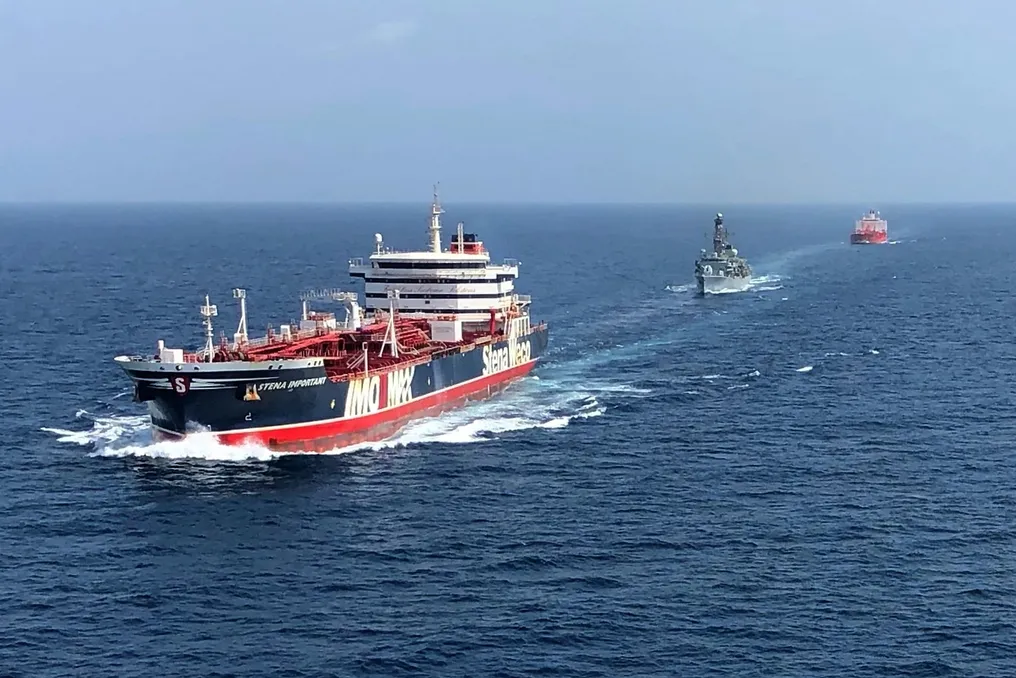
According to an analysis by Goldman Sachs Group Inc., oil flows through the Strait of Hormuz have increased to approximately two-thirds of pre-war levels, which limits the impact of the war in Iran on global crude oil prices. The growth in total exports of crude oil and petroleum products passing through this waterway occurred against the backdrop of changing shipping tactics.
Goldman analysts, including Dan Stroyven and Julia Zhestkova Grigsby, noted in a recent note that total exports reached 15–16 million barrels per day. Nevertheless, this volume still lags behind pre-war levels by 7–8 million barrels but significantly exceeds the minimum figure of 5–6 million barrels per day recorded in March.
The increase in dark voyages by specialized carriers, as well as the rise in ship-to-ship operations, indicates that producers and shippers are actively adapting to the conflict in the Middle East. Higher dark flows may mitigate potential increases in crude oil prices, even if disruptions in the Middle East continue for longer.
Accurately determining the volume passing through Hormuz remains a difficult task, as tankers often disable satellite transponders—a practice known as 'going dark'—to avoid detection. Traders estimate that about 6–8 million barrels of crude oil transit the strait. These active export flows help keep global oil prices under control; they have fallen to approximately $89 per barrel from over $120 in April.
Despite the successful outflow of a large volume of crude oil from the Persian Gulf, flows of liquefied natural gas and refined fuels remain lower. Analysts continue to forecast greater potential for price growth in European natural gas and deferred prices for petroleum products in scenarios of sustained disruptions than for crude oil itself. Shippers are refining logistics strategies in the region to counter current geopolitical obstacles. The adaptation of dark voyages points to the resilience of the supply chain, which directly mitigates broader economic shocks.