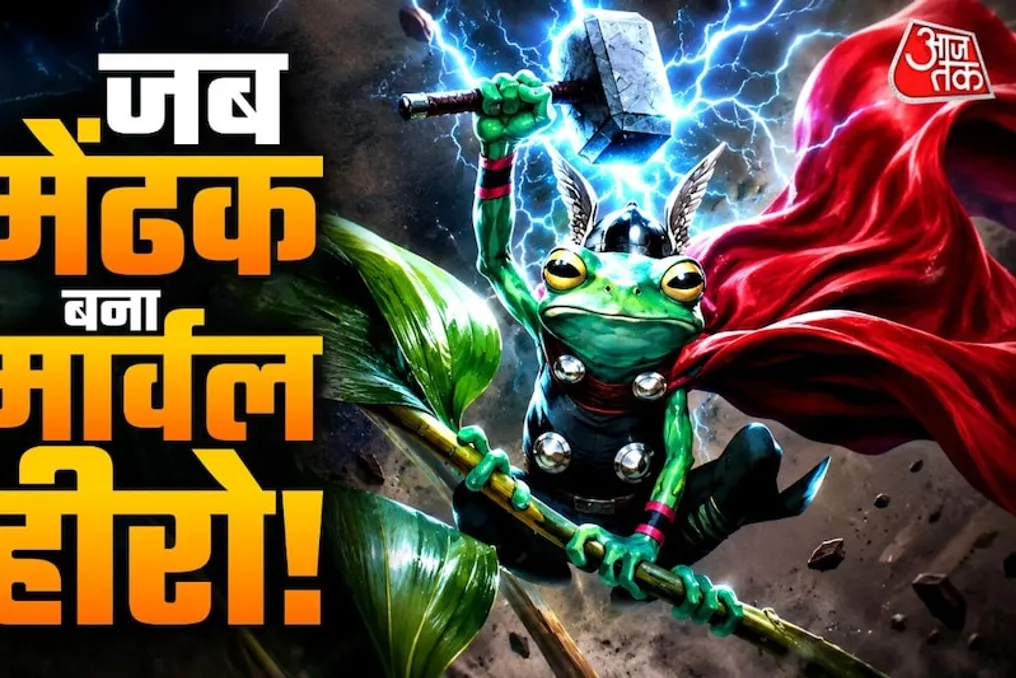
Marvel created a frog hero with Thor's power who fights mice
Read more
Aaj Tak
www.aajtak.in

Marvel created a frog hero with Thor's power who fights mice

The Marvel comic universe is known not only for its serious and dark storylines but also for its highly original ideas. One such character beloved by fans is Trog, or Thor the Frog. The story of this character began in the Marvel comic Thor #364 in 1986, written by writer Walter Simmons.

Trog's plot originated when Loki, Thor's half-brother, used ancient magic to eliminate him and seize the throne of Asgard. As a result of this magic, Thor was transformed not into a mighty being, but into an ordinary park frog in New York City's Central Park. This event led to the creation of Trog.

Even as a frog, Thor's warrior nature did not change. He found himself in a pond in Central Park where a fierce battle was taking place between frogs and mice. Thor took the side of the frogs and defeated the mice, saving the pond. During this incident, he met a frog named Puddlegarp.

Puddlegarp was no ordinary frog; he was previously a human named Simon Walterson, a football player. After a tragic incident, he sought help from a gypsy witch. However, the witch cursed him and turned him into a frog. Meanwhile, to counter Loki's schemes, Thor had to return to his true form. He somehow managed to reach his magical hammer Mjolnir. The small frog could not lift this huge hammer, but Thor was worthy of lifting it. As soon as he touched Mjolnir, thunder roared, and even in his frog form, he gained Thor's divine powers.

Afterward, Thor went to Asgard, taught Loki a lesson, and restored his human and divine appearance. But the story didn't end there. As Thor soared into the sky from Central Park using his hammer, a tiny shard of Mjolnir broke off and fell to the ground.

Puddlegarp picked up this fragment. Thanks to his pure and brave heart, he proved worthy to lift this shard. With a clap of thunder, this small piece turned into the miniature magical hammer Frogjorn. At that moment, Trog, the Thunder Frog, was born.

Trog possesses many powers similar to Thor's. He can control lightning, fly, and possess infinite power despite his small size. He also founded a team in the Marvel world called Pat Avengers, which included animals like Lokjo and Redwing. This team helped protect the Marvel universe from villains like Thanos.

Marvel Studios also included this comic book character in the MCU, showing a brief cameo of Trog trapped in a vacuum jar in the first season of the Loki series. Thus, this story, which began with Thor's transformation into a frog, reaches the point of Puddlegarp's becoming Trog and is considered one of Marvel's most unique stories.
Similar stories

Marvel sold rights to characters like Spider-Man and Hulk during the financial crisis, then achieved success.
Read more
www.aajtak.in

Marvel sold rights to characters like Spider-Man and Hulk during the financial crisis, then achieved success.

Spider-Man is a famous Marvel character. In his latest film, Tom Holland played Spider-Man. Reports suggest he received 1 billion rupees for this role, including salary and profit share. This demonstrates how large and wealthy a company can be, capable of paying such sums to an actor.

However, looking back, it becomes clear that Marvel was not always so successful; there was a period when the company was completely bankrupt.

In the 1990s, the idea arose to sell comics as an investment asset, assuming that low-priced issues today would become expensive in the future, similar to collectibles. Marvel noticed this demand, raised prices, but subsequently fell into debt.

The situation worsened to the point where the rights to major characters such as 'Spider-Man,' 'X-Men,' 'Fantastic Four,' and 'Doctor Strange' (originally 'Daredevil') had to be sold to various studios. After this, Marvel focused on characters that were not finding buyers at the time, such as 'Iron Man,' 'Captain America,' and 'Thor.'

Interest in these hobbies became popular in the American world by the 1980s. Reports came in that gold editions of comics were worth thousands of dollars. Publishers released versions with different covers, foil stamping, and glossy printing, which were bought by both readers and people hoping to profit in the future.

During this period, businessman Ron Perelman took notice of Marvel. In early 1989, he acquired Marvel Entertainment Group from New World Pictures for $82.5 million. Over two years, Marvel went public, after which it made several acquisitions in the toy sector, two trading card companies, Panini stickers, and the distributor Heroes World, totaling $700 million according to reports. Thus, Marvel suddenly established a presence in many markets.

In the early 90s, sales of 'Spider-Man' and 'X-Men' grew very rapidly. The first release of the new comic 'X-Force' was also sold in large volumes. At the same time, one of five different trading cards was given in the pack, forcing collectors to buy several copies of the same comic to collect all five cards. It was said that some fans kept five copies in perfect condition and bought a sixth for reading.

Then what was warned about happened. From 1993 to 1996, revenue from comics and trading cards began to drop sharply. In 1993, the company's stock fell to $35.75, and three years later—to $2.375. At that time, Marvel Chairman Scott Sassa stated: 'When the business turned around, it seemed everything that could go wrong, went wrong.'

By 1995, Marvel had accumulated huge debt. Amid growing losses, Perelman founded Marvel Studios and developed a plan to merge the remaining toy biz shares with Marvel Studios to create a strong structure and bring major characters, long involved in legal disputes, to the big screen.

However, shareholders opposed this idea, arguing that it would lead to a further decrease in Marvel's stock value. In response, Perelman filed for Chapter 11 bankruptcy in 1996, which allowed him to reorganize the company without shareholder approval.

This was followed by a power struggle that lasted about two years. Shareholder Carl Icahn opposed Perelman, stating: 'It's like giving money to a plumber to start a business, and he comes and breaks your house, and then says he wants the house for free.'

After the boardroom battle subsided, Marvel refocused on the film business. Avi Arad, from Israel, reached the position of CEO of toy biz, and after Marvel acquired a 46 percent stake in the company in 1993, he received 10 percent. Initially, he managed Marvel figures, but later took over Marvel Films from Steven Levy.

Under pressure from debt, Marvel sold the rights to many of its major characters. The rights to 'Spider-Man' transferred to Sony, and the rights to 'Hulk' were passed to Universal Pictures. Century Fox took the rights to 'Doctor Strange,' 'X-Men,' and 'Fantastic Four.' After this, Marvel Studios was left without the rights to the most profitable characters.

Marvel did not expect high revenue from films, but believed they would serve as excellent advertising for toys. The question was not who children would want to see on the big screen, but which specific toy they would want to play with. The answer turned out to be 'Iron Man.'

In 2007, Kevin Feige was appointed head of Marvel production, and the company strengthened this strategy. In 2008, Paramount released 'Iron Man.' This was the very film about which doubts previously arose regarding who would come to see it in theaters. Later, this film brought in $318.4 million in domestic net revenue and $585.2 million worldwide.

Feige noted that it all started with comics.

Marvel turned a KGB agent into a superhero: How Stan Lee created the Black Widow character
Read more
www.aajtak.in

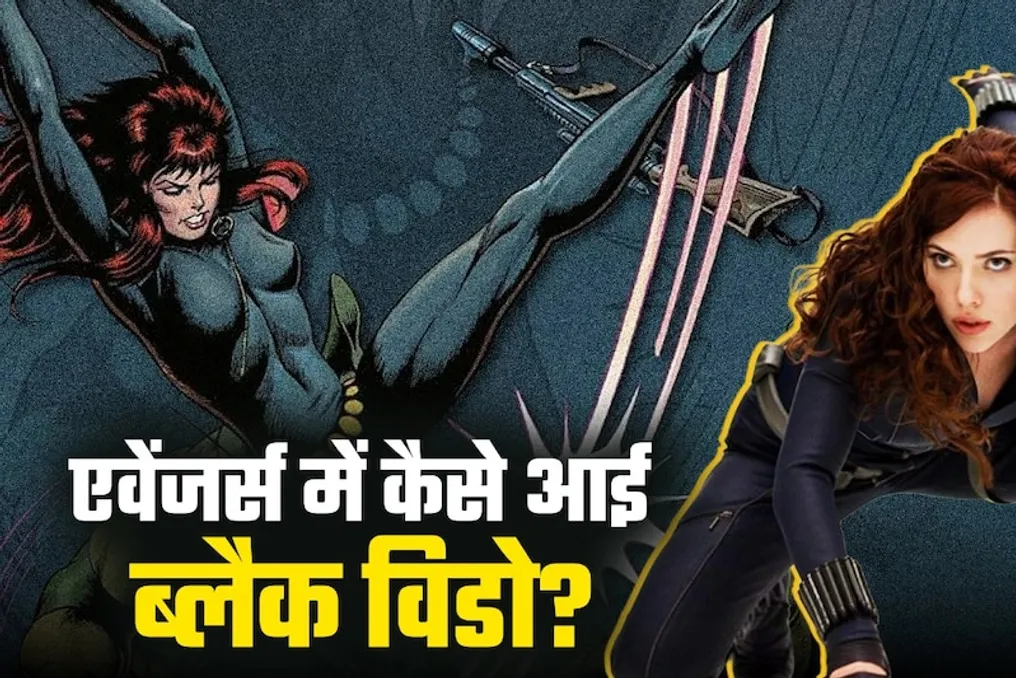
Marvel turned a KGB agent into a superhero: How Stan Lee created the Black Widow character

Black Widow, Natasha Romanoff, is the only superhero in Marvel's Avengers team who does not possess superpowers; she cannot fly and does not have a massive physique, yet she single-handedly confronts the world's most dangerous adversaries. The presence of such a character among Marvel's most iconic figures is due to her creation story.

The roots of Natasha Romanoff's image trace back to real stories of secret spies. When Marvel introduced this character in the 1960s, the Cold War was underway between America and the Soviet Union (Russia), and the influence of espionage training from that era, KGB-style infiltration methods, sleeper agents, and female operatives is clearly visible in the history of the Black Widow.

There are many stories about how the USSR's intelligence agency, the KGB, conducted extremely harsh and painful training for its female spies. These women were trained from childhood, focused solely on mission execution, without any emotions. They became experts in martial arts, weaponry, languages, combat, espionage, and the ability to lure people into their webs to extract secret information. In some real programs, such women were sometimes called 'gullet eaters'.

It was during this period that Stan Lee was creating characters for Marvel. In 1964, drawing inspiration from these real spies, Stan Lee invented a character who would appear innocent but was actually a dangerous Russian spy. This idea gave rise to the image of Natasha Romanoff.

The comics state that Natasha was sent at a young age to a Russian training program called the 'Red Room,' where young girls were prepared to become lethal underground agents. The 'Red Room' was presented to resemble real KGB training centers. Based on this story, the Black Widow debuted in 'Tales of Suspense #52' in 1964.

This character was created by Stan Lee based on the plot, Don Rico based on the script, and Don Heck based on the art. Initially, she was depicted as a Soviet agent and Fem Fatal, who was sent to attack Tony Stark, Iron Man, to steal his secrets. Later, this character became so popular that Marvel transformed the Black Widow from a villain into a hero. The real espionage training, the dark background of the 'Red Room,' and her dangerous presence without superpowers made the Black Widow a truly strong and believable character.

When Marvel began winning audiences' hearts through films after the comics, the Black Widow had to appear in them. In 2010, she was featured in the film 'Iron Man 2,' played by Scarlett Johansson. After that, the Black Widow appeared in many Avengers films, and separate movies about her were also launched. The Black Widow character features in nine Marvel Cinematic Universe films.

Popular