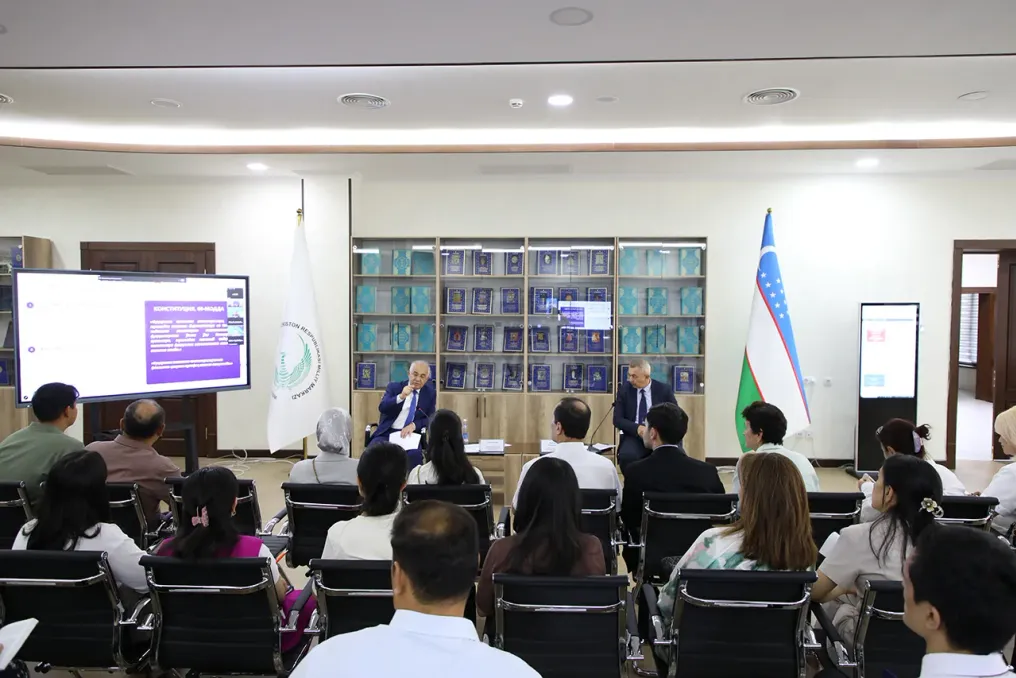
In Tashkent, Uzbekistan, the National Center for Human Rights of the Republic of Uzbekistan, together with the National Association of Non-Governmental Non-Profit Organizations of Uzbekistan, held a training seminar on August 28, 2026. The main topic of the event was the preparation of shadow reports under international human rights treaties and the involvement of the public in the process of making environmental decisions.
The event, held at the House of Human Rights, gathered about thirty NGO representatives from across the country, including heads of the central management and regional officers of the Association. The seminar's organization was consistent with the roadmap for implementing the fifth stage of the World Programme on Human Rights Education in Uzbekistan, approved by Cabinet of Ministers Decree No. PKM-91 dated March 3, 2026.
Key Speeches and Commitments
At the opening, Akmal Saidov, Director of the National Center for Human Rights, Kamoliddin Ishanhodzhaev, Chairman of the Council of the National Association of NGOs, and Erkin Isakulov, Human Rights Advisor at the Regional Office of the UN High Commissioner for Human Rights (OHCHR) for Central Asia, spoke. The speakers emphasized the importance of structured cooperation between state bodies and civil society to advance current human rights reforms.
Saidov focused on the country's action plan, which marks the 60th anniversary of the International Covenant on Civil and Political Rights and the International Covenant on Economic, Social and Cultural Rights, viewing the seminar within the context of these broader obligations.
Constitutional Basis and International Monitoring
Referring to the constitutional basis, Saidov cited the updated Constitution of 2023, which officially included Chapter XIII to define the legal status and role of civil society institutions. He noted that in accordance with the 'Uzbekistan – 2030' Strategy, the country continues to fulfill its international obligations, having ratified 11 major UN human rights treaties and submitted 52 national reports to treaty bodies to date.
A key topic of discussion was the role of non-state structures in international monitoring. Data presented at the seminar showed that over 140 international and national NGOs, including 22 operating in Uzbekistan, have prepared alternative reports for UN committees. Artur Yatsevich, OHCHR Human Rights Advisor, conducted a practical session, providing methodology for using international monitoring tools and standard practices for developing shadow reports.
Principles of the Aarhus Convention
The second part of the seminar was dedicated to the principles of implementing the Aarhus Convention. A representative of the National Committee of Uzbekistan on Ecology and Climate Change outlined the three main pillars of the convention: public access to environmental information, public participation in environmental decision-making processes, and access to justice in environmental matters.
Upon completion of the seminar, NGO representatives received practical recommendations on drafting alternative human rights reports and suggestions for applying the principles of the Aarhus Convention in local self-government, with final proposals to be submitted to the relevant state agencies.