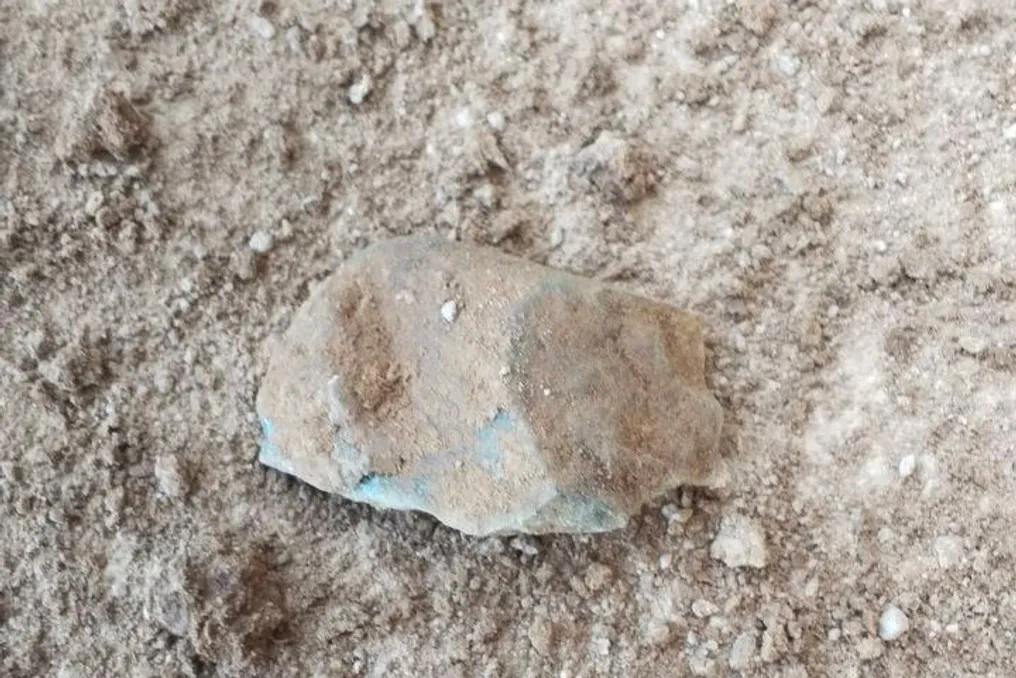
The Paleolithic site of Arkutsoy, located in the Bostanlyk district of the Tashkent region, potentially could become the oldest archaeological site in Uzbekistan. The preliminary age assessment of the stone artifacts found there is from 280 to 320 thousand years old.
Research on this site is being conducted by specialists from the Academy of Sciences of Uzbekistan in collaboration with the Institute of Archaeology and Ethnography of the Siberian Branch of the Russian Academy of Sciences. Targeted surveys began in 2024, and work is currently underway at three different locations.
Scientists were able to discover human-processed stone objects in three ancient soil layers. This indicates that the Arkutsoy territory was used repeatedly by ancient human groups over different time periods.
The most significant artifacts are those extracted from the third layer. According to preliminary analysis based on geological and paleoclimatic data, this layer formed approximately 280–320 thousand years ago.
Confirmation of this dating using independent laboratory methods may indicate that human communities began to inhabit the territory of the Tashkent oasis and modern Uzbekistan during the later stages of the early Paleolithic. In this case, Arkutsoy will take the title of the oldest known archaeological site in the country.
Previously, remains of an ancient structure and unique wall paintings depicting tulips and white flowers were discovered at the Boburtepa archaeological site, located in the Kashkadarya region.