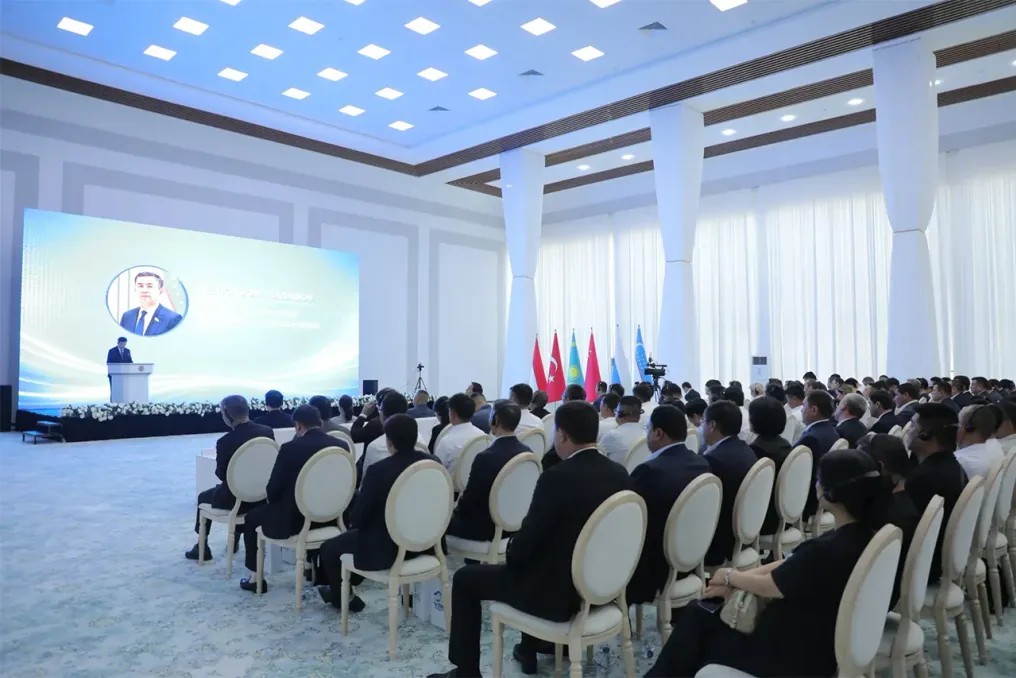
It is projected that the volume of foreign direct investment in the Syrdarya region of Uzbekistan will reach 2 billion US dollars in 2026. This amount will correspond to the total volume of foreign capital attracted to the region over the previous decade.
Investment Goals Announcement
The governor of the region, Erkinjon Turdimov, announced this figure during the international investment forum 'Do Business in Syrdarya,' which took place in Gulistan on the eve of the 35th anniversary of Uzbekistan's national independence. Over the last decade, the total investment volume in the region amounted to 8 billion US dollars, of which more than 2.5 billion dollars was attracted from abroad. The goal of 2 billion dollars for 2026 represents an increase of 2.2 times compared to the previous year.
Turdimov noted that several foreign companies present at the forum have expanded their local presence, taking on host roles. Among these companies are Lianghe Grade Agro, Tavsid General, Wuzong Energy, FM World, Lesso, and OTR Group. The forum gathered over 30 international delegations and more than 300 foreign guests from nearly ten countries, including China, Russia, Kazakhstan, Tajikistan, and Kyrgyzstan.
In the past year, 30 industrial projects were allocated in the region's industrial zones across a total area of 420 hectares, with a value reaching 1.5 billion US dollars. Priority sectors for future investments have been defined as metallurgy, energy, agriculture, textile industry, chemical industry, mechanical engineering, building materials, information technology, electrical engineering, and rare earth metal mining.
Providing a broader economic context, Turdimov reported that in 2025, Uzbekistan attracted 43.1 billion US dollars in foreign direct investment nationwide. Meanwhile, the gross domestic product exceeded 145 billion dollars, and exports reached 33.4 billion dollars. For 2026, national targets stipulate that GDP will exceed 180 billion dollars, and exports will surpass 40 billion dollars, aligning with the presidential objective to increase the national economy by more than 240 billion dollars over the next five years.
To support business growth, regional authorities emphasized the implementation of national administrative reforms. These reforms include the abolition and digitalization of 120 documentation requirements, a three-year moratorium on inspections for small businesses not related to public health or commercial risks, and raising the VAT registration threshold from 1 billion to 5 billion soms, which benefits about 600,000 small enterprises. Additionally, online applications for loans up to 5 billion soms have become available for budding entrepreneurs.
Turdimov also mentioned the conclusion of preferential trade agreements to expand foreign trade. These agreements cover 150 commodity categories with Jordan, 88 with Pakistan, and 34 categories each with Iran and Afghanistan. Furthermore, a regime of mutual duty-free trade with Turkmenistan is in effect for domestically produced goods.