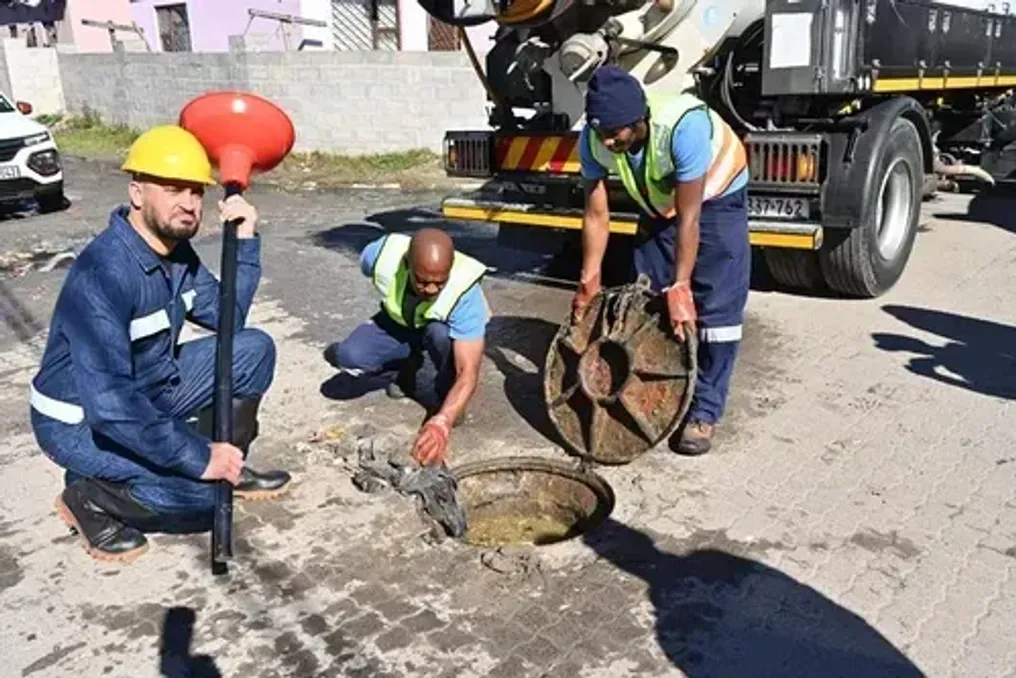
The wastewater services of the City of Cape Town Council recorded over 90,000 blockages during one financial year, noting that most of these issues could have been prevented.
A total of 90,002 blockages were registered for the 2025/26 financial year, which is approximately 2,000 more than the previous year. This equates to about 247 sewer blockages daily.
The city administration attributed 59,729 blockages to the use of rags, hygiene products, and other foreign objects. Grease caused 11,678 blockages, while 7,627 were related to sand, and 7,443 were due to roots.
Additionally, 2,289 blockages were caused by infrastructure collapse, and 1,236 by construction materials. This data was released by the City Council on Thursday, August 27, 2026, as part of the launch of a new campaign aimed at preventing residents from using toilets and drains as dumping grounds.
Nearly 60,000 blockages caused by foreign objects
Zahid Badroodien, a member of the Portfolio Committee on Water Resources and Sanitation, stated that over 80% of sewer system blockages could be avoided. He emphasized that despite the fact that the sewer infrastructure is often unseen and forgotten, what happens within this system has a tangible impact on community streets and public spaces.
Badroodien noted that all participants have a role in preventing overflows and blockages. He pointed out that wet wipes, diapers, construction waste, and other refuse are being flushed into the system, creating an additional burden on City resources. In addition to rags and hygiene products, the City reports that wet wipes, diapers, construction debris, and other trash enter the sewer network. Cooking fats and oils solidify inside pipes, contributing to thousands of additional blockages.
According to Badroodien, when sewer lines become clogged, sewage can rise and overflow onto roads and public areas, forcing City teams to clear obstructions and clean up affected zones.
Kuyasisa students remain without classes
This statistical data emerged the same week that a specific sewerage problem at Kuyasisa Primary School in Khayelitsha disrupted the learning process. The Cape Argus reported this week that students missed over a week of classes after a burst sewer pipe led to sewage entering the school grounds.
The Western Cape Education Department (WCED) informed Cape Argus on Thursday that cleanup and repair work had been postponed due to safety concerns raised by contractors. However, the City's own report indicates that only 2.5% of the blockages registered over the year are related to infrastructure collapse.
City runs public awareness campaign
Meanwhile, the City has launched its latest campaign, 'Don't be a drain clogger,' to reduce the number of preventable blockages. Badroodien stressed that residents must play an active role in reducing the problems faced by municipal crews. The City has appealed to residents to use bins for solid waste and not flush or pour down toilets and drains anything that the sewer system is not designed to transport.