The President of Uzbekistan, Shavkat Mirziyoyev, signed the constitutional law 'On the International Center for Digital Technologies' (Enterprise Uzbekistan). This law was adopted by the Legislative Chamber on August 4, approved by the Senate on August 8, and signed by the head of state on August 19. According to the plan, it will come into effect in six months, specifically on January 21, 2027.
The main goal of this legislative act is to create a specialized jurisdiction. This jurisdiction is intended to stimulate investment attraction in the field of digital technologies, promote the implementation and commercialization of innovations, and support service exports.
Scope of the Special Legal Regime
The constitutional law stipulates that the International Center for Digital Technologies will regulate all relationships concerning digital technologies, innovations, and the provision of services. The special regime may cover a wide range of issues, including the development, implementation, and commercialization of products and services in the digital sphere; investment and export activities; as well as experimental testing of digital technologies.
Furthermore, the regime extends to civil and economic processes, labor and employment issues, currency operations, financial and banking activities, customs procedures, provision of public services, and intellectual property protection. The law establishes that this special legal regime will be valid until the end of 2100, with the boundaries of the center's territory to be determined by the president.
In certain situations, the application of this regime may also extend to participants' projects implemented outside the center's main territory, provided that the relevant conditions stipulated in the law are met.
Legal Regulation and Priorities
A special procedure for applying legislation is in effect within the center's territory. The Constitution of Uzbekistan, the constitutional law itself, as well as decisions of the president and the Supervisory Board, serve as the basis. If necessary, the principles of 'English and Welsh common law' and principles of fairness may be applied, provided this does not contradict the constitution and the center's decisions.
Decisions made by the center within its jurisdiction take precedence over any normative acts of Uzbekistan that contradict them, except for the Constitution, the law itself, and ratified international treaties.
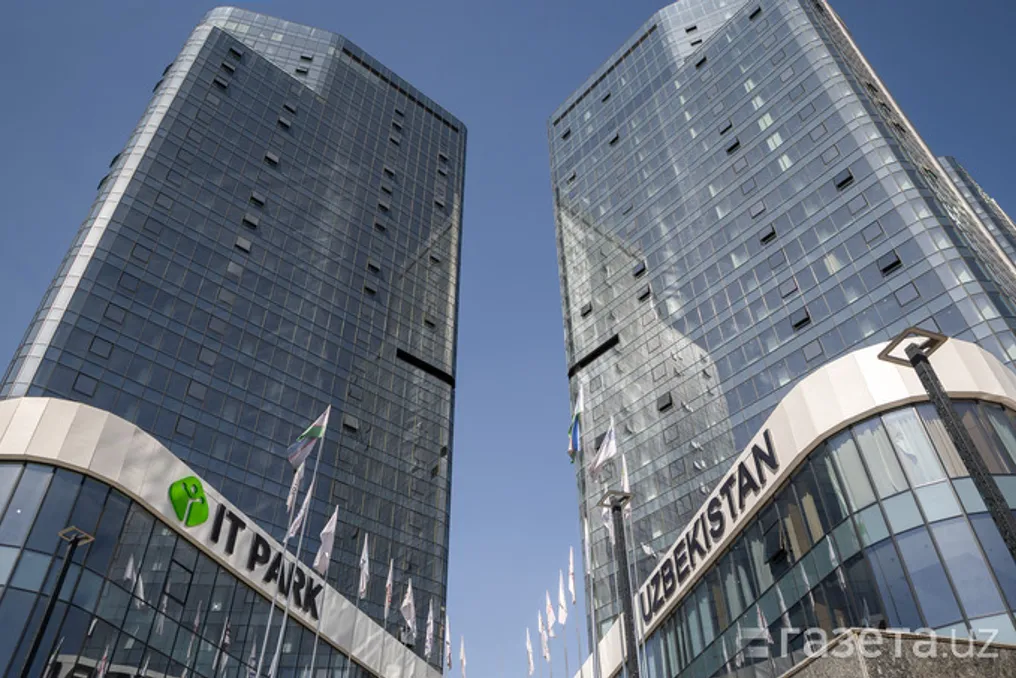
According to information provided to 'Gazeta.uz' in Enterprise Uzbekistan, this center represents a technological jurisdiction for large global Bigtech companies, located in the IT Park Uzbekistan in Tashkent. Enterprise Uzbekistan emphasizes that the main value of the center lies not in tax incentives, but in the general special legal regime that allows large technology firms to conduct their operational activities directly from Uzbekistan.
Governance Structure and Mandatory Decisions
The center will be managed by the Management Council and the Administration. The President of Uzbekistan approves the composition of the Management Council and simultaneously serves as its chairman. The Council is responsible for determining the strategic directions of the center's development and approving the key provisions of the special regime.
Decisions of the center's bodies, made within the powers established by the Constitutional Law, shall be binding within its territory. The use of international law norms and recognized international practices is permitted when forming the special regime, provided it is allowed by the law and the center's decisions.
English has been declared the official working language of the Center. All decisions of the Center's bodies must be published in English, and in case of discrepancies between versions in different languages, the English text shall prevail.
Investor Classification
Participants of the center include its residents and investors, whose details will be entered into a register and published on the center's official website. The law distinguishes four categories of investors: institutional, startup investor, resident investor, and infrastructure investor.
Institutional Investors
Institutional investors include financial institutions, investment and venture funds, as well as other organizations engaged in investment activities.
Startup Investors
Startup investors are recognized as both individuals and legal entities that invest funds in strategic projects implemented within the center's territory.
A resident investor is a resident of the center who, in addition to their main activity, invests in priority or other strategic projects.
Infrastructure Investors
Infrastructure investors are individuals and legal entities that implement projects for the modernization, reconstruction, or creation of the center's infrastructure, as well as those conducting research and development or placing facilities for infrastructure development.
For each of these categories, the center may establish individual requirements, operating conditions, and support measures. Investors are free to independently determine the scope, types, forms, and directions of their investments, as well as freely dispose of the income received within the special regime.
Assets, property, and investments of the center's subjects are protected against nationalization, confiscation, arrest, and expropriation. Exceptions apply only to final rulings of the Tashkent International Commercial Court, as well as measures aimed at combating terrorism financing, money laundering, and sanctions restrictions.
Tax and Customs Benefits
Bodies, employees, and participants of the center are exempt from all taxes and fees established by Uzbek legislation, with the exception of three types of taxes explicitly listed in the law: VAT, profit tax, and personal income tax.
A zero rate applies to VAT on turnover of goods and services both inside and outside the center's territory; the rate is set by the center's decision when sales are made within Uzbekistan and when goods are imported into the country. Regarding profit tax, income of center participants from priority areas of activity within the center is exempt from this tax.
In terms of PIT, foreign citizens who are highly qualified employees of the center's bodies or participants are exempt from paying salary and dividend tax. For foreign employees who do not meet the high qualification criteria, the PIT rate will be 12%, while for citizens of Uzbekistan and stateless persons working for center participants, it will be 7.5%.
Investors who do not have the status of a center participant are also exempt from PIT and profit tax on dividends and other income received under the special regime. In the customs sphere, the center's bodies and participants are exempt from customs duties and VAT when importing equipment, software, materials, and samples for digital technology production, as well as when operating within the 'regulatory sandbox' and ensuring the center's functioning.
Temporary import of goods within the 'sandbox' is permitted for up to 12 months, and for investment projects—for the entire duration of the project; in other cases—for up to five years. Declarations are submitted through the center's digital platform and reviewed by customs within no more than two business days.
Regulatory Sandbox
A 'regulatory sandbox' regime has been introduced for testing new products, services, and innovative technologies for a period of up to 12 months, unless the council sets a different term. Under this regime, participants are temporarily exempted from a number of legislative requirements, licensing and permit procedures, and gain access to the center's research infrastructure.
Using technologies during the testing period does not entail liability for participants, except in cases where human health or life is harmed. Center participants can use various financial services—banking, insurance, payment, and venture—through accredited partners. With the agreement of the Central Bank, foreign banks are allowed to open branches in the center.
Personal Data and Cloud Technologies Provisions
A special procedure for regulating access to personal data and measures for its protection may be established in the center. A separate article is dedicated to cloud technologies, where the center's decisions will determine the conditions for storing and reusing such information. Measures must be ensured to protect data from unauthorized access, alteration, destruction, or dissemination, and storage requirements must comply with international security standards.
Protection of intellectual property rights is also regulated by separate articles of the law.
Labor Relations Features
Labor relations within the center's territory will be governed by the constitutional law, the labor legislation of Uzbekistan, and the center's own decisions. The document allows for the introduction of special rules for labor organization, while maintaining basic employee guarantees, such as the prohibition of discrimination, ensuring fair remuneration, and compliance with safety standards.
A separate regulation is provided for foreign workers. Specifically, within established quotas, they may be exempt from the requirement to obtain confirmation of their right to work in Uzbekistan. Issues of visas, entry, and registration of foreign specialists will also be regulated taking into account the specifics of the special regime.
Artificial Intelligence and Education
The constitutional law pays special attention to regulating the field of artificial intelligence. Participants of the center will have the opportunity to develop and test AI technologies. However, when creating and testing solutions that may directly or indirectly affect human rights and freedoms, measures must be taken to protect these rights and legitimate interests.
The law obliges consideration of potential risks, prevention of discrimination, and fulfillment of Uzbekistan's international obligations. Furthermore, the center will be able to participate in international scientific and technological cooperation, including joint research and testing.
Under the special regime, educational institutions will be able to implement curricula taking into account the center's requirements, allowing the use of educational standards and programs from foreign countries and international organizations in the manner established by the law and the center's decisions.
Dispute Resolution
The law establishes a separate mechanism for resolving disputes arising within the special regime. The Tashkent International Commercial Court will have jurisdiction to consider economic, civil, corporate, and labor disputes related to the activities of the center's participants. The court will also consider disputes concerning decisions made by the center's bodies, as well as property disputes.