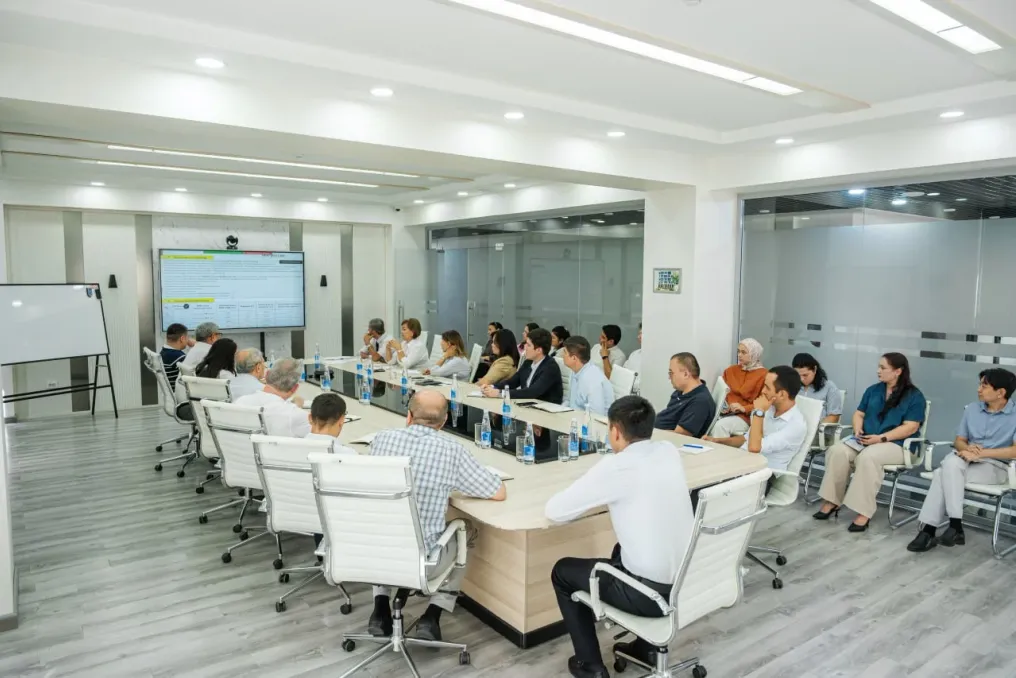
A seminar was held in Tashkent, Uzbekistan, at the Institute of Macroeconomic and Regional Studies (IMRS) under the Cabinet of Ministers of the Republic of Uzbekistan, where information on Uzbekistan's key achievements and future goals in the context of the Sustainable Development Goals (SDGs) was presented.
Participants gathered to assess national progress against key SDG indicators and identify areas requiring further effort. One of the most significant results noted at the seminar was the sharp decline in the national poverty rate: it fell from 17 percent in 2021 to 5.8 percent by 2025. Over the same period, the total number of people living in poverty decreased from 6 million to 2.2 million.
Officials attributed this improvement to targeted social policies, support for entrepreneurship, job creation, human capital development, and work at the local community level within the 'mahalla' system. Progress was also noted in expanding access to preschool and higher education, as well as in promoting gender equality.
Labor Market Challenges and Youth Employment
Nevertheless, difficulties persist regarding women's participation in the labor market, which stands at 43 to 45 percent compared to approximately 70 percent for men. According to International Labour Organization estimates presented at the event, the gender pay gap in the country is between 25–35 percent.
The main focus of the discussions was youth employment, as about 600 thousand young people enter the Uzbek labor market annually. The youth unemployment rate was 8 percent in 2024, and the share of young people who are not in education, not in employment, and not in training (NEET) decreased from 25.3 percent in 2005 to 13.7 percent in 2025.
A lack of practical experience continues to hinder professionals entering the workforce. Analysis of resumes on the Mehnat.uz portal showed that 69.1 percent of young applicants have no prior experience. In a survey conducted by IMRS, 27.2 percent of respondents cited job searching as their most pressing problem, while 25 percent highlighted learning a foreign language.
Digitalization and Energy
Uzbekistan also demonstrated successes in developing its digital economy and artificial intelligence. The country improved its ranking in the AI Readiness Index, rising from 95th place in 2020 to 62nd place in 2025. Seminar participants noted that the next priority for this sector is expanding computing power and technological infrastructure.
In the energy sector, the total installed generation capacity almost doubled between 2016 and 2025, reaching 26.9 GW. Solar and wind generation provided 7.6 GW, accounting for 28.2 percent of the total capacity. In recent years, the sector has attracted about $23 billion in foreign investment.
Participants pointed out a discrepancy between international statistics and the actual situation on the ground. Specifically, Uzbekistan's indicator on the share of renewable energy in final consumption, presented in the 2026 Sustainable Development Goals Report, is based on 2022 data. Consequently, recent changes in the energy sector, including newly commissioned generating capacity, are not yet fully reflected in some global SDG metrics.
Event participants emphasized that further progress toward the SDGs will require expanding scientific research, improving the quality and timeliness of statistical data, evidence-based decision-making, and regular evaluation of implemented measures.