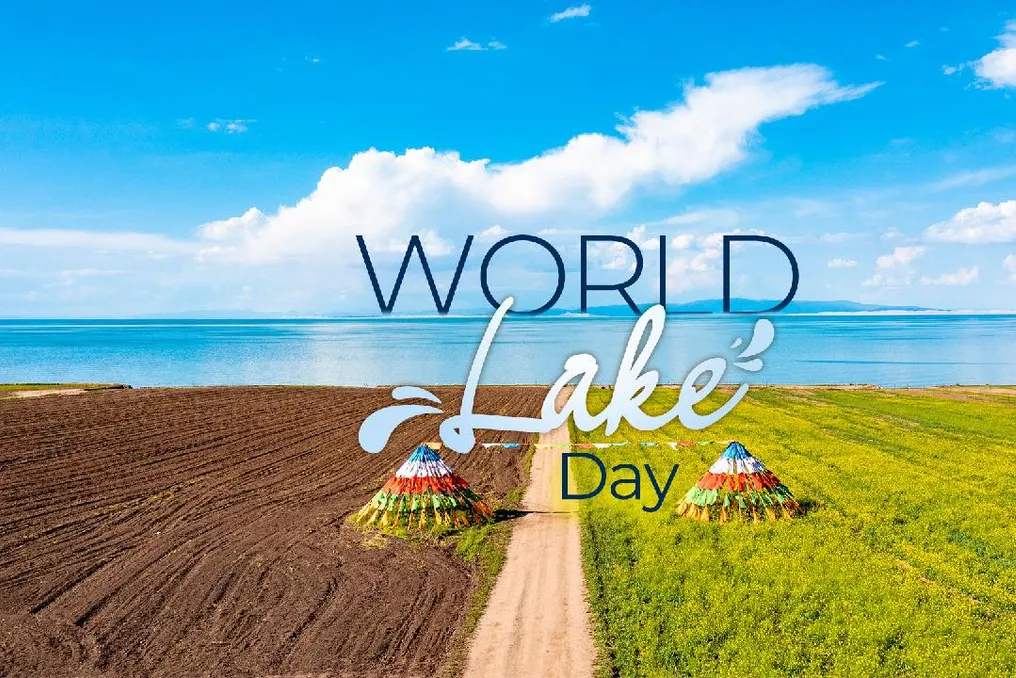
August 27th marks World Lakes Day, which serves as a reminder of the critical role lakes play in maintaining freshwater reserves, biodiversity, and human livelihoods.
Lakes are more than just bodies of water; they connect rivers, wetlands, and wildlife while supporting life and providing vital sources of fresh water.
Globally, efforts to conserve lakes are increasingly shifting from addressing isolated pollution issues to restoring entire ecosystems.
In the Inner Mongolia Autonomous Region of northern China, Lake Ulan Suhai, the largest freshwater lake in the Yellow River basin, demonstrates annual improvement in its condition. Local authorities replenish the lake's level with water from the Yellow River while strictly controlling pollution sources. Furthermore, artificial wetlands are used to improve water quality, and solar-powered aerators help oxygenate the water before it enters the lake.
In Qinghai Lake in northwestern China, biodiversity restoration is closely linked to the protection of the endemic gibel carp. Since 2001, authorities have implemented six rounds of fishing bans. Meanwhile, artificial breeding and the construction of seven fish passage facilities have helped restore fish migration routes. The population of gibel carp has increased by more than 50 times, reaching 133,000 tons.
As the lake ecosystem improves, the population of endangered Przewalski's gazelle has risen from just over 300 individuals in 2001 to more than 3,400, and the number of black-tailed cranes has increased from approximately 30 to over 130.
Technology adds a new dimension to lake conservation. In 2026, Chinese researchers created a dataset of the spatial distribution of China's coastal wetlands at a 10-meter resolution, covering the period from 2019 to 2023. This dataset provides more detailed information for tracking changes in wetlands and supporting ecological assessment and management.
The issue is global. A $10 million technical assistance project launched in 2026 in Africa aims to help restore the ecological and economic functions of Lake Chad and strengthen the resilience of communities around the basin.