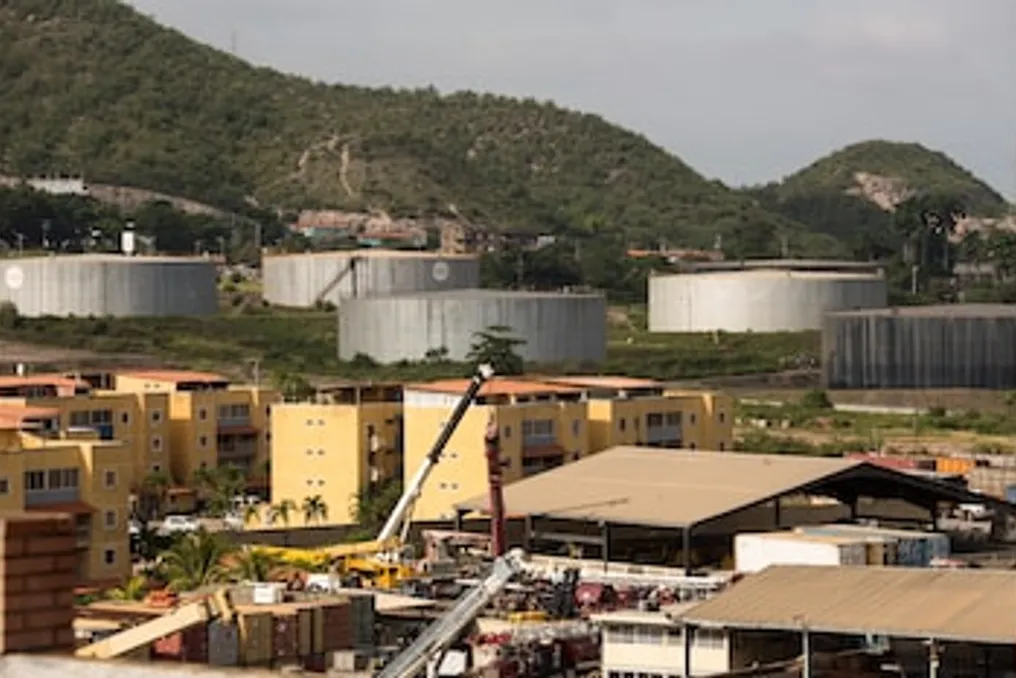
According to sources familiar with the situation, Venezuela is closely examining plans to withdraw from OPEC, which deals another blow to the oil cartel that the country helped establish more than six decades ago.
Some sources, who wished to remain anonymous, reported that the idea of leaving was discussed with representatives of the US government, but a final decision has not yet been made. A White House representative did not provide immediate comments, and the Venezuelan Ministry of Information did not respond to requests for comment on Thursday.
The decision to leave the Organization of the Petroleum Exporting Countries would demonstrate a massive political restructuring in Caracas after President Donald Trump ousted long-time leader Nicolás Maduro and took control of the country's oil sales.
The growing influence of Washington is also reflected in US talks with Venezuelan leaders about gaining a large stake in the country's oil fields—a development that seemed unthinkable two years ago.
Insider reports indicate that negotiations are underway regarding this proposal, and one possible option discussed is a long-term lease of several oil fields for a period of one hundred years. The White House declined to comment on these negotiations, which were previously covered by Axios.
Although such a deal would mark an almost unprecedented US intervention in the economy of another country, it also aligns with the so-called Trump Donroe Doctrine, aimed at expanding American influence in the Western Hemisphere. He characterized Venezuela as a '51st state' and claimed that the US controls its oil.
This move is also consistent with the growing interventionist approach to business under Trump, whose administration acquired stakes in companies such as Intel Corp., rare earth producer MP Materials Corp., and lithium mining company Lithium Americas Corp. Trump also dealt with foreign natural resources; last year his administration established a joint investment fund with Ukraine, backed by revenues from projects in that country related to minerals, oil, and gas.
The possibility of direct involvement of the US government in Venezuelan oil projects highlights how the industry is transforming during a period of political change. International supermajors are largely cautious regarding Venezuela, while risk-tolerant independent drillers and investors are actively participating in what many consider the biggest oil opportunity since the fall of the Soviet Union.
Fading Glory
Once a prominent member of the oil cartel, Venezuela has lost its significance due to US sanctions and internal instability, which have undermined its oil and gas industry. In July, the country produced 1.16 million barrels per day, according to a Bloomberg survey, less than half the volume it produced ten years ago. Nevertheless, production volume increased this year.
Given the decline in production, Venezuela's potential exit is unlikely to have an immediate significant impact on global oil markets, which are currently influenced by the fallout from the US-Iran war. However, this idea is gaining momentum amid public dissatisfaction with membership obligations, voiced by Iraq and others.
Just four months ago, the United Arab Emirates announced its withdrawal from the cartel, jeopardizing the group's unity and its influence on crude oil prices. Venezuela's departure strengthens doubts about whether OPEC, led by Saudi Arabia, can maintain its integrity and influence oil prices. Further fragmentation could plunge members into fierce competition for market share, repeating the brief price war of 2020.
Some American officials envision an energy power created by an alliance between the US and Venezuela that would significantly reduce OPEC's influence, one source noted. Since Caracas has faced a sharp downturn in recent years, it does not fall under OPEC production quotas, and another source stated that freeing the country from any potential quotas would help it maximize production in the long run and, consequently, lower prices. According to this source, Washington could implement its plans for the country's oil sector without being constrained by obligations to another group.
A Favorable Moment?
Venezuela's potential departure from OPEC could pave the way for international oil companies from the US and other countries to play a more significant role in the country's hydrocarbon industry recovery, potentially increasing the global oil surplus forecasted by the International Energy Agency and other authoritative analysts.
Caracas's possible separation would be a victory for Trump, a long-time critic of OPEC and its ability to raise oil and fuel prices for American consumers. Since the US forces seized power on January 3rd and Delfi Rodriguez assumed the role of acting president, relations between Washington and Caracas have shifted from isolation and hostility to deepening partnership, as Trump exerts significant pressure on the country and its vast natural resources.
The Trump administration restored diplomatic ties, reopened the US embassy in Caracas, and is conducting direct talks with Rodriguez and her senior ministers, using a combination of sanctions relief, access to global finance, and control over oil revenues to guide policy. Venezuela was one of five oil-producing nations that founded OPEC in 1960 and is considered the most influential country in the group's creation due to the diligent diplomatic efforts of its then-oil minister, Juan Pablo Pérez Alfonso.
The cartel and its partners played a significant role in global oil markets since the Arab oil embargo in the 1970s and the massive production cuts that stabilized prices and helped most of the world's refining industry during the coronavirus pandemic. Venezuela also played an important role in the creation of OPEC+, an alliance formed in 2016 between core cartel members and external participants, including Russia, which revived the once-fading organization.
However, in recent years, the coalition's influence has weakened again. US shale drillers and other global competitors have undermined its ability to influence prices. Furthermore, major discoveries in Guyana and Brazil have diluted its dominance in production.