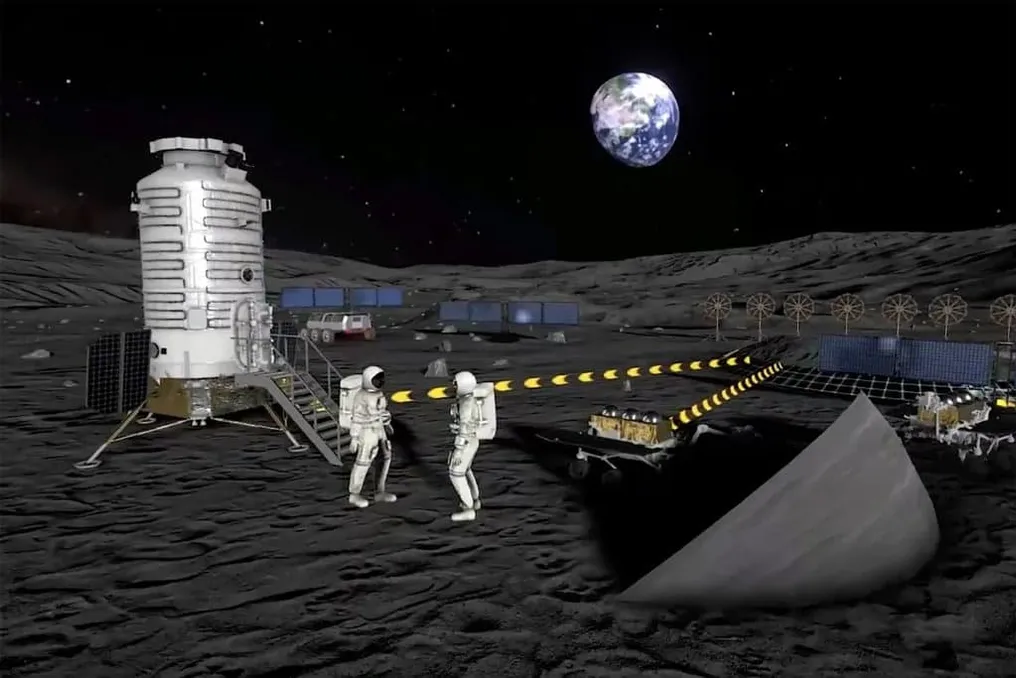
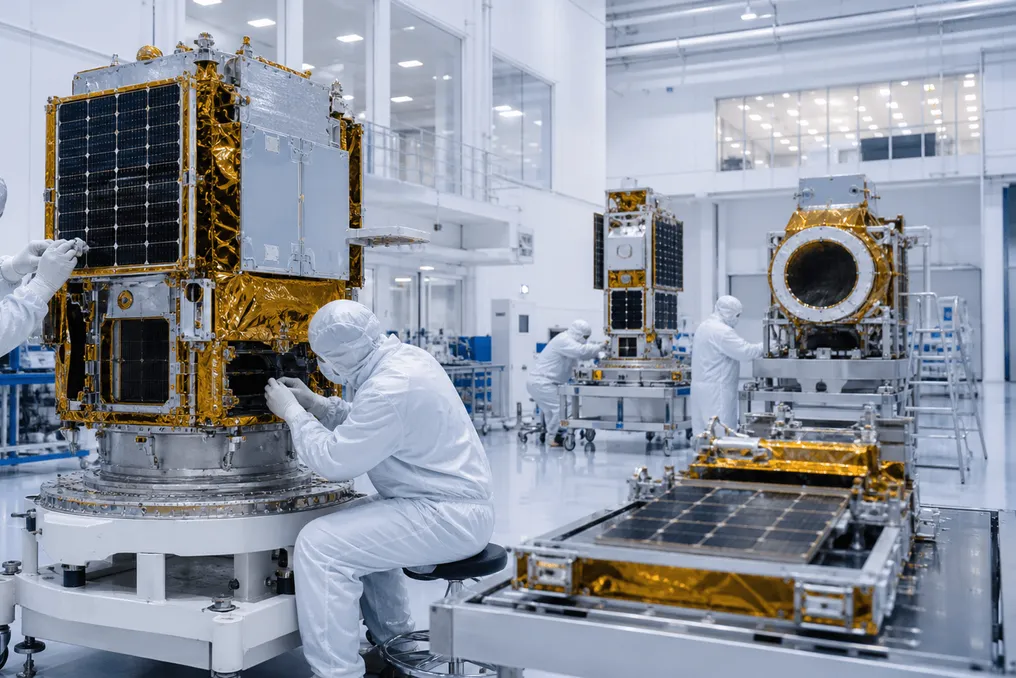
China is preparing to launch the Chang'e-7 mission, one of the most ambitious robotic missions planned for the Moon. This probe will include an orbiter, a lander, a rover, and a surface transport vehicle, as well as a series of international scientific experiments, including cargo supported by the United States.
The launch is scheduled for Monday morning (the 24th) local time (which corresponds to Sunday evening in Brazilian time) using the Long March 5 Y14 rocket from the satellite launch center in Wenchang, China. The equipment for Chang'e-7 was delivered to the site in April.
The lander is set to head to an area near the edge of the Shackleton Crater on the Moon's south pole. After the launch, the orbiter will orbit the Moon for several months before releasing the lander for a landing attempt planned for the end of the year. In addition to scientific goals, the mission should contribute to the preparation of China's project to send astronauts to the lunar surface by 2030.
James Hed, a lunar scientist from Brown University's Department of Geological Sciences, called Chang'e-7 a new stage in the exploration of the natural satellite. He told Space.com that 'Chang'e-7 is the most ambitious, comprehensive, and complex robotic lunar mission ever undertaken by any state or organization.'
Zhang Jingbo, spokesperson for the China Manned Space Agency (CMSA), previously emphasized that the mission fully utilizes the experience and technological potential accumulated by the country over decades to achieve the goal of conducting China's first crewed landing on the Moon by 2030.
Scientists from various countries hypothesize the presence of water ice on the Moon, but the quantity and characteristics of this resource have not yet been definitively determined. Ye Peizhan, a member of the Chinese Academy of Sciences, told China's state television CCTV that China plans to search for water using various methods—from surface analysis to subsurface crater exploration.
Chang'e-7 will use an integrated approach to exploration, combining orbital flight, landing, surface traversal, and jumps to study the environment and resources of the Moon's south pole.
Chang'e-8 will follow Chang'e-7, scheduled for 2028. The goals of this mission will be to test technologies for constructing structures and habitats using lunar regolith. Both robotic missions are intended to help prepare the International Lunar Research Station (ILRS)—a multi-stage Chinese project for lunar exploration.
Although Chang'e-7 is a Chinese mission, it carries various instruments developed by institutions of other countries and international organizations. The lander includes PmL-Ch7, a complex developed by the Russian Academy of Sciences for detecting lunar dust. Technologies developed by the USA, Italy, Bahrain, Egypt, Thailand, and Switzerland are also being used.
The combination of various spacecraft, scientific experiments, and technologies makes Chang'e-7 a mission aimed not only at studying the Moon's south pole but also at preparing for the next stages of China's research program and future human presence on the Moon.
Furthermore, South Korean company InnoSpace conducted the first suborbital test flight of the SEBIT rocket at the Acantara Launch Center (CLA) in Maranhão state, Brazil, on Thursday (the 19th) at 4:30 PM Brazilian time. The main objective of the mission was to assess the stability of the vehicle in the air, test systems under real conditions, and collect data for further project stages.
However, the test had to be prematurely terminated after a problem was detected during ascent. SEBIT is a single-stage suborbital vehicle powered by a three-ton class hybrid engine. The initial ignition proceeded without deviation on the InnoSpace platform, followed by liftoff. Nevertheless, as the vehicle progressed through the atmosphere, it deviated from its planned trajectory.
According to a statement from the Brazilian Space Agency (AEB), to avoid risks and maintain operational integrity, the Brazilian Air Force activated the Flight Termination System (FTS). This was done in accordance with safety procedures adopted at the launch center. The activation of the device led to a controlled termination of the flight, and the rocket fell into a predetermined maritime safety zone off the coast of Brazil. The incident resulted in no casualties or material damage. An investigation into the causes of the event is already underway.
Lunar moons of Mars may hold one of the most important answers in the science of how life originated on rocky planets in the Solar System. To search for these clues, Japan is preparing the Martian Moons eXploration (MMX) mission, which will be launched from the Tanegashima Space Center in the coming months. The spacecraft will orbit Mars for about three years and attempt to land on Phobos, the largest of the planet's two moons. The goal is to collect at least 10 grams of material from the surface before returning to Earth around 2031.
Modern life's dependence on electrical grids, satellites, and navigation signals has turned space weather into a constant problem. An intense solar storm can affect vital services worldwide in mere seconds. The scientific community is trying to reassess the real threat to prevent large-scale power outages and communication failures. Recent discoveries have shown that Earth's vulnerability is higher than previously assumed, and protecting the planet will require joint efforts.
Astronomers have discovered the fastest star in the Milky Way. It is located very close to the supermassive black hole Sagittarius A*, located at the center of our galaxy. This astronomical object, named S301, orbits the galactic center in 8.7 years—the shortest recorded orbital period for a star in this region. This finding, made by an international team of researchers, was published in the scientific journal Nature on Wednesday (the 20th).
China has achieved unprecedented success in space launches by recovering the first stage of a rocket on land after an orbital flight for the first time. This success was achieved with Zhuque-3, developed by the private Chinese space company LandSpace, during a launch conducted at the Dunfeng Commercial Space Innovation Test Zone.
For decades, the standard cosmological model viewed dark energy as a constant force accelerating the expansion of the Universe. However, results from the DESI dark energy spectroscopy instrument, published in 2025, opened up an intriguing possibility: perhaps this mysterious component is not constant and changes over time.
For centuries, humanity has looked at the sky, wondering if our planet would be an absolute rarity. Since the presence of water has always been considered a fundamental condition for the origin and sustenance of life, identifying this element on other worlds increases the chances of finding potentially habitable environments beyond Earth.
To understand how this vital substance shapes the cosmos, Olhar Digital presented a detailed journey across 13 locations outside Earth where the presence of water has been confirmed or strongly suggested. One group of researchers discovered a rock in India that may contain signs of some of the oldest forms of life found on Earth. The material is approximately 3.5 billion years old and contains layers of carbon and silica, which scientists believe could be remnants of microbial communities that lived on the planet in the Paleoarchean.