Debashish Mohanty: 9 First-Class Wickets Debut, 10 Wickets in Duleep Trophy, But Only Two Matches for India
Read more
Aaj Tak
www.aajtak.in

Debashish Mohanty: 9 First-Class Wickets Debut, 10 Wickets in Duleep Trophy, But Only Two Matches for India

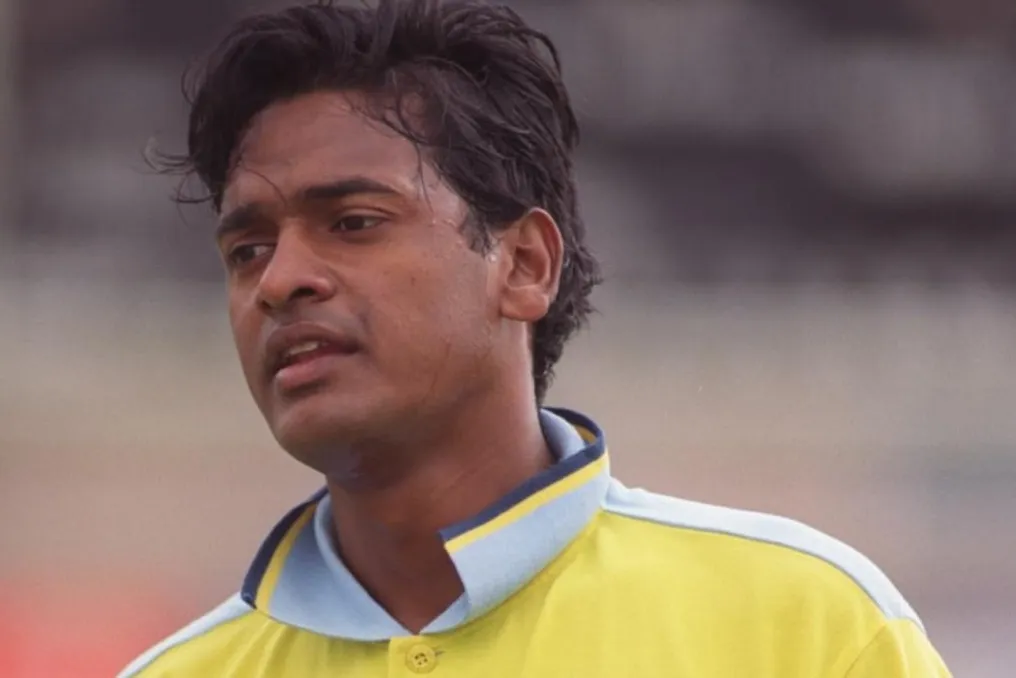
Debashish Mohanty, a former fast bowler from India, holds an impressive record in club cricket, but his international career remains incomplete. He took nine wickets in his first-class debut and 10 wickets in the Duleep Trophy match. However, he managed to play only two Test matches for the national team.

Mohanty began his first-class career in November 1996 against Bengal at Eden Gardens. In the first innings, he registered figures of 5/52 and took a total of nine wickets, which caused significant resonance. His impressive performance at the domestic level quickly earned him a spot in the Indian Test squad.

In August 1997, Mohanty debuted in Tests against Sri Lanka at the Sinhala Sports Club (SSC) in Colombo. He was preceded by players such as Sant Jayasuriya, Roshan Mahanama, Arjun Ranatunga, and Arvind D Silva. Mohanty hunted all four, starting well with figures of 4/78. However, this was his first and last major spell in his Test career. After the second match against Sri Lanka in Mohali, he did not receive another chance in the Test team, taking only four wickets in two matches.

In the One Day International (ODI) format, Mohanty received more opportunities. In September 1997, he debuted against Pakistan in Toronto. Although he took only one wicket in the first ODI, in the very next match he impressed with three wickets, dismissing Shahid Afridi, Saeed Anwar, and Ejaz Ahmed. His ability to make the new ball swing and his unique style made him a difficult target for batsmen.

Before the 1999 Cricket World Cup, Mohanty was not a main favorite for the Indian team. However, considering the importance of bowlers who can create swing in English conditions, he was included in the squad. He played six matches in the tournament, taking 10 wickets. With an average ranking of India, only Javagal Srinath surpassed him with 12 wickets. Against Kenya, Mohanty showed his best performance with 4/56. In Eastbourne against England, he dismissed Alex Stewart and Graham Hick with consecutive deliveries, helping India gain an early advantage and reach the Super Six. He also took a crucial wicket of Steve Waugh against Australia. His unique bowling action was well-known, and the figure of the bowler on the official logo of the 1999 Cricket World Cup was inspired by his style. In 17 ODIs in 1999, he took 29 wickets, indicating his excellent form.

Mohanty's biggest personal success came in January 2001 during the Duleep Trophy. In Irdgala, the South Zone team faced the East Zone team, which included players like Rahul Dravid and VVS Laxman. Mohanty took all 10 wickets, conceding 46 runs in 19 overs. Dravid could not score a single run, while Laxman was dismissed for 20 runs. The entire South Zone team was reduced to 113 runs. In the second innings, he took another four wickets, totaling 14 wickets in the match. Remarkably, just a few months after this historic performance in the Duleep Trophy, Mohanty played his last ODI for India. After July 2001, he was no longer selected for the national team. However, in domestic cricket, he continued to show excellent results, taking 417 wickets in 117 first-class matches. He also featured in List A, taking 160 wickets in 129 matches.

Debashish Mohanty's international career for India spanned 47 matches, including two Tests and 45 ODIs, with a total of 61 international wickets. However, the gap between his domestic records and international opportunities makes his story unique. On one hand—417 first-class wickets, 10 wickets in the World Cup, and 10 wickets in the Duleep Trophy match; on the other—only two matches in Test cricket. After retiring from cricket, Mohanty took on roles as a coach and selector. In 2012, he played a role in the East Zone's victory in the Duleep Trophy, and later became part of the junior and senior men's selection committee of the BCCI (Board of Control for Cricket in India).
Similar stories

The story of the player who won the U-19 World Cup in India and his subsequent career
Read more
www.aajtak.in

The story of the player who won the U-19 World Cup in India and his subsequent career

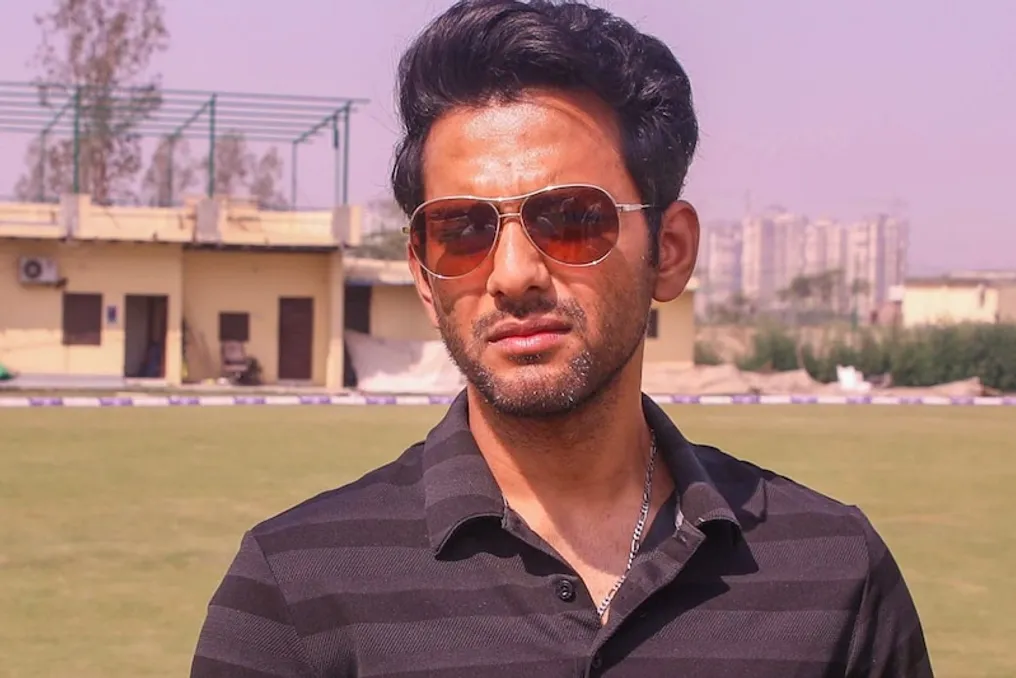
August 26, 2012, will forever remain a special day for the Indian team, as it was on this day that India won the U-19 World Cup title in Townsville against Australia. At that time, the team was led by young batsman Unmukt Chand.

In the final, a strong Australian team faced India. Initially, Australia's position was extremely difficult: after four players fell for only 38 runs, captain William Bosisto took the initiative and helped the team by scoring an impressive 87 runs in half an hour. In the end, Australia scored a total of 225/8 in 50 overs.

India needed to score 226 runs to secure their third victory in the U-19 World Cup. While pursuing this goal, the Indian team lost four batsmen in just 25 overs, scoring only 97 runs.

After this, captain Unmukt Chand, along with Smith Patel, stabilized the game and helped India become the third-time U-19 World Champion. India won this match by six wickets. Chand demonstrated powerful batting against the Australian bowlers, scoring 111* not out. In this innings, he hit seven fours and six sixes.

At that time, Unmukt Chand was considered a future big star of Indian cricket, and he was compared to other promising players. It seemed that this athlete would play for the Indian team in the future. However, the story of cricket does not always follow expectations.

Despite the initial brilliant success, Unmukt Chand's career did not reach the height expected of him after the memorable U-19 World Cup final. He also failed to leave his mark in the IPL. One of his most striking photos in the IPL is when Brett Lee dismissed him with a clean bowl on the very first ball of the tournament in 2013, using his magnificent outswinger.

The player, once compared to Virat Kohli, never managed to play in international matches for the senior Indian team. In 2021, at the age of just 28, Unmukt Chand decided to leave Indian cricket and moved to America. There, he played in a minor American cricket league and signed a contract with the Silicon Valley Strikers, who became champions. Currently, Unmukt Chand plays for the Los Angeles Knight Riders in the Major League Cricket (MLC).

Last year, on September 12, 2025, a documentary about Unmukt Chand titled 'Unbroken: The Unmukt Chand Story' was released in cinemas, and then premiered on ZEE5 on May 27, 2026.

First Class: 67 matches, 3379 runs, average 31.57, 8 centuries, 16 fifties, maximum 151 runs.

List-A: 120 matches, 4505 runs, average 41.33, 7 centuries, 32 fifties, maximum 127 runs.

IPL: 21 matches, 300 runs, average 15.00, strike rate 100.00, 1 fifty, maximum 58 runs.

The story of cricketer Doug Wright: record 7 hat-tricks and 2056 wickets in first-class cricket
Read more
www.aajtak.in

The story of cricketer Doug Wright: record 7 hat-tricks and 2056 wickets in first-class cricket

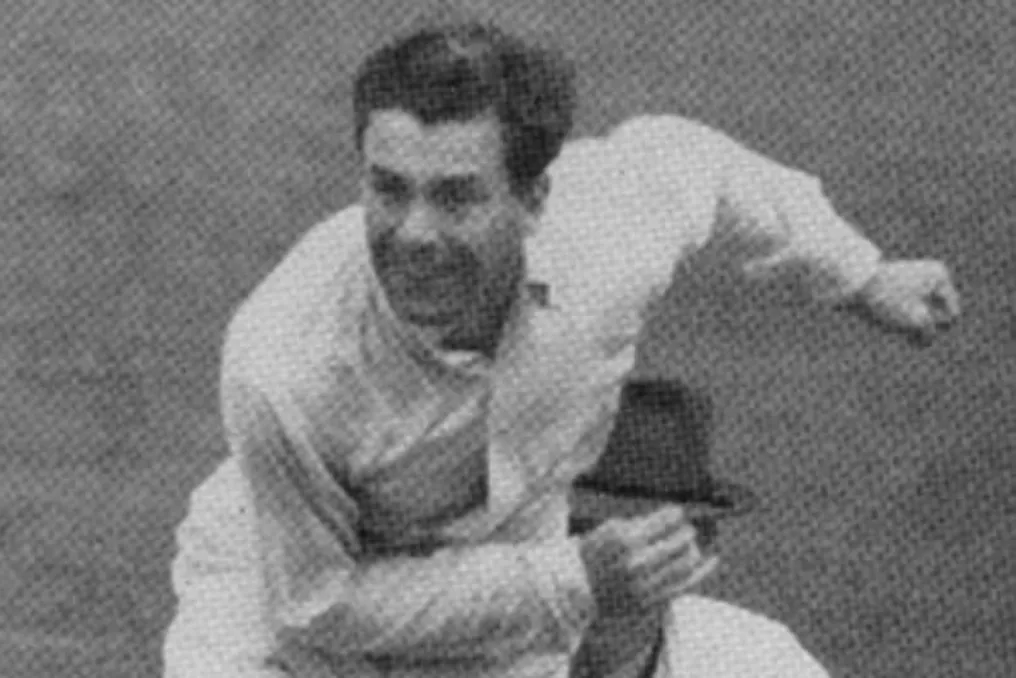
Doug Wright, the great left-arm spinner from England, was born on August 21, 1914. At the time, he was considered the best left-arm spinner in England, and many even called him one of the most dangerous bowlers.

Doug Wright, born in Sidcipes, debuted in first-class cricket for Kent at the young age of 17 in 1932. However, he had to wait another four years to be included in the team. By 1938, he became part of the England Test squad.

Wright set a first-class cricket record that has never been broken. During his career, he took 7 hat-tricks and accumulated 2056 runs in 497 first-class matches.

Nevertheless, his performances in Test matches were not as impressive. In 34 matches for England, he took 108 wickets with an average of 39.11. His struggle was particularly noticeable in the Ashes matches against Australia, where he managed to be part of a winning team only once in 14 Ashes matches.

In one Ashes match against Australia in Leeds, Wright demonstrated outstanding play by setting a target of 105 runs for the visitors, while also dismissing stars such as Don Bradman, Bill McCabe, and Lindsay Hassett, which created serious problems for Australia.

Initially, Wright wanted to be a fast bowler and sometimes used wrist rotation for spin delivery. Later, he changed his approach and made spin his main weapon. Wright's bowling was characterized by strong lift and rotation. Great batsmen Don Bradman and Wally Hammond were admirers of his game. It was said that playing against him when he was in form was almost impossible.

During the tour of Australia in 1946–47, Wright, along with Alex Bedser, bowled about 500 overs. In 1947, at Lord's against South Africa, Wright took 10 wickets in one Test match, conceding 175 runs.

In 1954, Doug Wright became the first professional captain of Kent. However, the team's results began to steadily decline. At the age of 43, he retired from cricket, and later, in 1959, took up the position of coach at Charterhouse.

23-year-old spinner Lyle Robertson breaks world record of Pakistani bowler by taking 6 wickets on ODI debut
Read more
www.aajtak.in

23-year-old spinner Lyle Robertson breaks world record of Pakistani bowler by taking 6 wickets on ODI debut

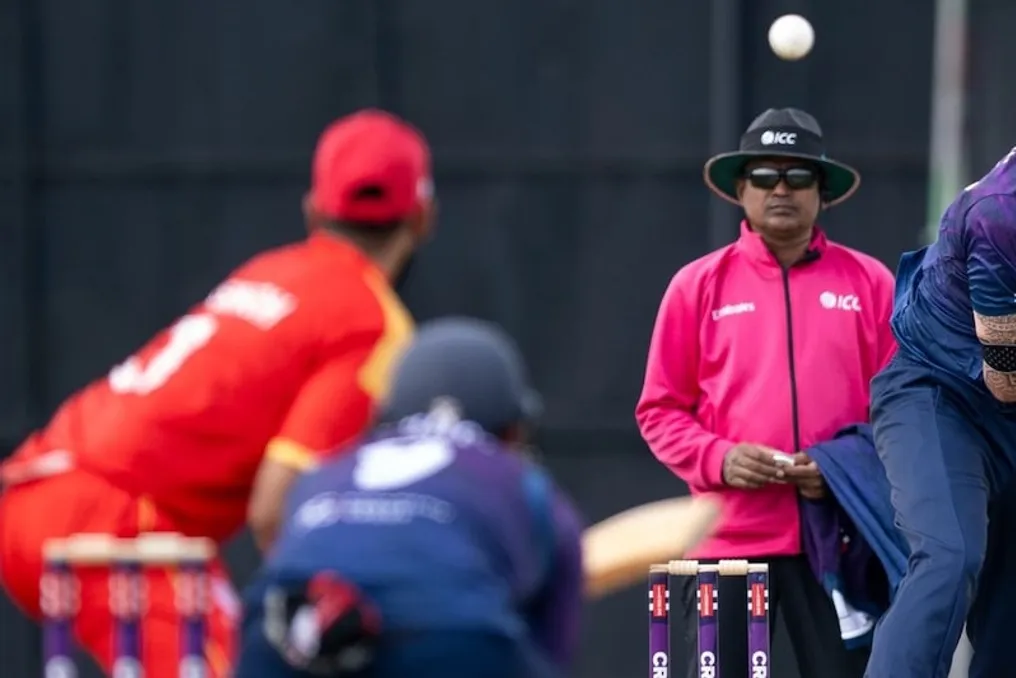
Scottish spinner Lyle Robertson achieved a historic feat on his One Day International debut. In the match against Canada, Robertson took six wickets for just 52 runs in 10 overs. This is the best bowling performance by a spinner on an ODI debut. Due to his impressive bowling, Scotland defeated Canada by a large margin of 170 runs.

Robertson broke the record set by Arafat Minhas of Pakistan. Minhas had taken five wickets for 32 runs in his ODI debut against Australia this year. In this match on August 13th at Forthill ground in Dundee, Scotland set a massive target of 348 runs against Canada. However, the Canadian team was all out for 177 runs in just 35 overs.

Robertson got his first wicket in the 23rd over when he dismissed Harsh Thacker. Subsequently, he also sent Sad Bin Zafar and Shivam Sharma back to the pavilion. Robertson concluded his spell in a spectacular fashion; in his final over, he dismissed Shreyas Mowa and Zahid Shirzad consecutively. The next ball was a dot, and then he completed his six-wicket haul by taking the wicket of Kaleem Sana.

With this performance, Robertson became the fourth bowler in the world to take six or more wickets on an ODI debut. The world record in this category is held by Charlie Ceesell of Scotland. Ceesell took seven wickets for 21 runs on his debut against Oman at the same ground in 2024. Additionally, Kagiso Rabada of South Africa took six wickets for 16 runs in his first ODI against Bangladesh in 2015. Meanwhile, Fidel Edwards of West Indies took six wickets for 22 runs on his ODI debut against Zimbabwe in 2003.

In the match, Scotland's captain Richie Barrington decided to bat first after winning the toss. Despite the early loss of two wickets, Barrington and Brandon McCullum stabilized the innings. A crucial partnership of 140 runs was formed between these two batsmen for the third wicket. McCullum scored 64 runs off 59 balls, which included eight fours and three sixes. On the other hand, Barrington scored a brilliant century with 120 runs off 103 balls, including 15 fours and four sixes. Matthew Cross and Jack Jarvis added quick runs in the final overs. Cross remained unbeaten on 51 runs, while Jarvis contributed 30 runs off just 14 balls. Scotland posted a huge total of 347 runs losing seven wickets.

Canada's chase of the massive target did not start satisfactorily. Aaron Johnson was dismissed early, and Yuvraj Samara managed only 16 runs. Paragat Singh tried to stabilize the innings by scoring 42 runs. Anup Cheema played an explosive innings of 42 runs off just 16 balls, but Robertson dismantled the middle and lower order batsmen, ending all possibilities of a Canadian comeback. From a run-scoring perspective, this was Scotland's biggest win in ODI cricket jointly. Previously, Scotland had defeated Canada by 170 runs in 2014.

Popular