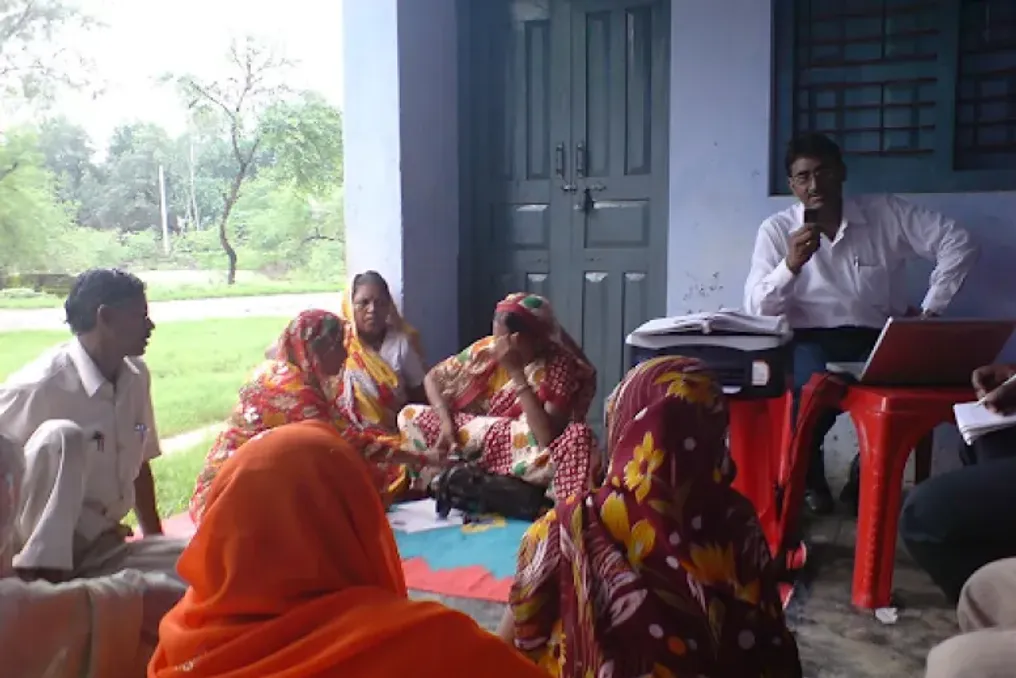
In villages and cities across India, access to small, unsecured loans has long served as a vital resource for low-income families. Nevertheless, economists remain divided on whether microcredit programs—often managed by local Self-Help Groups (SHGs) and Microfinance Institutions (MFIs)—truly help families escape poverty in the long term.
A new, comprehensive study conducted by Rasmiti Maharana and Tara Shankar Shaw at the Indian Institute of Technology Bombay (IIT Bombay) and published in the journal Economic Modelling sheds new light on this issue. The authors demonstrated that microcredit significantly reduces both immediate and future poverty risk by analyzing household well-being across multiple parameters, rather than just simple daily income.
To accurately assess the impact of these loans, researchers examined data from the Consumer Pyramids Household Survey, tracking over 130,000 households between 2016 and 2019. Instead of measuring poverty solely with standard financial indicators like daily expenditure or wages, the authors employed a multidimensional poverty approach. This system assesses simultaneous deprivations across key aspects of life: education, health, and living standards (including access to clean water, adequate housing, sanitation, and electricity).
Furthermore, using advanced analytical tools to map declining risk over time, the team measured vulnerability—the probability that a family will face multidimensional deprivations in the future. The analysis revealed a dual benefit of microcredit, although its primary effect manifests differently depending on where the families live. In rural areas, obtaining microloans primarily serves as structural protection against future poverty risks.
Rural households often direct microcredits towards agricultural needs, livestock, or small non-agricultural enterprises. Since these investments take time to yield financial returns, their immediate impact on daily spending is minor; however, they diversify household income sources and build a sustainable asset base over time. Conversely, in urban settings, where market access is faster and infrastructure is more developed, microcredit leads to an immediate, direct reduction in current multidimensional poverty.
Interestingly, the study found that the dynamic benefit of microloans occurs regardless of whether the money is spent directly on business investments or on the family's daily needs. When families use microcredits for non-productive purposes, such as medical emergencies, home repairs, or tuition payments, it prevents forced asset sales or falling into high-interest informal debt traps. Moreover, loans channeled through SHG groups showed a statistically stronger impact on reducing vulnerability compared to individual microloans, highlighting the critical role of social capital, peer support, and collective financial discipline.
This research significantly advances existing microfinance literature by addressing key methodological challenges that plagued previous studies. Prior assessments often relied on unidimensional financial metrics (such as daily consumer spending) or localized primary surveys that could not isolate true causality.
Because microcredit programs naturally target underserved communities, households actively choosing to take out loans often possess unobserved traits, such as higher risk tolerance or entrepreneurial spirit. The IIT Bombay team addressed self-selection bias and reverse causality by combining Propensity Score Matching (PSM) methods with Instrumental Variable (IV-2SLS) strategies and Fuzzy Regression Discontinuity Design (FRDD), isolating the genuine causal effect of microcredit borrowing using a large, nationally representative dataset.
Despite its methodological strength, the study acknowledges important limitations. First, the survey data lacked specific nutritional consumption indicators, necessitating the assessment of health deprivation based on self-reported health and insurance coverage. Second, while econometric models effectively capture LATE (Local Average Treatment Effect), regional variations in local microfinance regulations, interest rate caps, and institutional support across different Indian states may alter the effectiveness of converting credit into long-term household benefits.
Contextualizing these findings in India and the broader South Asian region underscores the complementary role of state infrastructure and political representation. The study indicates that the presence of local banking networks and higher female political representation in state legislatures directly improves the reach and positive spillover effects of microfinance programs. In regions where formal banking infrastructure coexists with active political support for women, microcredit functions much more effectively as a tool for sustainable development.
In an era where policymakers strive to achieve the United Nations Sustainable Development Goals (SDGs)—particularly SDG 1 (No Poverty) and SDG 5 (Gender Equality)—this research provides concrete validation for group-based financial inclusion models. By demonstrating that microcredit reduces multidimensional deprivations in health, education, and living conditions, the study proves that targeted microfinance is not merely a debt instrument but a broad social safety net system.
For policymakers, the results emphasize the need to support grassroots financial initiatives, such as the SHG-BLP (Self-Help Group-Bank Linkage Program) and the DAY-NRLM (Deendayal Antyodaya Yojana-National Rural Livelihoods Mission). Empowering women through community credit networks mitigates household vulnerability to unexpected economic shocks, such as health crises or extreme weather events, thereby reducing the need for costly government intervention and fostering bottom-up economic growth.