The hot hatch concept, although facing difficulties in an increasingly comfort-oriented market, still attracts enthusiasts who value the handling, low weight, and practicality of these compact vehicles. The automotive industry has promoted the idea that SUVs fulfill these needs, which many critics contest, comparing this trend to the fate of other categories like station wagons and sedans.
The decline of hot hatches is seen as a symptom of the current preference for elevated driving positions and exaggerated promises of off-road capability. Despite this, some iconic models persist; the Volkswagen Golf GTI and the Honda Civic Type-R remain present, with Japanese engineers ensuring that the Type-R will be maintained as long as there is demand for a sporty hatchback with a manual gearbox and a high-revving engine.
It is necessary to recognize and lament the loss of several other hot hatches that enriched the automotive scene, such as the Mercedes-AMG A45 S, the Renault Mégane RS, the Renault Sandero RS, the Suzuki Swift Sport R, and the Audi RS3.
It is observed that most of the mentioned hot hatches have European origins, reflecting the philosophy of the Old Continent, which prioritizes low weight, little inertia, and power appropriate to the chassis, allowing enthusiasts to enjoy winding roads, unlike the American approach focused on large V8 engines for desert straights.
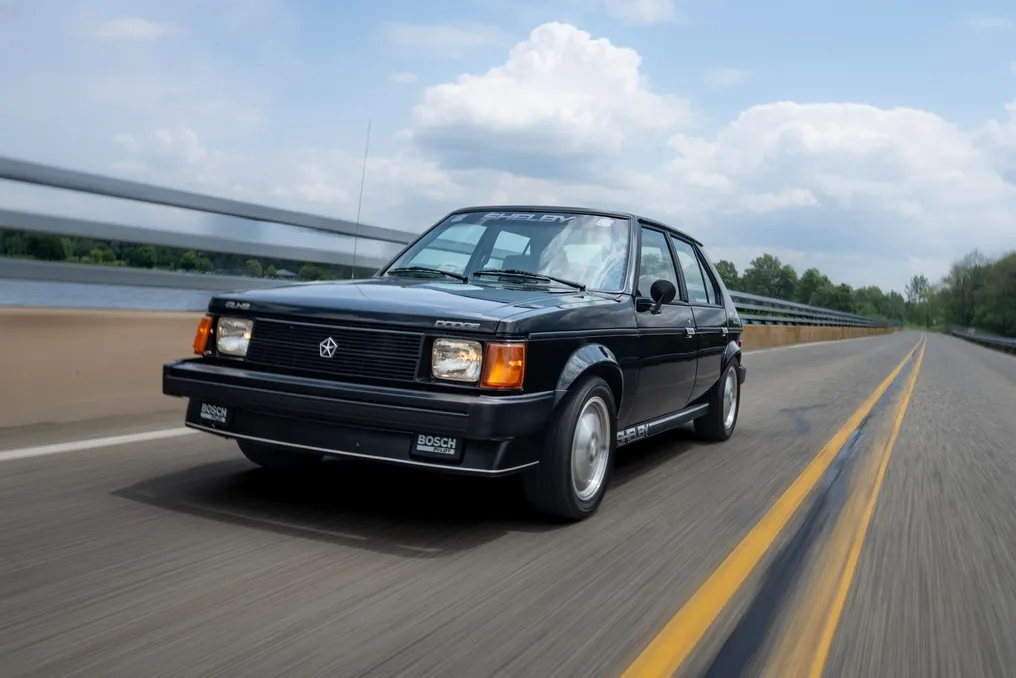
However, Americans have also demonstrated the ability to create remarkable hot hatches. A prominent example is the Shelby GLHS, resulting from the fusion of European engineering with American brute force, conceived by Carroll Shelby.
The origin of this vehicle is intrinsically linked to the oil crisis of the mid-1970s in the United States. The end of the muscle car era and new emission regulations forced a drastic change, resulting in heavy, underperforming cars. In this context of financial difficulty, Chrysler introduced the L-Body platform in 1978, adapting it from a French manufacturer, Simca.
On this base, Chrysler launched two vehicles: a compact hatchback, essentially an Americanized version of the first-generation Volkswagen Golf, sold as the Omni in Dodge and the Horizon in Plymouth, in addition to a Talbot Horizon version in Europe. Simultaneously, the same base was used to create a three-door coupe called the Dodge Charger, a controversial marketing decision for purists.
Although the Omni and the Horizon helped save the Chrysler corporation, they were considered forgettable cars. The situation changed with the arrival of Lee Iacocca, who took over Chrysler with the goal of injecting passion into the brand. Iacocca sought out Carroll Shelby, his old Texan friend, to develop something more exciting.
Shelby, initially distanced from the industry, was challenged to apply his skills to front-wheel-drive subcompacts and four-cylinder engines. The first result was the Dodge Shelby Charger in 1985, which featured suspension and aerodynamic improvements but only had 110 hp.
Carroll Shelby recognized the potential of the Omni, a smaller and lighter model on the same L-Body platform. Convincing Iacocca, he developed the Dodge Omni GLH in 1984. The acronym GLH officially stood for 'Goes Like Hell' and was not an empty promise.
The original Omni GLH was extremely competitive, weighing 1,000 kg and equipped with a high-compression 2.2 engine. It achieved 0 to 100 km/h in an impressive 8.7 seconds, surpassing the Volkswagen Golf GTI, and its dynamics were completely redesigned by Shelby.