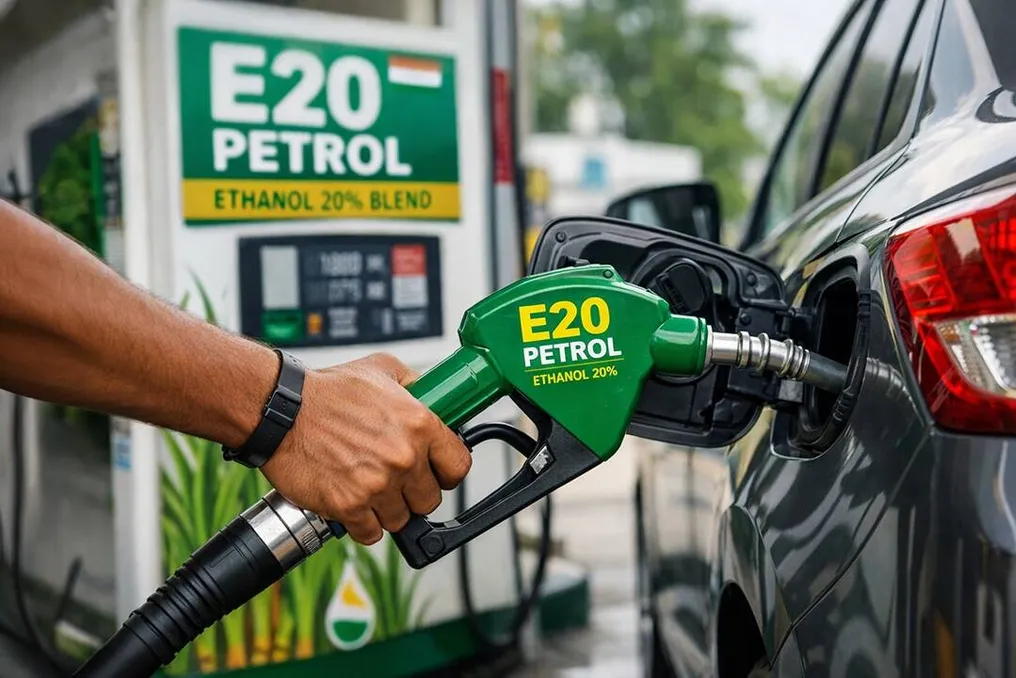
Bharat Petroleum Corp Ltd (BPCL), India's second-largest fuel retailer, stated on Thursday that there are no plans to replace E20 gasoline with E10. The company clarified that the current debates concern the possibility of providing older vehicles with lower ethanol content fuel and how an additional grade of gasoline could be accommodated within India's extensive fuel distribution network.
During a media conference following the annual shareholders' meeting, BPCL Chairman and Managing Director Sanjay Khanna noted that he sees no operational or logistical issues in transitioning from E20 to E10 if the government decides to change the ethanol blending policy.
He emphasized: 'I have never said that E20 will be replaced by E10.' He added that some circles are discussing whether older vehicles should have the option to use fuel with a lower ethanol content. However, he explained: 'This does not mean that E20 will disappear, but that E10 will appear.'
These statements came amidst a broader policy discussion on whether owners of older vehicles should have access to E10 gasoline, which contains 10 percent ethanol, alongside E20, which contains 20 percent ethanol. India is gradually increasing the addition of ethanol to gasoline as part of efforts to reduce crude oil imports, decrease emissions, and support domestic ethanol production.
Khanna also stressed that no final decision has been made regarding a change in the current fuel blending regime. He stated: 'Nothing has been finalized.' However, when asked about potential changes, he noted that since E20 is already established, the transition to E10 or its implementation poses no problems for the company, and none of the oil companies will face difficulties moving from E20 to E10.
There is a discussion about whether India should make E10 gasoline, containing 10% ethanol, available parallel to E20 fuel, against concerns from consumers and industry stakeholders regarding the impact of higher ethanol concentrations on vehicles and fuel availability.
When asked about necessary changes for oil companies in the event of E10 introduction, he reported that the existing infrastructure would not create serious obstacles. Nevertheless, there is a difference between changing the fuel composition and providing an additional grade of gasoline alongside E20; the latter presents a more significant logistical challenge, especially considering the scale of India's fuel distribution network.
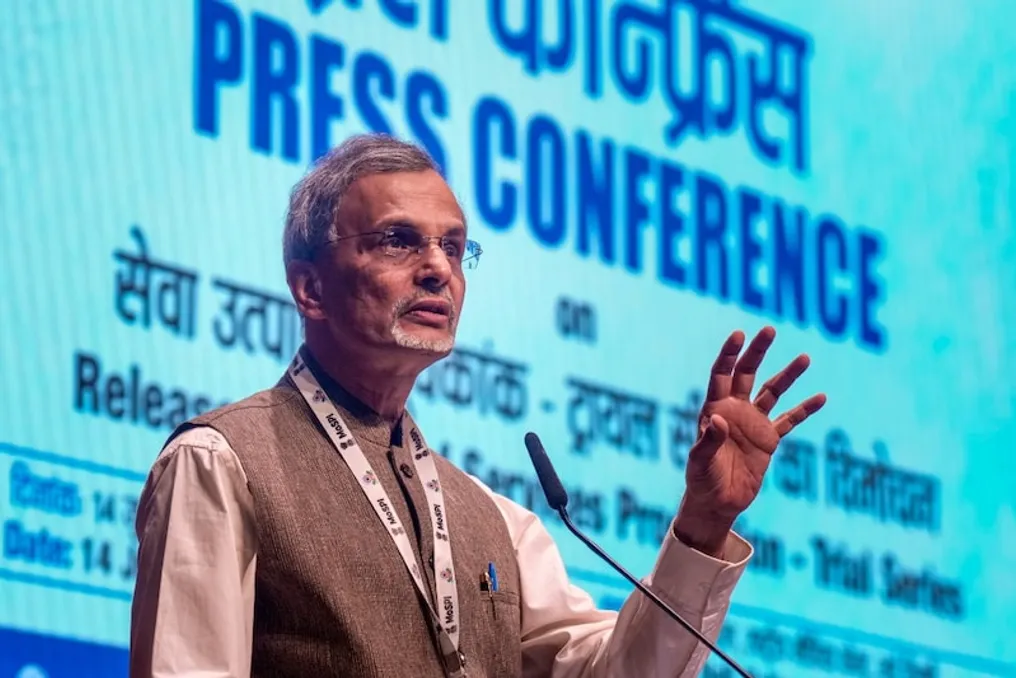
Earlier this month, the government's Chief Economic Advisor V Anantha Nageswaran, along with Akash Pujari, an advisor to the Department of Economic Affairs, stated in his article that India should restore an option for lower ethanol content gasoline to protect millions of older vehicles.
E20 gasoline, containing 20% ethanol, was introduced last year and became the sole type of gasoline available at petrol pumps across India starting April 1, as part of measures to reduce India's dependence on imported oil, support agriculture, and cut emissions. However, some users, particularly owners of vehicles that do not meet the BS-VI standard, have reported reduced performance and damage to auto parts—a claim the government has repeatedly dismissed as unfounded.
The Ministry of Petroleum insists that creating and maintaining infrastructure to supply multiple grades of fuel is impractical. Nageswaran and Pujari argued that existing evidence does not support widespread claims that E20 damages engines, but they countered that the policy could pose problems for India's large fleet of older two-wheelers.
The country has about 75–80 million older two-wheelers manufactured before the BS-IV standard, which run on carburetors. A carburetor cannot sense additional oxygen in the mixture and adjust operation, so when using E20, the engine consumes too little fuel for the incoming air and overheats. Furthermore, old rubber seals not designed for ethanol present a separate issue, as they degrade upon contact with the fuel regardless of engine temperature, as they wrote.
The authors recommended restoring lower ethanol content fuel, such as E10, alongside E20 to protect older vehicles, allowing the government to continue its ethanol utilization program. Their article stated that the government should 'protect the existing fleet until the modernization program catches up.'
The Ministry of Petroleum and Natural Gas had previously stated last month multiple times that requiring every petrol station to store pure gasoline, E10, and E20 simultaneously would create significant logistical difficulties. India has over one hundred thousand petrol stations supported by an extensive network of refineries, terminals, depots, and pipelines. The Ministry noted that maintaining multiple grades of base gasoline in the network would increase processing costs, complicate inventory management, and reduce operational efficiency.
The Ministry also stated that comparisons with premium gasoline are incorrect, as premium fuels are niche products sold in limited quantities at a significantly higher price and do not represent separate national streams of base fuel. The Ministry asserted: 'Running parallel national supply chains for pure gasoline, E10, and E20 would be a completely different task.'
The logistical issue is particularly relevant if E10 is offered as an optional extra for older vehicles rather than a replacement for E20. The BPCL Chairman acknowledged that the implications of offering another grade are part of ongoing debates. He noted: 'What are the issues related to supplying another grade (of gasoline)... these are issues being discussed.'
_