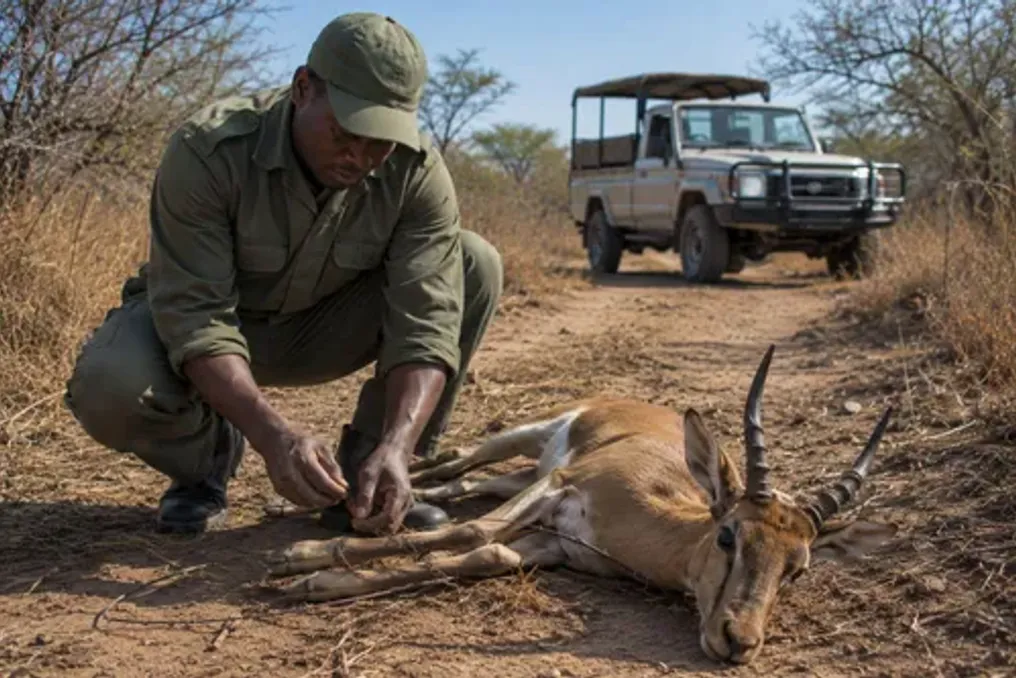
Experts warn that poaching of wild animals for meat causes serious damage to wildlife populations and endangers South Africa's tourism economy. According to specialists, the ongoing loss of wildlife can have devastating consequences for conservation efforts, rural livelihoods, and the country's international reputation as a leading safari destination.
Professor Piet van der Merwe from the TREES research unit at North-West University (NWU) stated that illegal hunting for wild meat is subtly depleting parks, reserves, and agricultural lands that attract millions of visitors annually.
Van der Merwe warned that protecting wildlife is not only an ecological duty but also an investment in tourism, agriculture, and the country's international image. He noted: 'If wildlife disappears, so too may tourists—and the opportunities they create.'
Pressure on Wildlife
This warning came amid a growing number of reports that wild animals are falling into wire traps and being hunted with dogs in South Africa's protected areas. According to conservation organizations, setting traps remains one of the most common forms of poaching in the country.
Unlike targeted hunting methods, wire traps indiscriminately capture animals regardless of their species, age, or conservation status. Many animals suffer prolonged torment due to severe injuries, infections, dehydration, and starvation after being caught in a trap.
According to Van der Merwe, the consequences go far beyond the killed animals. He emphasized that poaching for wild meat threatens the quality of the wildlife experience, which underpins South Africa's tourism reputation, because it depletes populations, disrupts natural behavior, reduces the food base for predators, and increases pressure on vulnerable species.
Conservation studies and reports have documented instances of trap placement in national parks, provincial reserves, private conservation areas, and farms. Kruger National Park, managed by SANParks, has identified traps as a growing threat affecting species such as the endangered African wild dog.
Risks to Ecosystems and Tourism
The loss of prey species also entails broader ecological consequences. As natural food sources diminish, predators may disappear from affected areas or increasingly prey on livestock, exacerbating tensions between conservation authorities and farming communities.
Van der Merwe explained that for those involved in wild meat poaching, the issue often boils down to food security. Wild animals are primarily hunted for food, and secondarily as a source of income, with the meat sold in local markets and communities.
However, he cautioned that wild meat poaching has ceased to be solely a means of subsistence; illegal meat is increasingly entering informal markets, creating commercial incentives for poachers.
Dangerous Conditions for Rangers
Van der Merwe described the trade in wild meat as a serious problem for conservation agencies, especially in the Kruger National Park area. He reported that rangers patrol the park daily looking for traps, but removing them is both complex and dangerous. He added that some poachers are armed and do not hesitate to shoot upon confrontation.
The use of hunting dogs has further complicated anti-poaching efforts, allowing poachers to pursue wild animals over vast territories and outside property boundaries. He noted that the use of dogs in wild meat poaching also poses serious challenges, particularly in rural areas remote from densely populated places.
Call for Community-Based Solutions
Van der Merwe stressed that the economic losses from declining wildlife populations extend far beyond protected areas, affecting accommodation providers, guides, transport companies, restaurants, and local suppliers who depend on tourism revenue.
He insisted that solving this problem requires a combination of strengthened law enforcement, anti-poaching operations, and community-level interventions aimed at reducing poverty, unemployment, and food insecurity. Van der Merwe stated that communities living near parks and reserves must reap tangible benefits from nature conservation and tourism.
He concluded that creating incentives for wildlife protection rather than exploitation can be achieved by providing significant employment opportunities, skills development, establishing community-owned tourism enterprises, and improving access to affordable food.