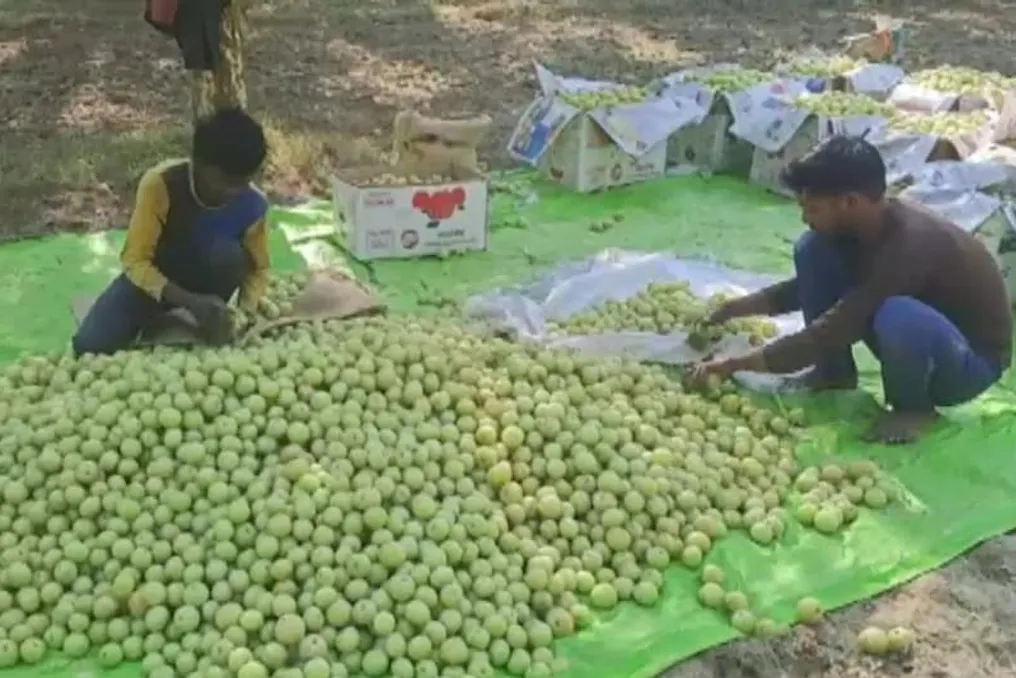
UP government's scheme transformed the amla market in Pratapgarh, increasing farmers' income
Read more
Aaj Tak
www.aajtak.in

UP government's scheme transformed the amla market in Pratapgarh, increasing farmers' income

Amla fruits from Pratapgarh are no longer limited to gardens thanks to the UP government's One District One Product (ODOP) program, which has helped bring them to large national and global markets. Now, numerous products are made from this fruit, such as candies, murabba, juices, pickles, and laddus. This has ensured farmers a higher price for their harvest and also created employment opportunities for women.

Pratapgarh is known as the amla city due to the long-standing cultivation of this fruit. Thanks to the ODOP program, the processing of this fruit is now actively supported. More than 15 amla processing units have been established in the district, where various products are prepared, including candies, chawanprash, powder, and hair oil.

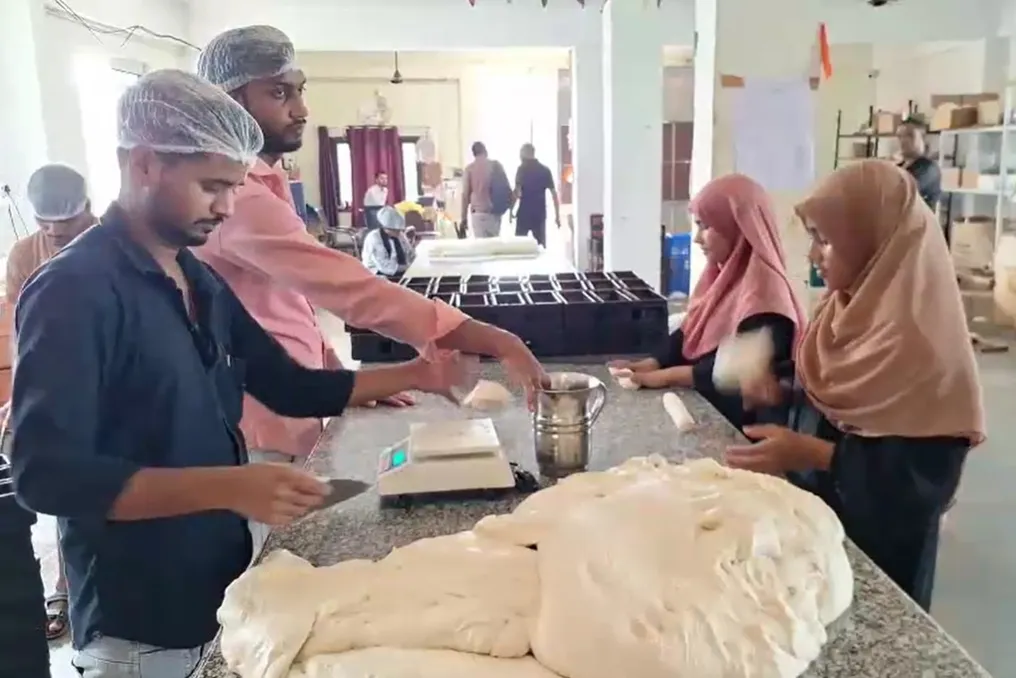
The most significant aspect of these transformations involves women from rural areas. Women associated with self-help groups have received training on producing products from amla. As a result, women who previously engaged only in household chores have now become a reliable source of income for their families by working in packaging and processing units.

The administration and the Horticulture Department have not only focused on farming but have also taught farmers how to sell their produce in the market along with processing. With subsidies, easy credit, and e-commerce assistance provided under ODOP, the taste of Pratapgarh is now available not only at local fairs. Through platforms like Amazon, Flipkart, and government portals, the produce reaches the tables of residents in metropolitan cities. Last year, the total turnover in the district exceeded 50 million rupees.

Ramesh Kumar, involved in the business, notes that the plant's capacity has grown from 1000 tons to 10,000 tons. Farmer Mahesh Yadav states that after the program's implementation, there has been a huge increase in demand, and crop prices have risen by 20 percent. Since supplies are made directly from Katni and Jabalpur to Haryana, the dishonest practice of middlemen has disappeared, and all profit goes directly into the farmer's pocket.

Thus, the ODOP program has turned amla cultivation in Pratapgarh into a full-fledged business. Farmers, entrepreneurs, and women from self-help groups are participating in this process, opening up a large market for this traditional district product.
Similar stories

Farmers' lives in Siddharthnagar (UP) are improving thanks to the sale of black salt rice grain under the ODOP program
Read more
www.aajtak.in

Farmers' lives in Siddharthnagar (UP) are improving thanks to the sale of black salt rice grain under the ODOP program

In the Siddharthnagar district of Uttar Pradesh (UP), black salt rice grain was selected under the ODOP program in 2018. This initiative has proven to be a true blessing for local farmers.

Previously, farmers were forced to seek buyers, selling the black salt rice grain at a price of 60–70 rupees per kilogram. After being included in the ODOP program, the government conducted extensive promotion of the rice's properties, which significantly increased demand. Today, the price reaches 180–200 rupees per kilogram, and it is becoming difficult to find.

Earlier, government officials were the only ones purchasing this rice, but now traders are signing contracts with farmers even at the sowing stage, providing advance payments. Furthermore, since this rice has a low glycemic index, it can be consumed by people with diabetes.

The Department of Entrepreneurship also encourages the creation of products from this rice by providing subsidized grants. As a result, cookie and confectionery production from black salt rice has begun in the district. New entrepreneurs purchase it from farmers, package it, and sell it in large cities and through online platforms.

If rice was cultivated on an area of only 2000 hectares in 2017, due to the growing demand, it is now cultivated on 18 thousand hectares, and there is a need to increase the production area.

Ajay Rawat, one of the beneficiaries, noted that the 'Buddha Doelts Van District Van Product' program has been a good government initiative. He stated that they have been cultivating black salt rice for about three generations, and after its inclusion in ODOP in 2018, opportunities for export to national and international markets opened up for them.

Under this program, they have also developed value-added products, including zinc and protein-enriched medicinal cookies. Ajay added that he received a grant of 2.6 million rupees from the Siddharthnagar district Industries Department. He used this grant to participate in fairs and festivals across the state and abroad, promoting his product and expressing gratitude to the government for providing the platform.

He emphasized that before 2018, the market was undeveloped, and they were unaware of the rice's health benefits, including its low glycemic index. Thanks to the government, they learned about this, and the market grew. What was previously not valued even at 50–60 rupees is now sold for 200 rupees per kilogram, which is the credit of ODOP and the Government of Uttar Pradesh.

Pankaj Chaube, a farmer, said that the situation was very difficult before; then, he could barely sell it for 5000–6000 rupees per quintal, whereas now he sells it for 20 thousand rupees per quintal. Significant changes have occurred since the implementation of the ODOP program in 2018, and this is a big victory for Siddharthnagar. He noted that rice from the Alidapur area is considered the best, and that previously, when the British ruled here, local achievements were not attained. Now, black salt rice has become the pride of the district.

Mohit, another farmer, explained that they have been cultivating black salt rice for a long time, and even their grandfathers planted it, but back then, demand was low, and it was sold at prices of 35–45 rupees. With the launch of the 'One District - One Product' program, people started booking the harvest even at the planting stage, offering advance payments. Mohit noted that thanks to this ambitious program, the cultivation of black salt rice in the Alidapur belt became known, and doctors are now talking about its features. Farmers feel energized, and the rice is becoming known abroad.

Popular