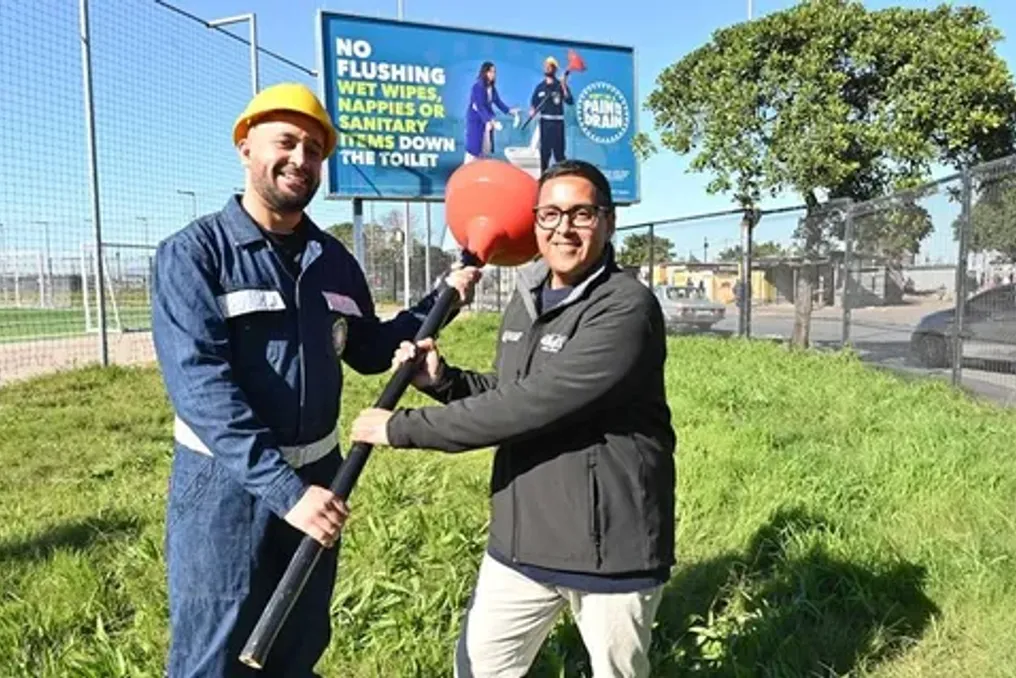
The City of Cape Town's Directorate of Water Resources and Sanitation has officially launched a public awareness campaign titled 'Don’t Be a Pain in the Drain.' This initiative aims to prevent sewage system blockages and raise residents' awareness about daily household habits that can lead to serious plumbing overflows.
The campaign also highlights the dangers of building unofficial structures over city manholes and illegally connecting stormwater and sewage systems to each other. The campaign features a new local character named 'Drainman' and encompasses video series, print advertising, radio spots, and billboards.
Call for Responsible Action
According to the City, sewer blockages are entirely preventable and arise directly from improper system use or illegal waste disposal. Zahid Badroodien, a member of the Majority Committee on Water and Sanitation, noted that what happens in the sewer system directly affects local streets and public spaces, even if this infrastructure remains out of sight.
City officials emphasize that using toilets and manholes as trash bins diverts critically important funds from municipal improvements that could cover the costs of preventative emergency clearing. Badroodien stated that every time someone flushes or throws wet wipes, rags, construction debris, oil, and other items not intended for sewers, it creates an enormous and unnecessary burden on City resources.
To avoid localized flooding, the City advises residents to strictly follow the 'Three P' rule: flush only urine, feces, and toilet paper. Residents are strongly urged to take the following steps to protect public infrastructure:
- Avoid flushing anything other than paper: wet wipes, sanitary pads, diapers, and rags should be kept out of toilets.
- Do not allow grease into sinks: used cooking oil and fat should be allowed to cool and then wiped into a solid waste container instead of being poured down the drain.
- Dispose of construction waste properly: Construction debris or trash must never be thrown into open manholes.
- Maintain network separation: Proper separation between private stormwater drainage and the public sewer line must be ensured.
Recently, the City of Cape Town began urgent infrastructure repairs to address major sewer pipe collapses affecting sanitation services in the Khayelitsha area. Badroodien reported that these collapses affect critical infrastructure serving communities in Khayelitsha. He acknowledged the difficulties associated with relocating affected residents, emphasizing that relocation is a necessary condition to ensure safe access for repair crews to damaged areas and to carry out work.
Official Reporting Channels
To report infrastructure problems such as sewage overflows, missing manhole covers, or illegal dumping, citizens can use the City of Cape Town Service Request Portal or contact the municipality through any of the official reporting channels:
- Online portal: Problems can be reported directly via the City of Cape Town service request webpage.
- WhatsApp line: Details and photo evidence can be sent by messaging 060 018 1505.
- Telephone: Contact the Customer Service Centre by calling 0860 103 089.
- Email: For issues related to water and sanitation, write to water@capetown.gov.za.
- SMS service: A brief description (up to 160 characters) can be sent to 31373 (standard SMS rates apply).
- On-site service: Citizens can speak in person with staff at municipal reception centres or local accountable councils.