
Socure raises $156 million at $5.2 billion valuation to expand AI-powered trust platform
Read more
Ventureburn
ventureburn.com

Socure raises $156 million at $5.2 billion valuation to expand AI-powered trust platform

Socure announced the raising of $156 million in strategic growth funding, which raised its valuation to $5.2 billion following continued expansion. The funding round included the issuance of new company capital as well as a secondary offering for existing employees.

Socure provides AI-based trust infrastructure to prevent fraud and verify identities for corporate companies and government agencies. The company serves clients in banking, government sectors, gaming, telemedicine, telecommunications, and e-commerce, boasting over 3000 clients in more than 190 countries.

Among Socure's clients are 19 out of the 20 largest US banks, over 600 FinTech companies, and 160 organizations in the public sector. Other major clients include companies such as Capital One, Citi, Robinhood, Chime, Revolut, as well as major sports betting and prediction market operators.

The acquisition of Fravity provided Socure with the technological capability to automate investigations that traditionally required significant human effort. Fravity uses AI agents to manage anti-fraud, risk, and compliance operations. The company reported an annual recurring revenue of $364 million for the second quarter of 2026.

Fravity's capabilities will be integrated into Socure's RiskOS orchestration and decision-making platform. The combined technology will be offered as RiskOS_Agents, initially focused on watchlist screening, monitoring, and 'know-your-business' processes.

Socure and Fravity already have common enterprise clients who use both platforms in operation. Socure stated that Fravity's technology reduced the cost per case by 80% in existing deployments. Annual Recurring Revenue (ARR) grew by 63% year-over-year, and net dollar retention reached 133%.

The system has also reportedly reduced case resolution time by five times and lowered false positives by 70%. These improvements can help financial institutions manage the growing investigation workload more efficiently.

Socure's latest funding comes as artificial intelligence creates new challenges for fraud prevention and identification. Last year, the company's network recorded an 8000% increase in AI-driven fraud. Generative AI is capable of making synthetic identities more convincing and allows malicious actors to automate fraudulent activities on a larger scale, increasing pressure on financial institutions and other enterprises to strengthen identity assurance.

Socure believes that AI can also help manage the investigation load created by automated fraud detection systems. Human teams often have to review a large number of alerts before determining if the activity poses a real risk. The company positions AI agents as a way to automate much of this investigative process, expanding Socure's scope beyond identity verification into the broader area of financial crime prevention and regulatory compliance operations.

The new funding will be directed towards Socure's international expansion and the integration of Fravity technologies into RiskOS. Since its founding in 2012, the company has raised over $742 million in disclosed financing. Socure's previous valuation was $4.5 billion during the Series E funding round in 2021. Its latest valuation reflects the ongoing growth in the corporate identity and fraud prevention markets. The company has also expanded its government business.

Similar stories

Emerald AI raises $150 million to scale flexible data center capacity
Read more
ventureburn.com

Emerald AI raises $150 million to scale flexible data center capacity

Emerald AI has successfully raised $150 million in a re-signed Series A funding round, valuing the company at $1.05 billion. The funding was co-led by Energize Capital and DCVC, and attracted strategic investors from global energy and technology sectors.

The company currently includes 12 Fortune Global 500 enterprises among its investors, who also participate in Emerald AI's Strategic Advisory Board. With the capital raised, the company plans to accelerate the commercial deployment of its solutions worldwide.

Emerald AI's clients include data center operators, artificial intelligence companies, and electric utilities. The company develops software that enables data centers to become flexible electricity consumers. The Emerald Conductor platform manages AI workloads concurrently with the use of local energy resources.

The system automatically regulates energy consumption when grid load periods coincide, while ensuring the protection of critical AI computing tasks. This approach could potentially help data centers gain faster access to power sources and reduce the strain on local infrastructure during peak demand. According to Emerald AI, their technology is capable of freeing up over 100 gigawatts of capacity, referring to the existing US power grid.

The company notes that this capacity can become available before new infrastructure is built, as traditional energy grid projects can take many years to become operational, whereas the electricity demands of AI data centers are growing rapidly.

Emerald AI conducted five demonstration projects in the United States and London. These trials took place in commercial data centers in Arizona, Illinois, and Virginia, as well as in Oregon and London. The company aims to bridge the time gap between demand and availability through software. Partners in these projects included NVIDIA, EPRI, Oracle, Nebius, and National Grid.

Emerald AI has now moved beyond demonstrations and begun commercial deployment. Its software is fully operational in a data center in California, where flexible energy consumption was demonstrated during grid stress. The company also plans additional large-scale deployments, having partnered with Silicon Valley Power for a flexible interconnection program that gives data centers access to additional grid capacity in exchange for providing proven and managed energy flexibility.

Furthermore, Emerald AI is collaborating with Digital Realty and NVIDIA in Virginia on the development of the Vera Rubin AI Research Farm in Manassas, which is expected to have a capacity of around 100 megawatts, and its energy-flexible design has been tested.

Emerald AI CEO, Dr. Varun Sivaraman, stated that AI can help solve its own energy supply problem. He emphasized that the company's demonstrations showed the capability of precisely tuning data center energy consumption. The company's goal is to implement this capability wherever AI infrastructure is developing to strengthen grid reliability and support AI growth.

Energize Capital and DCVC noted that Emerald AI has quickly reached the stage of commercial deployment, and their investment reflects the growing demand for solutions meeting AI's energy requirements. Other participants in the funding round included NVIDIA, Samsung Ventures, Siemens, and GE Vernova. Salesforce Ventures, Aramco Ventures, and RWE also joined the round, strengthening the company's position at the intersection of AI infrastructure and energy, giving it the capital to expand deployments into new markets and assist utilities in managing growing demand.

Wispr raises $280 million to develop voice AI technologies beyond dictation
Read more
ventureburn.com

Wispr raises $280 million to develop voice AI technologies beyond dictation

Significant capital is required to build next-generation artificial intelligence infrastructure due to rising costs for computing power and hardware. To address this issue and move beyond traditional dictation, startup Wispr has raised $280 million in a Series B funding round at a $2 billion valuation.

This large influx of capital will allow the company to train its own voice models that easily process complex real-world audio material. By proactively solving expensive computational needs, Wispr aims to create a universal voice interface that will replace text input on everyday devices and digital platforms.

Most people view voice control as a simple tool for setting timers or writing short messages. However, Wispr envisions a future where natural human speech becomes the primary method of data entry across all daily-use software applications.

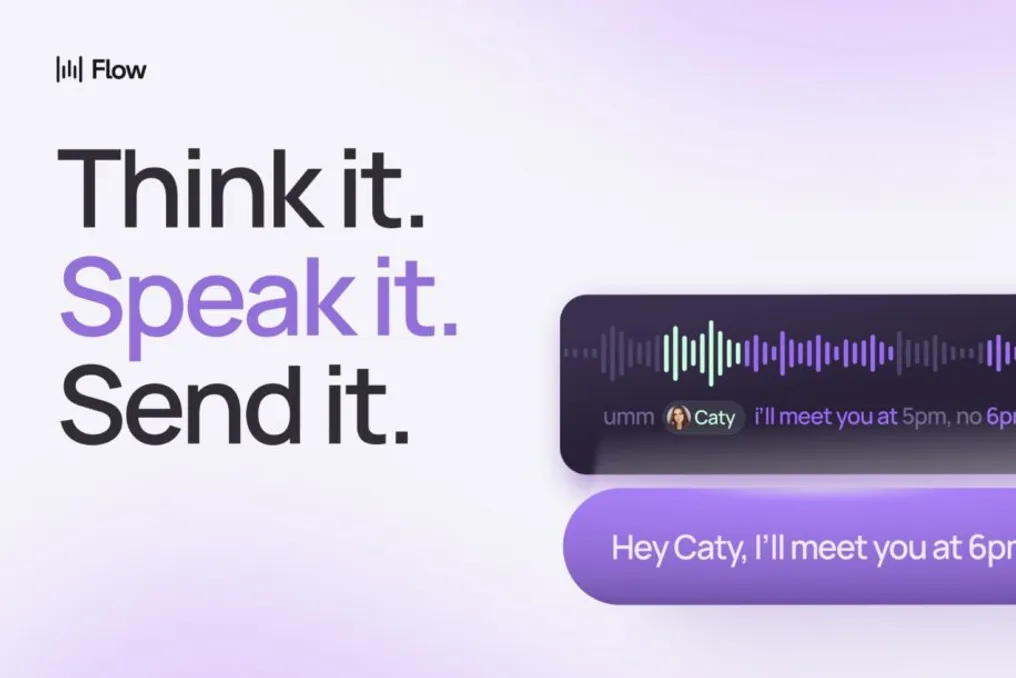
Wispr's flagship application, Flow, allows users to speak seamlessly into any text field on both desktop and mobile operating systems. Flow processes human speech in real time, eliminating the need for clumsy raw transcriptions. It removes filler words like 'um' and 'uh', corrects grammatical errors, and subtly fixes stumbles on the fly. Thus, it transforms the user's hasty, vague ideas into clear, professional text without tedious manual editing and typing.

The new capital directly accelerates the development and deployment of Canto—Wispr's proprietary voice model designed specifically for noisy real-world environments. Standard speech-to-text engines work acceptably in quiet rooms but fail completely in typical conditions. Background conversations, barking animals, heavy traffic, and coffee shop noise usually lead to significant transcription errors. Canto overcomes this major hurdle by training directly on unfiltered, chaotic audio data.

Thanks to this, Canto reduces the frequency of speech recognition errors in noisy environments from 30% to less than 10%. Users can easily dictate long emails or complex documents while traveling or in open-plan offices. Consequently, Canto lowers the percentage of speech recognition errors in loud places from 30% to less than 10%, allowing users to comfortably dictate detailed letters or complex strategic documents while commuting, walking through busy city streets, or being in noisy offices.

Major venture capital funds clearly see enormous long-term value in Wispr's technical approach and ambitious product vision. The Series B funding round was led by Menlo Ventures alongside Notable Capital, NEA, Neo Ventures, 8VC, and MVP Ventures. With this strategic injection of funds, Wispr has raised a total of $361 million. The technology is already gaining significant popularity among corporate teams, creative professionals, and even notable users. To date, users have generated over 60 billion words on the Flow platform.

Employees from almost all Fortune 500 companies and over 10,000 enterprises use Flow daily. Multilingual specialists and professional athletes highly value Flow for its ability to smoothly switch between languages without losing words. In the future, with the advancement of artificial intelligence, traditional physical keyboards and touchscreens may become obsolete. With a substantial reserve of funds, Wispr is using this money to create a persistent voice layer situated directly beneath every desktop and mobile application. Instead of switching between different apps or manually typing long messages, users will simply be able to speak naturally to their screens. Combined with the optimization of specialized voice models, voice input becomes significantly faster and more accurate than manual typing.

Popular