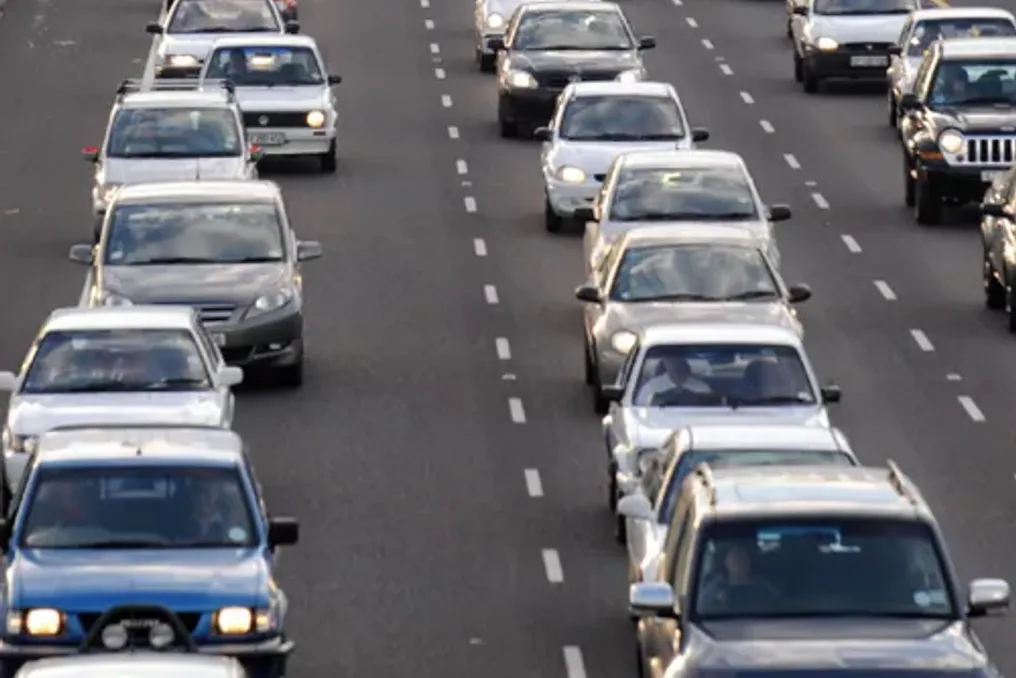
According to a new study by the University of Cape Town (UCT), rising transport costs are forcing people to reduce their journeys, with public transport users being the hardest hit. Over 40% of these users reported having to travel less due to increased transport expenses.
Drivers are also reducing activity: 31% stated they have limited driving due to fuel prices. This data comes from the UCT Liberty Institute's Passenger Report 2026, which surveyed 2198 passengers nationwide and included 100 in-depth interviews.
The report found that 45% of drivers attempted to lower travel costs in the last year, and 15% switched to smaller, more economical vehicles.
Public transport users face fewer options when costs increase. Paul Egan, managing consultant at the UCT Liberty Institute, noted that unlike private car owners who can change habits or switch to a smaller vehicle to combat inflation, public transport users have far fewer levers of influence.
Egan added that millions of South Africans are already experiencing 'transport poverty,' where limited mobility directly hinders access to jobs, basic services, and personal well-being.
Six out of ten passengers would consider trains
The study showed that 59% of private car drivers would switch to trains if safe and reliable services were available. Among taxi and bus users, this figure was 62%. However, despite the cost of owning and operating a car, nearly 70% of public transport passengers stated they would prefer to drive.
According to the study, this preference is mainly related to safety concerns and the ability to control one's journey, rather than status. One public transport user told researchers: 'I want to control when I leave and arrive, and I want to control my own safety.'
Safety was a concern for all passengers regardless of mode of transport. About 41% of public transport users feared for their personal safety on South African roads, compared to 33% of drivers. Another 14% of drivers reported instances of serious road rage.
A co-author of the report, Associate Professor James Lappeman, noted that having a car gives passengers more independence but does not necessarily eliminate travel stress. He stated: 'Owning a vehicle provides control over schedules and independence, but for many drivers, this control is accompanied by anxiety, road stress, and safety issues.'
How South Africans manage daily commutes
Researchers also examined how people make their daily commute. They identified five types of passengers: the escapist, the recharger, the social connector, the time optimizer, and the resilient.
The escapist uses music, radio, or podcasts to drown out traffic and environmental noise, while the recharger prefers silence, reflection, or prayer. Social connectors use the journey to interact with other passengers, and time optimizers try to use the trip for planning, organizing, or making phone calls. There is also the resilient, who focuses on completing the journey.
Lappeman emphasized that passengers do not always belong to one group. He noted: 'On a Monday morning when the work week begins, you might want to be productive, and on a Friday afternoon when you just want to switch off, you might want to be an escapist.'