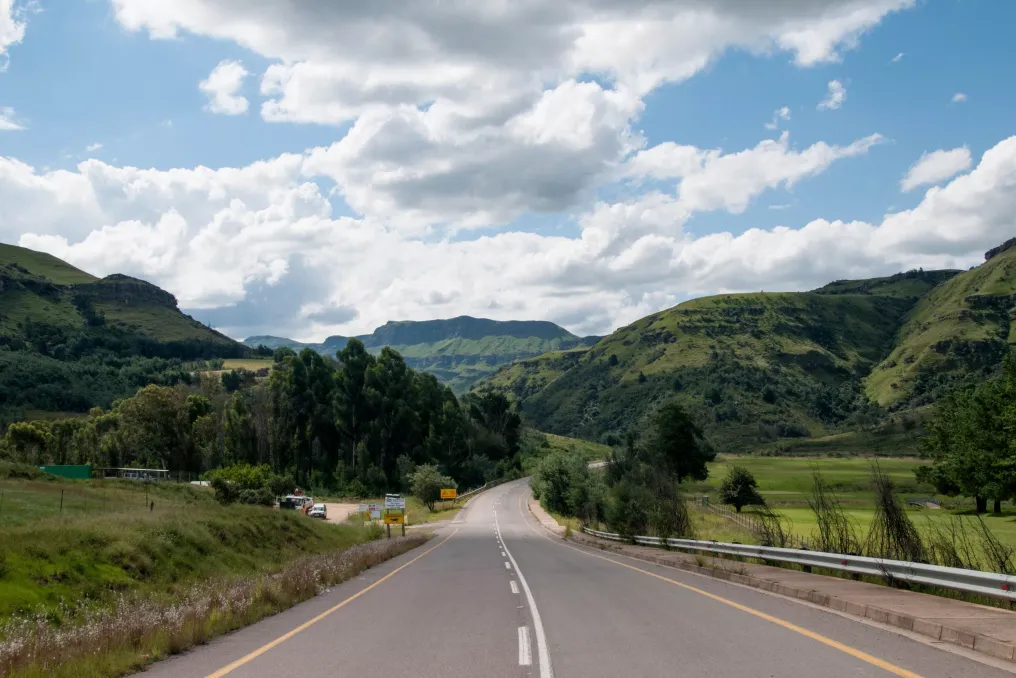
Instead of choosing a destination and then deciding what to eat upon arrival, you can plan a road trip starting with a specific ingredient. South Africa has several unique gastronomic destinations linked to local produce.
Rooibos, which grows in the dry mountains of the Cederberg, is one of the most distinctive South African products. It is best explored in the Cederberg region, where the local variety Aspalathus linearis grows. Traditionally, this tea was harvested by Khoisan communities, and commercial cultivation began in the early 20th century.
Clanwilliam remains the hub of the rooibos region. The Cederberg tourism authority claims it is the only place where the tea is cultivated commercially. Local tours allow visitors to see the plant in the field and learn about its journey from farm to cup. Clanwilliam can serve as a base for the trip, from where you can take a farm tour or experience local tea. Additionally, Cederberg offers hiking, rock climbing, mountain biking, and learning about the ancient San rock art.
The connection between Knysna and oysters has existed for generations, combining natural, agricultural, and cultural aspects. Wild oysters are found along the southern coast of South Africa, and attempts to establish oyster farms in the Knysna lagoon date back to the 1940s. Although Pacific oyster farming expanded in the 1970s, it proved unsuitable for sustainable production in the lagoon. The oyster remains an integral part of the city's culinary identity; besides restaurants, you can take local lagoon tours that include cruises, tastings, and demonstrations of how to shuck mollusks. Furthermore, you can explore the Knysna headlands, walk along the lagoon, or venture into the surrounding forests and coastline, enjoying the Garden Route scenery.
If oysters are to be the central element of the trip, you should plan a visit to the Knysna Oyster Festival, which began as a winter festival in 1983 and has grown into a major annual event. However, the true appeal of such a trip lies in the opportunity to see the landscape behind the shell.
The olive tree has been part of the Cape region's landscape for centuries. Jan van Riebeeck recorded the successful growth of two olive trees in Boeshoeveld in 1661, although serious development of the commercial olive industry in South Africa only began in the early 1900s. Today, the Riebeek Valley is one of the country's most famous olive growing areas, located about 70 km from Cape Town under Table Mountain. This area offers an easy route for those who want to enjoy good food without long drives. You can start in Riebeek-Castle, using the olive itself as the basis for the route: visiting tasting rooms to compare extra virgin olive oil, table olives, and tapenades, or stopping at producers like Olive Boutique. It is also worth visiting Kloovenburg Wine & Olive Estate, where winemaking and olive products are combined in a rural setting. Afterwards, you can slow down, wander through the town, visit galleries and shops, go hiking or mountain biking around Table Mountain, or simply have a long lunch with a bottle of Stellenbosch wine. For a complete immersion in the ingredient theme, the Swartland Olive Festival in Riebeek-Castle and Riebeek-West takes place from September 25 to 27, 2026, including olive and wine tastings, chef demonstrations, and local cuisine.
Karoo lamb is regional in nature, and its origin is geographical. In 2023, Karoo lamb was officially registered as a South African Geographical Indication, protecting the name of meat produced under specific conditions in a defined geographical area. These rules recognize the distinct characteristics of the meat and its link to the region. Part of this story relates to sheep feed: Karoo sheep graze on local plants called bossie, which research suggests are linked to the characteristic grassy flavors of the meat from this region. This makes the Karoo one of the best places to build a route around a meal. Instead of choosing one destination, it is worth taking a longer journey through the landscape. Towns such as Langeburg, Malmesbury, and Prince Albert serve as natural stops, and the roads between them are as much a part of the experience as the food itself. When ordering Karoo lamb on a local menu, it is worth stopping at farmers' stalls and taking time to explore the surroundings. Prince Albert is particularly good as a base for combining food with the history of the Karoo and the surrounding mountains, and the Swartberg Pass offers one of the region's greatest scenic drives. This route is not meant to be rushed; the Karoo reaches its best when you have nowhere else to hurry to.
There is another satisfaction in this way of traveling. A cup of rooibos tastes different after standing among the dry fields of the Cederberg. The oyster becomes more interesting when you have seen the lagoon that shaped Knysna's relationship with it. Olive oil gains history when you walk among the trees, and Karoo lamb gains more meaning when the road has led you through its country of production. This is the meaning of following the ingredient: you are not just looking for food; you are following the climate, agriculture, history, and the people who have learned to make a living in a particular corner of South Africa. So next time you plan a trip, don't start with a map. Start with what you want to eat, and see where it takes you.