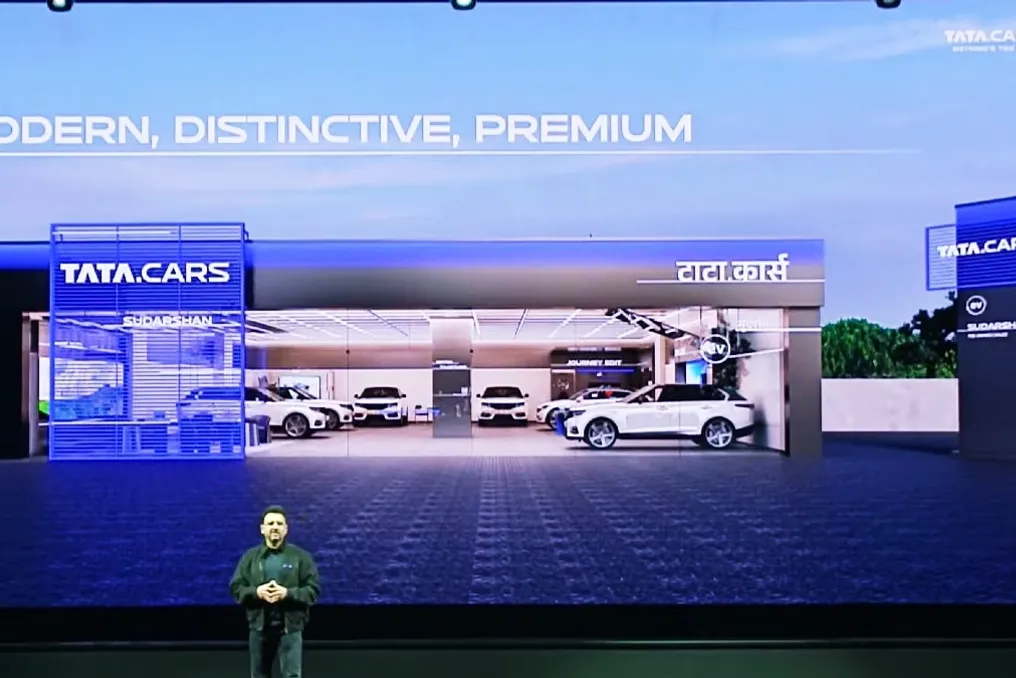
Tata Motors Passenger Vehicles (TMPV) introduced Tata.cars on Thursday as its new customer-centric identity. This gives the passenger vehicle business a distinct brand expression during a period that Managing Director and CEO Shailesh Chandra called the company's 'next chapter.'
The new identity will be gradually implemented across all dealerships and showrooms, digital touchpoints, as well as in after-sales service, servicing, and marketing communications. Nevertheless, the legal and registered name of the company will remain Tata Motors Passenger Vehicles Limited and will be used for official contracts, manufacturing sites, and legal documents.
This move followed the spin-off (demerger) of the former Tata Motors into two independent divisions: passenger and commercial vehicles. This allowed the passenger car division to gain a clearer consumer identity. The demerger took effect on October 1, 2025. The commercial division was transferred to the former TML Commercial Vehicles Ltd, which subsequently became Tata Motors Ltd, while the passenger vehicle business remained with the company named Tata Motors Passenger Vehicles Ltd.
The commercial vehicle business already operates under its own identity and brand promise, 'Better Always,' which Tata Motors considers a guiding principle for its independent CV business following the split.
The Core Promise of Tata.cars
For the passenger vehicle business, the core promise will be the slogan 'Nothing’s too far.' During the presentation of this identity, Chandra noted: 'The name Tata carries our heritage, our values, and the trust earned over generations, while adding ‘.cars’ gives our passenger vehicle business a distinctive, modern, and forward-looking expression.' He added that it is 'a brand system designed for growth in products, technologies, experience, and models.'
The introduction of Tata.cars does not mean the disappearance of Tata.ev, a separate identity that Tata created for its electric passenger cars. Tata.ev will continue to be used for the company's electric vehicles and its specialized EV dealerships, while Tata.cars will become the broader customer identity for the entire passenger vehicle business.
Thus, this change forms a clearer brand architecture for Tata's automotive enterprises at the time of the structural separation of passenger and commercial vehicles within the group. Chandra emphasized that the new identity is more than just a name change; he asserted that the company needs to change how it presents itself to the new generation of car buyers in India.
He stated that since India is entering a new era and striving for more, the company must consider how it will interact with a fundamentally new generation of Indians, describing this consumer as expressive and ambitious, 'ready to go further, expect more, and define their own path.'
Chandra added that 'brands are defined not just by what they offer. They are defined by what they mean, how they make people feel, and whether they reflect who they are.'
Achieving Seven Million Customers
The identity change comes as Tata Motors' passenger vehicle business has surpassed seven million customers. Chandra called this achievement a starting point for the company's next phase. He explained: 'Seven million is not just another milestone. It is a starting point that launches us into our next chapter.'
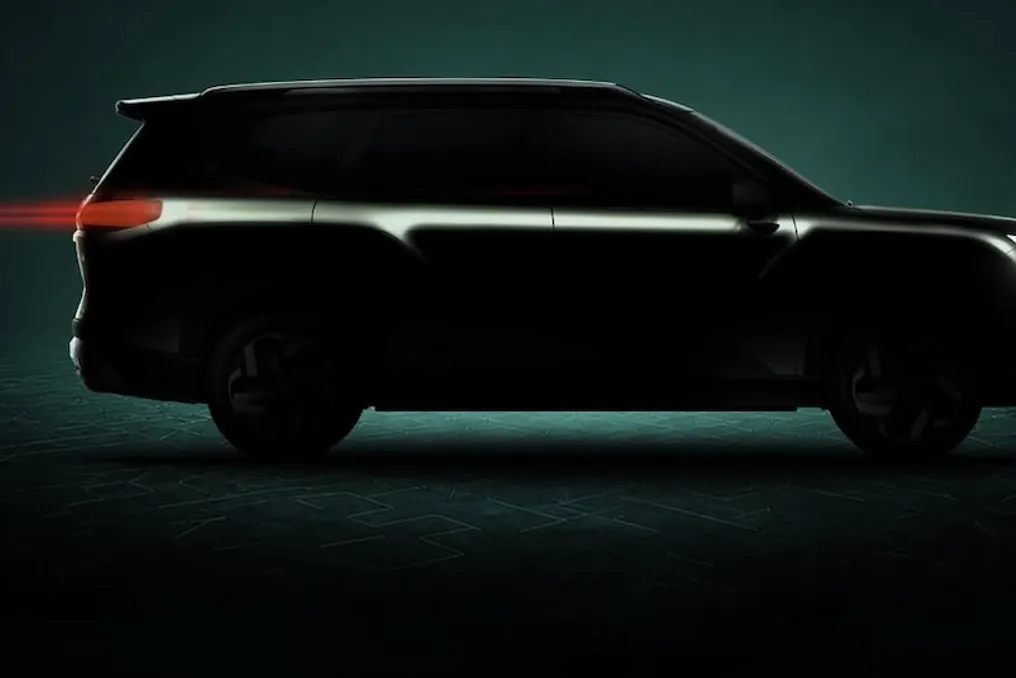
The company plans to use the next phase to attract more customers, strengthen its position in the electric vehicle segment, and improve the buying, servicing, and ownership experience of its vehicles. Chandra noted: 'For us, growth has never been defined only by numbers. It is about creating products that anticipate changing aspirations. It is about advancing design, technology, and software so that mobility becomes more meaningful.'
He also added that it is necessary to 'rethink the retail, service, and ownership experience so that every interaction reflects the same care and thoughtfulness as the vehicle itself.'
The branding shift is also linked to a larger corporate restructuring within Tata Motors. The group had previously announced the demerger to give its passenger and commercial vehicle divisions greater strategic focus and flexibility. After the restructuring was completed, the passenger company includes Indian PV operations and its interests in Jaguar Land Rover, while the CV business operates separately.
In a letter to shareholders for the fiscal year 26, Chairman of Tata Sons N. Chandrasekaran described this year as the company's first year as an 'exclusive personal mobility company' after the demerger, stating that Tata Motors Passenger Vehicles will focus on creating 'distinctive, reliable, and aspirational brands' that connect more meaningfully with customers. He also mentioned the introduction of a 'more focused brand proposition' in the passenger vehicle business.
The Tata.cars identity aligns with this strategy while retaining the Tata name at its core. Chandra reported that the company has evolved alongside the changing Indian automotive market over more than three decades—from Indica, Safari, and Sierra models to Nexon and Punch, and most recently, its electric vehicle portfolio.
He concluded: 'Our products have evolved. Our design has evolved. Our technologies, retail environments, digital platforms, and ownership experience continue to develop. And today, our customer identity is also evolving to reflect this transformation. What doesn't change is who we are—the heritage and values we uphold.'
The new value proposition aims to link mobility with the aspirations of Indian consumers, rather than simply positioning the company as a car manufacturer. Chandra explained: 'For them, a car is more than a vehicle. It is a tool. It bridges the distance between aspiration and possibility, between where people are and where they want to go.' He added: 'This is the promise underlying Tata.cars.' The company summarizes this proposition in its new phrase: 'When India sits in a Tata car, nothing’s too far.'