Artificial intelligence is capable of designing thousands of protein molecules in a single day, but there is currently no method to determine their actual functionality. Most existing laboratories are designed to test only about twenty designs, not thousands.
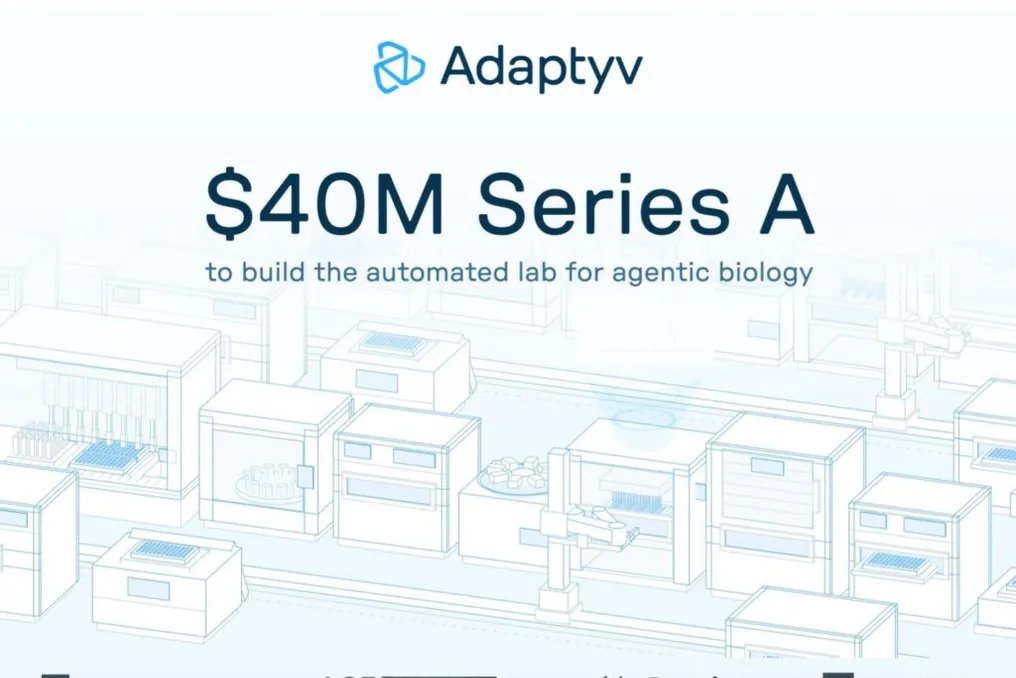
For this reason, the company Adaptyv has raised $40 million to build an automated laboratory that will allow AI to design, test, and learn from proteins on a large scale.
Tools like AlphaFold, Boltz, and Chai have simplified the process of protein design by generating thousands of candidates for a target drug in a matter of hours. However, the next stage—validating these candidates—is a problem. In traditional drug discovery, these designs are passed to scientists who order DNA, grow cells, produce protein, and conduct binding assays. This process takes weeks, is expensive, and was originally designed to test only a small number of molecules, whereas modern AI models can generate two thousand designs for one target, and wet labs were not designed for such a volume.
Adaptyv Bio, based in Lausanne, announced the raising of a $40 million Series A round. The round was led by Highland Europe, with participation from existing investors Ace Ventures, ByFounders, and Y Combinator, who increased their investments. Ace Ventures previously led an $8 million seed round at the end of 2024 and called Adaptyv a solution to the gap between AI-driven design and laboratory validation. Adaptyv has developed what it calls an 'AI-native automated laboratory.'
The process starts with a digital protein sequence and ends with obtaining real experimental data without the involvement of a scientist working with a pipette. The basis of this process is cell-free protein production. Instead of modifying living cells to synthesize proteins, Adaptyv uses only the biochemical mechanism necessary to convert DNA into protein. What makes the system 'agentic' is the API. Customers can upload designs through a web platform, but they can also connect directly via API. This allows AI agents to design a protein, send an order to the Adaptyv laboratory, receive results, and use this data to design the next cycle, all without human intervention. The API is already integrated with tools such as Boltz, Chai, Cradle, Tamarind, Latent Labs, and Benchling.
The new $40 million will be directed towards implementing three priorities. First, expanding the infrastructure of the automated laboratory to handle a higher workload. Second, doubling the team in Lausanne to serve more clients and speed up order fulfillment times. Third, opening a new office and laboratory in London in the fourth quarter of 2026 to be closer to European pharmaceutical companies and AI clients. Adaptyv is also investing in the community by launching Proteinbase—a competition platform that attracted 680 participants and 10,000 protein designs in a single competition. The goal is to gather volunteer solutions to complex protein problems and create more publicly available training data for the field. This funding is intended to close the loop between AI prediction and experimental verification.
AI systems are capable of proposing experiments, conducting them, studying the results, and suggesting next steps autonomously. Adaptyv is creating the infrastructural layer for this realization. Switzerland positions itself at the center of this shift. The country currently has over 55 venture-capital-backed TechBio startups, with the concentration of companies focused on AI-based protein engineering centered around Lausanne and Zurich. With this Series A round, Adaptyv expects to become the standard laboratory backend for this ecosystem.