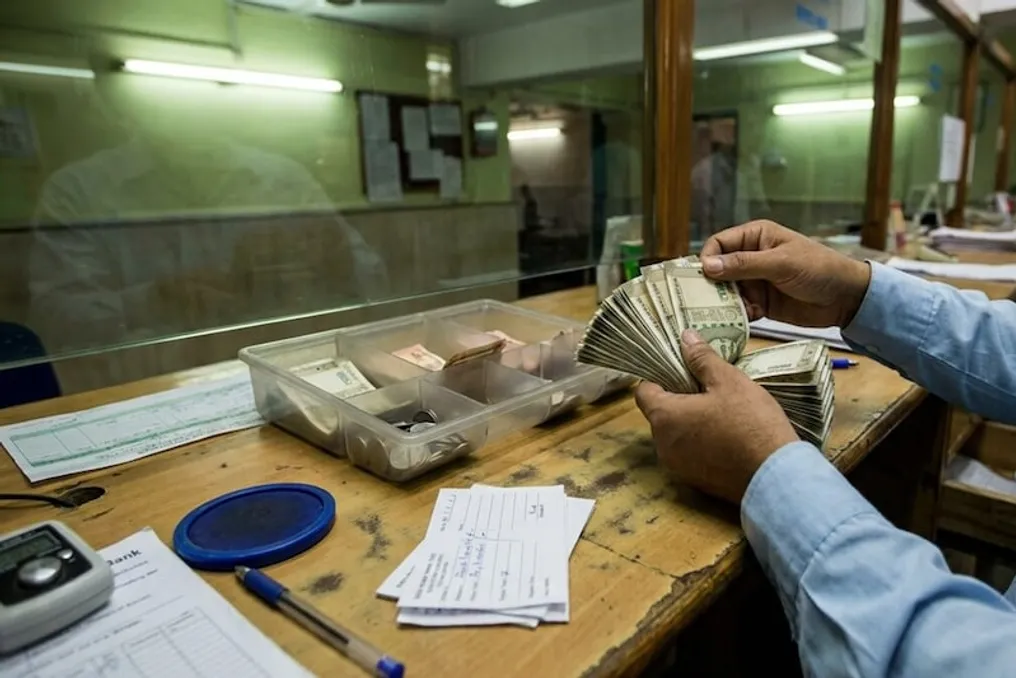
Indian banks have demonstrated impressive results in recent years, and asset quality has significantly improved. According to data for the April-June quarter, there is a sharp decline in the level of Non-Performing Assets (NPA) among all public banks, both public and private, which now stands at less than 1 percent.
Data collected by Zerodha Capital shows that the net NPA of 30 commercial banks fell to 0.4% by June, compared to a peak of around 6% in 2018. Furthermore, lending rates have accelerated, showing double-digit growth.
India Ratings & Research has raised its forecast for the current fiscal year, ending in March 2026, increasing the expected credit growth to 15% from the previous 13%. However, deposit growth lagged behind credit growth. Nevertheless, thanks to a strong inflow of funds through FCNR(B) deposits after the Reserve Bank of India opened a special preferential window for foreign exchange reserves, a short-term acceleration of this indicator is expected.
India Ratings also adjusted its deposit growth forecast for 2026-27, raising it from 11.4% to 13.6%. However, analysts predict that banks may face two serious issues in the short term.
Karan Gupta, Head and Director of Financial Institutions at India Ratings, noted that a high level of both lending and deposits is expected to persist. He reported that in the last quarter, this ratio was around 85%, the highest recorded in many quarters.
The second issue relates to profit pressure. Gupta suggested that this pressure could arise from a low Net Interest Margin (NIM) and a slight increase in credit costs. India Ratings forecasts that in the 2027 fiscal year, the cost of borrowing will increase by 74 basis points compared to 65 basis points last year. For private banks, the cost of borrowing is expected to be 95 basis points higher than for public banks, which will increase it by 60 basis points.
Gupta added that the situation is similar for non-banking financial companies; moderate pressure on their profits is expected due to declining NIM and higher anticipated credit costs. Although large NBFCs have sufficient capital reserves, smaller organizations may face difficulties in attracting necessary capital.
Additionally, it was noted that many IPOs planned by mid-sized companies are being canceled due to capital market instability. According to India Ratings, banks are experiencing margin pressure, mainly due to narrowing spreads and increasing reliance on certificates of deposit and large deposits. Consequently, a normalization of overall credit growth is expected in the second half of the fiscal year.