Survey shows that almost half of Brazilians spend more than R$ 100 monthly on digital subscriptions
Read more
Tecnoblog
tecnoblog.net

Survey shows that almost half of Brazilians spend more than R$ 100 monthly on digital subscriptions

A survey conducted by Vindi in collaboration with Opinion Box revealed that almost half of Brazilian citizens spends more than R$ 100 per month on digital subscriptions.

The study's data indicates that 29% of respondents spend an amount between R$ 101 and R$ 200, while another group, comprising 17% of participants, commits monthly expenses between R$ 201 and R$ 500.

Among the types of services analyzed, streaming leads the ranking, being mentioned by 79% of respondents. There is a projection that these costs tend to grow, given that 51% of respondents foresee increasing their subscription spending in the next five years.

Other relevant services mentioned in the research include cloud storage and computing (cited by 43%), artificial intelligence tools (37%), and food services (42%). Pet-related subscriptions were pointed out by 23% of the responses.

A central conclusion of the study lies in consumer expectation for increases in the values charged for subscriptions. Approximately 22% of respondents already anticipate paying higher amounts within a 12-month period. In contrast, 62% declared the intention to maintain the current spending level.

When analyzing costs per individual service, it was observed that subscriptions vary around R$ 20, R$ 30, or R$ 40 monthly, depending on the offer. Examples cited are the Netflix streaming, which costs R$ 20.90, and paid ChatGPT plans, starting at R$ 39.99.

However, when considering the accumulated total of subscriptions, the monthly cost becomes higher: only 19% of Brazilians pay less than R$ 50 per month in subscriptions.

Most respondents spend at least double this minimum value: 29% spend between R$ 101 and R$ 200, and 17% spend between R$ 201 and R$ 500. Despite these values, 47% managed to keep their spending over the last twelve months. On the other hand, 35% increased their expenses, while only 18% managed to reduce them.

The survey also investigated the payment methods used to contract the various services, highlighting credit card as the dominant method, used by 65% of users. Pix showed lower penetration, being used by only 16%, with a modest growth of 3% compared to 2025. Automatic debit was chosen by 9% of respondents.

Monisi Costa, head of payments at Vindi, commented that traditional Pix imposes an additional step, which tends to distance some consumers.

In addition to entertainment services, the research highlights the growing demand for subscriptions in other areas. Courses and music platforms represent 33% and 55% of expenses, respectively. Water and cell phone bills are included in digital subscriptions by 62% and 64% of people. Physical activity platforms, such as Wellhub and TotalPass, consume the monthly expenses of 44% of Brazilians.

This study was conducted online, covering 1,040 people from all regions of Brazil, during June and July 2026.

Similar stories

Amazon raises prices of Kindle, Echo, and Fire TV devices in Brazil due to supply chain crisis
Read more
tecnoblog.net

Amazon raises prices of Kindle, Echo, and Fire TV devices in Brazil due to supply chain crisis

Amazon has implemented a price increase of up to 55% on its main devices sold in Brazil, covering the Kindle, Echo, and Fire TV lines. The company attributed this change to rising costs in the global memory and storage component supply chain.

In an official statement directed to Tecnoblog this Monday, August 24th, Amazon justified the need to recalibrate its price list in the national territory. The company stated that the consumer electronics industry is facing considerable increases in expenses for memory and storage components. Although Amazon tried to absorb these increases for as long as possible, it had to adjust the values of its products, reiterating its commitment to offering good products at accessible prices.

An analysis of the new values, as reported by TecMundo, showed that 11 items in the brand's catalog were affected, with entry-level and the newest models being the most impacted. Some high-end devices, such as the Kindle Scribe and Echo Studio, managed to maintain their initial prices.

A clear pattern is observed in the variation: the simpler the device, the greater the percentage impact on the price. For example, the basic Kindle and the Echo Spot (2024 model) saw increases exceeding 50%, while the Kindle Colorsoft Signature Edition registered a smaller rise of only 6.06%.

This difference is due to the cost composition of each device. In entry-level electronics, RAM and storage chips constitute the largest portion of the total manufacturing cost. With the increasing cost of these components, the profit margin, which is already naturally reduced in these models, makes it difficult for the manufacturer to absorb the loss.

Conversely, in premium devices, the production cost is distributed across various other elements, such as high-definition screens and finishing materials. This allows the company to make adjustments to the final price with smaller pass-throughs.

The fundamental reason for the cost increase lies in the semiconductor industry's redirection to meet the demands of artificial intelligence companies. Key suppliers in the sector, including Samsung, SK Hynix, and Micron, concentrated their efforts on producing High Bandwidth Memory (HBM), which is crucial for AI data centers and offers higher profitability.

This migration resulted in a sharp decrease in the availability of conventional memories, those used in smartphones, computers, and smart home devices. Forecasts indicate that this situation is not temporary, as manufacturers have already negotiated almost all the memory stock projected for 2027. It is expected that the supply shortage and high prices will persist, at least until 2028, with some estimates extending the effects of this crisis until the end of the decade.

Government increases Move Brasil limit to R$ 200 thousand due to low credit disbursement
Read more
autopapo.com.br

Government increases Move Brasil limit to R$ 200 thousand due to low credit disbursement

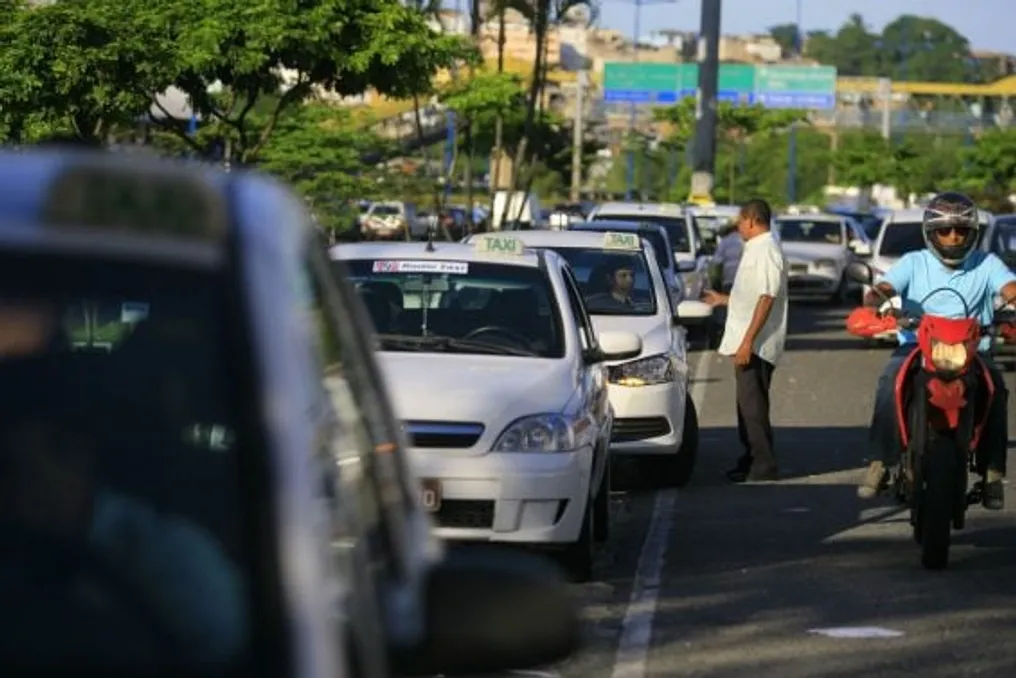
Due to only 11% of the credit being disbursed, the federal government decided to raise the maximum ceiling for vehicles that can be financed through Move Brasil, increasing it from R$ 150 thousand to R$ 200 thousand. This program offers subsidized credit intended for taxi drivers and ride-share drivers. The modification was formalized this Wednesday, the 19th, through an extra edition of the Official Gazette of the Union, and also incorporated new types of hybrid vehicles into the eligible models.

This change comes after the program has shown performance significantly below expectations. Of the R$ 30 billion allocated, BNDES had made available only R$ 3.44 billion by that week, which corresponds to 11.3% of the total amount, according to data provided by Folha de S.Paulo. This resource reached 33.4 thousand drivers, with approximately 27 thousand working in ride-sharing apps and 6 thousand as taxi drivers. It is noteworthy that only 5% of the beneficiaries are women, a group entitled to lower interest rates.

There is a large discrepancy between the initial demand and actual contracting: over 600 thousand professionals registered on the platform by early June, but just over 5% of this group finalized a contract.

The government points to the caution of banking institutions as one of the main obstacles. Finance Minister Dario Durigan mentioned that although Banco do Brasil and Caixa are supporting the operations, there is a 'lower appetite from private banks,' which show greater rigor in assessing drivers' risk.

The program is backed by the Guarantee Fund for Investments (FGI), which guarantees up to 80% of each financing, limited to 30% of the bank's portfolio in that line of credit. It is worth noting that this fund only began operating two weeks after the launch, on June 19th. Furthermore, Uallace Moreira Lima, Secretary of Industrial Development at MDIC, admitted communication failures with workers, stating that 'we failed to dialogue better with the worker' about the distinction between being registered and having credit approved.

With the new established limit, the government projects that Move Brasil will manage to reach 88% of the Brazilian vehicle market, compared to the 63% foreseen under the previous rule, based on 2025 registration records from Fenabrave. The reference value used for this count is that of the invoice.

To participate, taxi drivers must have active licenses and registration and a regular tax status, including cooperative members. Ride-share drivers need to have an active registration for at least 12 months and prove at least 100 rides in the same period and on the same platform, with the summation of rides from different apps being prohibited.

The rates were defined by the National Monetary Council at up to 0.99% per month for men and 0.91% for women, representing about 12.6% and 11.5% annually. The maximum term extends to 72 months, with a possibility of up to six months of grace period. The program does not require a minimum down payment, which is at the bank's discretion, and although not a formal requirement, having a clean name is important, as credit restrictions can result in refusal.

The registration process is carried out through the gov.br portal, with a response within five business days. After approval at this stage, the driver must go to the dealership or the bank where they have an account. Contracts are valid until September 15th, the deadline of the provisional measure supporting the program, and may be closed earlier if resources run out.

Venezuela and government agree on return of gold worth about 4 billion euros from bank in England
Read more
uza.uz

Venezuela and government agree on return of gold worth about 4 billion euros from bank in England

The Venezuelan government and part of the opposition have reached an agreement on the return of 31 tons of gold stored in an English bank. The value of this gold is estimated at approximately 4 billion euros.

These funds are planned to be used for the country's recovery after the devastating earthquake that occurred in June.

Popular