For millennia, mountains have symbolized unwavering resilience, but planetary warming is undermining this stability, causing landslides, floods, and avalanches.
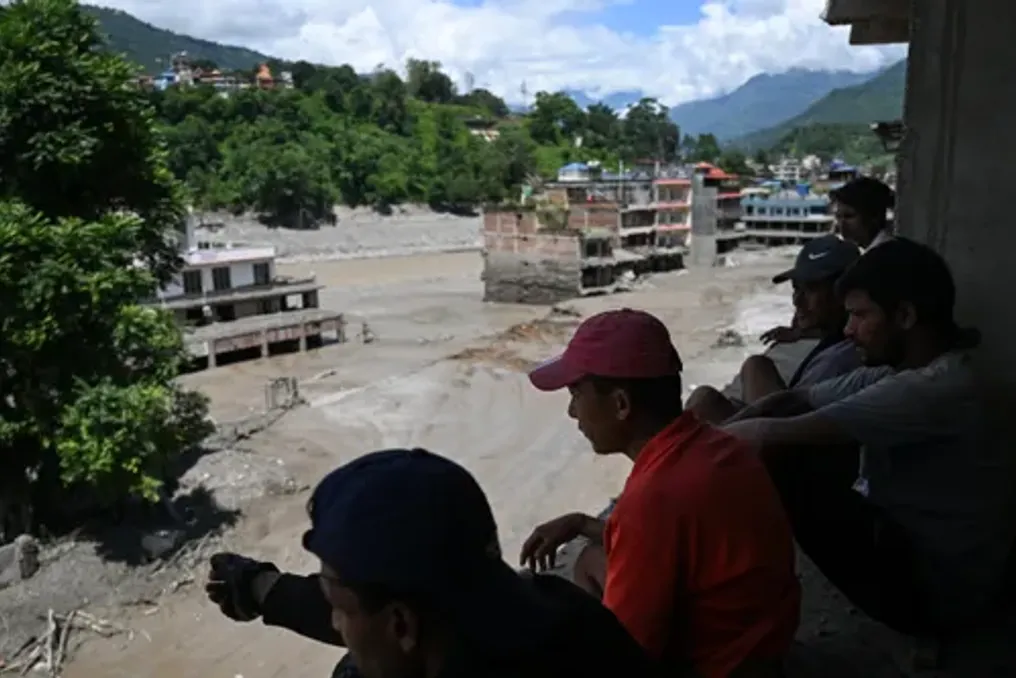
Recent catastrophic events, such as flash floods on the border between Nepal and the Tibetan region of China, demonstrate the destructive power of these processes. Following the Himalayan floods, at least 157 deaths were confirmed, and hundreds remain missing after a wall of mud and rock swept through valleys, raising the Trishuli River by nine meters in half an hour.
Preliminary investigations indicate that the collapse of ice and rock triggered a wave of water, debris, and boulders downstream. Researchers need to act quickly, as the initial disaster may have left behind a new material blockage that could cause further flooding if it breaks.
One might try to attribute all of this to isolated weather events, but scientific methods of weather attribution allow for a high degree of certainty in linking individual heatwaves, cold snaps, and extreme precipitation to global warming. The same influence is observed in droughts and wildfires, albeit with less certainty. Nevertheless, landslides and associated floods can arise from such complex chains of failures in once-stable terrains, causing the signal of global warming to be lost in the noise.
This may be true for individual incidents, but the overall trend is exceptionally clear because the crucial component holding many high-altitude landscapes together is not granite, shale, or limestone, but ice.
Nearly a quarter of the Earth's surface is covered by ice sheets or lies in permafrost zones—high latitudes or altitudes where the ground remains frozen year after year, and ice acts as a binding agent for soil and rock. As temperatures rise, this frozen structure weakens, threatening sudden collapses, much like snow sliding off a ski chalet roof in spring.
This is happening to mountainous terrain on four continents. When permanent ice disappears, steep slopes can collapse under their own weight. Recurring freeze-thaw cycles intensify this process. Water penetrates deep into cracks, crystallizing and gradually splitting the rock, deepening with each seasonal cycle.
Glaciers themselves can act as supports, holding up cliffs. As atmospheric temperatures warm, they retreat up the valley, removing the supports that stabilized the landscape for millennia. When water falls as rain instead of snow, it is more likely to erode the surface and carve deep channels, further weakening the soil.
Evidence of accelerating instability is accumulating. According to records dating back to 1950, eight out of ten of the most severe years in terms of ice cover loss occurred after 2016. In the Eastern Himalayas above 3000 meters, landslides now move five times more material than in the 1980s. The frequency of glacial lake outburst floods, especially devastating disasters when the dam holding glacial meltwater suddenly breaches, has increased almost threefold between the 1990s and 2010s.
Despite the horrific footage, this week's tragedy may not be the worst. In 2013, over 6,000 people died in Kedarnath, an Indian pilgrimage town, when monsoon rains, snowmelt, and glacial lake overflow led to catastrophic floods. Another 200 people were reported dead or missing in 2021 when water and rocks passed through two hydroelectric plant structures in Chamoli, southeast of the town.
Summer in the Himalayas is rapidly turning into a time when such events are a recurring feature rather than an anomaly. The damage is not limited to Asia. Glacial lake outburst floods have become an annual threat to the capital of Alaska, Juneau, the last of which occurred just a few weeks ago. In the exclusive Swiss ski resort of Zermatt, a new $630 million hydroelectric plant was designed partly to protect the town as the Gorner Glacier melts. Globally, about 15 million people live in regions at risk of glacial lake flooding.
There are no signs that the world is working to reduce emissions with the urgency required to prevent this catastrophe. In Europe, where summer heatwaves have caused over 30,000 excess deaths, politicians view climate as a toxic problem while companies abandon net-zero emission targets. India, the most populous country at risk of mountain flooding, is likely to emit more into the atmosphere than any other country in the coming decade. The US is dismantling policies aimed at reducing its own carbon footprint.
Unlike the destruction of high-altitude slopes, these political actions are choices, not forces of nature. Mountains may move beneath our feet, but that is no excuse for those in power to remain inactive.