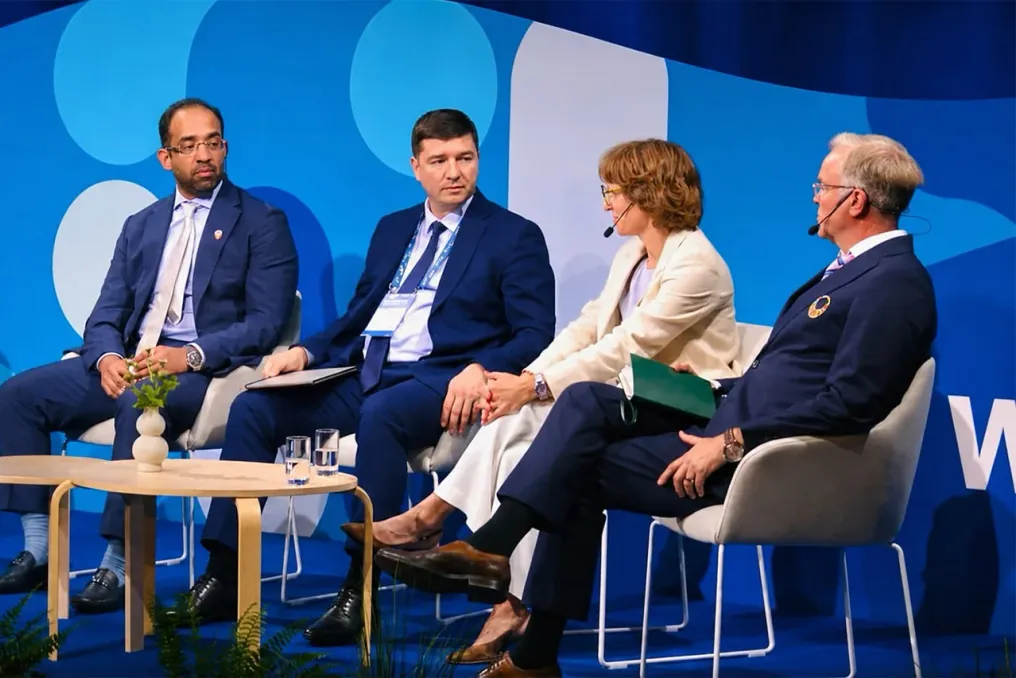
At the World Water Week 2026 in Stockholm, Uzbekistan demonstrated its experience in reducing water scarcity, expanding the use of water-saving technologies, and developing regional cooperation in water resources, according to the event materials.
Timur Butunbaev, Deputy Head of the Administration of the President of Uzbekistan, spoke at a session titled 'New Water Agenda: Entering the Era of Global Water Bankruptcy.' He noted that despite Uzbekistan being located in a region with a high level of water deficit, measures adopted in recent years have helped reverse the negative trend.
In 2026, Uzbekistan, China, and Sao Tome and Principe were recognized as countries that have made significant progress in achieving the sixth United Nations Sustainable Development Goal. In Uzbekistan, the water stress indicator has decreased from 169% in 2017 to 122% in 2022, and the country aims to reduce it to 95% by 2030.
Simultaneously, the use of water-saving technologies in agriculture has expanded. If these technologies were applied to less than 1% of irrigated lands in 2017, they are now used over an area of 2.6 million hectares, which accounts for more than 60% of irrigated territories.
According to data presented at the international event, the measures implemented in Uzbekistan have led to an annual water saving of 11 billion cubic meters. It is planned that this figure will increase to 15 billion cubic meters by 2030.
Butunbaev also participated in the World Water Week session 'UN Water Conference 2026: Space for Creating the Future.' He highlighted the reforms in the water sector being carried out in Uzbekistan under the leadership of President Shavkat Mirziyoyev.
The discussions emphasized that water resource management is a strategic priority for Uzbekistan. This approach includes integrated management, sustainable financing, implementation of modern technologies, digitalization, and training of qualified specialists.
Regional cooperation was also one of the topics of World Water Week. Uzbekistan presented practical steps to strengthen interaction between countries on water resources issues and promote water diplomacy.