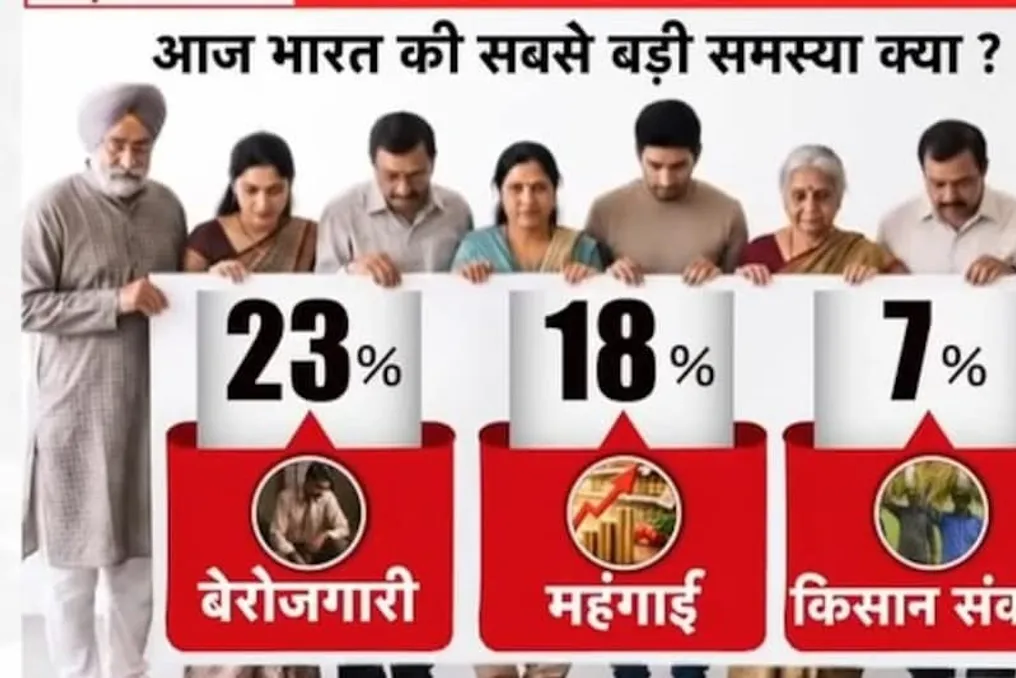
Over eighty million young people in India are facing serious difficulties as they lack employment, education, or professional training. According to a report by Niti Aayog, approximately 87 million Indians aged 15 to 29 fall into this category.
These figures are based on the results of the 78th round of the National Sample Survey conducted in 2021 and were presented in the Niti Aayog report titled 'Reimagining Skilling for Viksit Bharat@2047'. The document calls for the implementation of subsidized training programs that would help youth transition to self-employment and acquire skills relevant to local demand and growing sectors.
The report classified India's workforce and students into five main groups: students, higher education students, formally and informally employed workers, youth not engaged in education, employment, or training (NEET), and women. It was noted that young people outside the education, employment, and training system face particular financial hurdles as they receive no income despite having incurred previous educational expenses.
The report emphasizes that 'NEET youth are constrained by lack of income and costs of prior education. Students often cannot add paid education to existing financial obligations.'
Cost remains a barrier
The report indicates that for students from low-income families, an additional paid course of study on top of college expenses and, in many cases, private tutoring can be too expensive. This limits young people's ability to invest in supplementary education while pursuing a traditional degree.
Furthermore, it is observed that some graduates are forced to seek formal employment solely to generate income and support their families, even if the offered job is low-paying. Others struggle to transition from studies to work and ultimately become NEET.
Aayog stated: 'As a result, many students decide to get formal employment/income after finishing their studies to support their families, and often accept any job that provides some stable income, even if it is low-paying; others, however, struggle with the transition to work and become NEET.'
Skills mismatch
The gap between having a degree and finding suitable employment remains significant: only 8.25 percent of graduates are employed in positions matching their qualifications. The report also states that limited access to practical training and industry-relevant preparation continues to affect employability even among formally educated youth.
Aayog called for NEET youth and women to have access to affordable or subsidized learning options, supported by targeted financial assistance where financial constraints are most acute. The importance of providing people with opportunities to learn while earning money was also highlighted.
The Niti Aayog report specifies that 'for the workforce and NEET youth, the need shifts towards mid-career reskilling, self-employment pathways, and learning options aligned with local demand and growing sectors.'
The report concludes by asserting that India's ambitions to achieve the status of Viksit Bharat 2047 depend on the ability of its citizens to continue learning, earning, and developing, making upskilling a key part of these efforts. Niti Aayog added that over 76.7 million people were trained between 2014 and 2015.