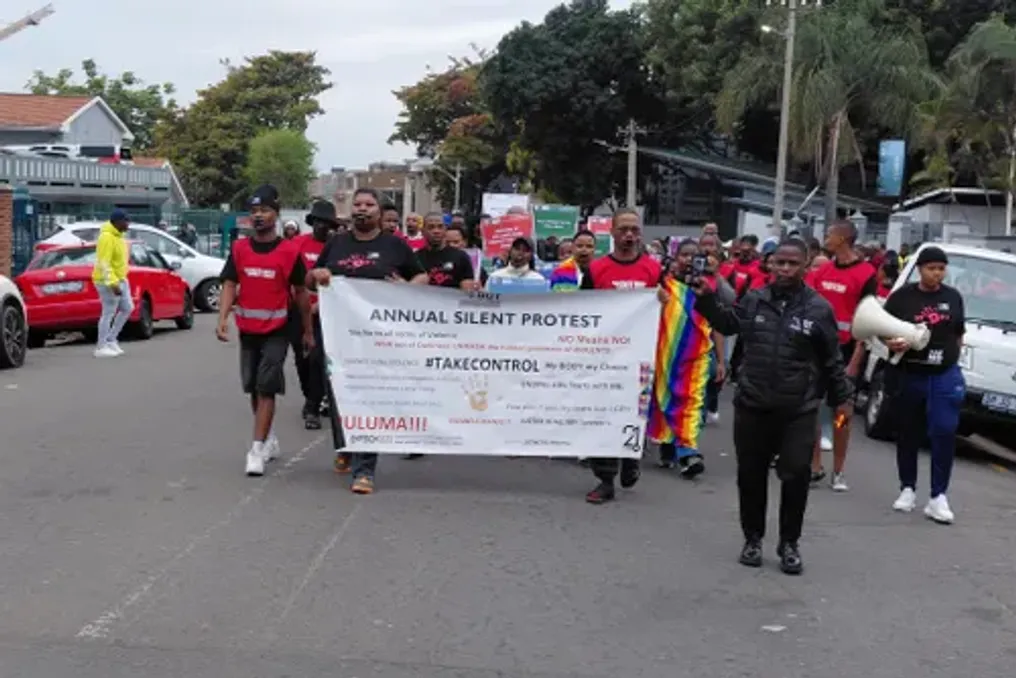
Students and staff of the Durban University of Technology (DUT) participated in a silent procession through the streets of Durban to honor the memory of victims of gender-based violence and femicide, while also calling for an end to violence, fear, and silence.
On Wednesday, the streets of Durban became the site of a silent march attended by DUT students and staff. The procession was organized in memory of victims of gender-based violence and femicide (GBVF).
The university community took part in the 12th annual silent protest march of DUT. Participants from the campuses of Durban and Midlands walked along Steve Biko Street under the slogan 'Silence speaks: together against GBVF.' For participants, silence represented not an absence of words, but a powerful statement about the pain, fear, and losses experienced by victims and survivors of gender-based violence.
The march was monitored by law enforcement agencies and was part of DUT's ongoing efforts to raise awareness about GBVF and encourage students, staff, and the wider public to challenge violence.
During the event, held at the Fred Crux sports centre on the Steve Biko campus, Sitembile Mjaddu, the temporary director of student services for the Midlands campuses, stated that the university stands against violence. She emphasized that DUT has been involved in the annual silent protest against gender-based violence, femicide, and any forms of abuse that strip people of their dignity and lives for many years. Mjaddu stated: 'We are not protesting as spectators. We are protesting as a university community that says: Enough. Enough!'
She also noted that the protest is based on DUT's core values, which include a human-centred approach, integrity, justice, diversity acceptance, and a commitment to excellence. These values imply that every student and staff member deserves safety, respect, and recognition; that the university commits to believing survivors and not ignoring cases of abuse; and that a truly excellent university is measured not only by research outcomes but also by how safe its students feel.
The keynote speaker, Dean of Student Affairs Dr. Clement Moreku, urged attendees to pay tribute in silence to those who died as a result of GBV. He stressed that gender-based violence cannot be viewed as an issue affecting only women, but rather as a societal failure requiring responsibility from everyone. Moreku noted that mere awareness is insufficient; what is needed are functioning systems and leaders who act, as well as communities that refuse to normalize violence.
Dr. Moreku added that this year's theme calls for a pause, to listen and reflect, because for GBV victims, silence can mean fear, shame, stigma, and uncertainty about whom to trust.
DUT's Director of Protection Services, Charles Sechlogo, also strongly urged students to take responsibility for their own safety and the safety of others. He advised students not to remain passive or rely on the intervention of others, emphasizing the importance of vigilance and speaking up when encountering GBV.
Help is available for students who may experience violence. DUT psychologist Candice McKay from the Student Counselling and Health Department provided a 24-hour hotline for GBV: 0800 150 150, and advised seeking assistance if needed. She reported that this department prioritizes GBV-related cases and is ready to support students outside of regular campus hours.
As the march entered its 12th year, DUT affirmed that its message remains unchanged: overcoming the silence surrounding GBVF requires more than just awareness. It requires that the voices of survivors be heard, that perpetrators be held accountable, and that communities refuse to accept violence as the norm. Every step taken by students and staff marching silently through Durban served as a reminder of lost lives, of survivors carrying their pain, and of the responsibility to create spaces where everyone can live, learn, and work with dignity and without fear.