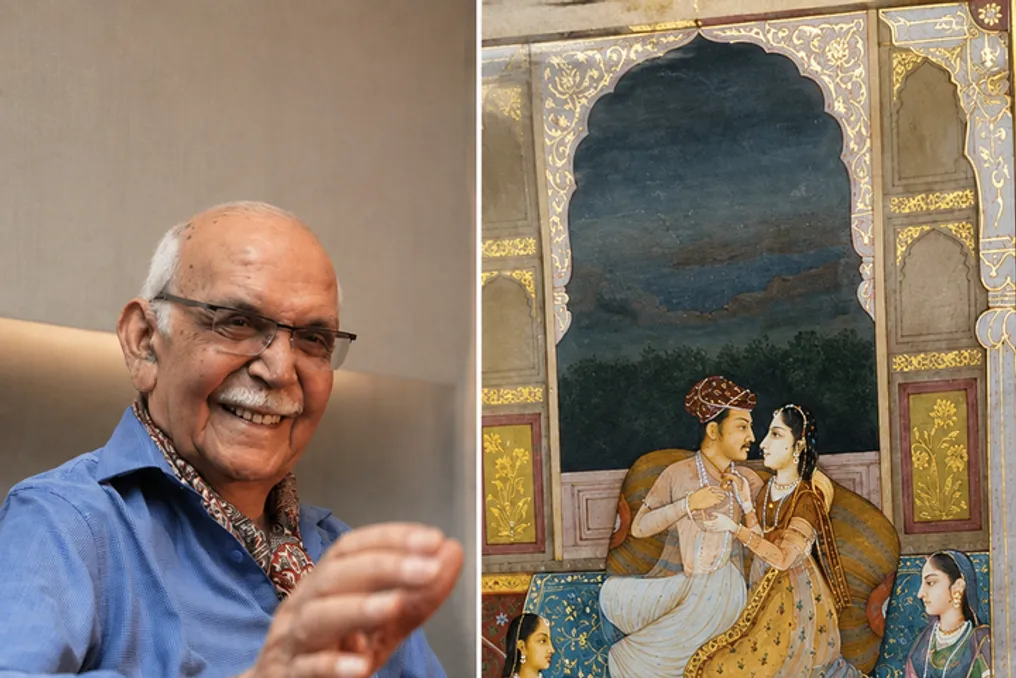
Miniature painting of India made many kingdoms famous, but many artists behind these works were almost forgotten. Former IAS officer B. N. Goswami dedicated his life to searching for these masters and restoring their names.
Most paintings were identified by the courts they originated from: Kangra, Guler, Basoli, Chamba. However, Goswami noticed what others missed: the painters and their families moved between these courts.
In 1968, his research on Pahari painting revolutionized the history of Indian art. He showed how families formed artistic styles in different kingdoms. As a result, anonymous brushstrokes could be traced back to generations of artists.
The question was how to identify an artist who lived 300 years ago? Goswami traveled through Kangra, studied takris, analyzed inscriptions, and even examined the reverse side of paintings in search of clues.
Then one painting provided an exceptional lead: it depicted Nainukh carrying the ashes of his patron to Haridwar. Goswami followed him on paper, centuries later.
Inherited temple registers in Haridwar contained records of pilgrims over many generations. Among these family documents, a clue was found that art historians had never considered. A register entry, written and signed by Manaku himself, revealed information about his father, grandfather, hometown, and profession.
Thanks to this, Goswami was able to link Seu, Manaku, Nainukh, and subsequent generations. This changed everything: artists began to appear as members of families with names, genealogies, and recognizable styles that moved from one court to another.
The IAS officer effectively became a detective and restored the artists' anonymity. Goswami, who passed away in 2023 at the age of 90, left behind more than 25 books and the Padma Bhushan award. Perhaps his greatest legacy was teaching the understanding of a painted canvas.