Study shows unemployment is the country's main problem, surpassing inflation
Read more
Aaj Tak
www.aajtak.in

Study shows unemployment is the country's main problem, surpassing inflation

The 'Mood of the Nation' (MOTN) study, conducted by India Today and C-Voter, presents an extensive analysis of the changing political and social climate in the country. This poll is the largest and most comprehensive to date, as it was carried out following recent youth (Gen-Z) protests to gauge public opinion among young people and the general public.

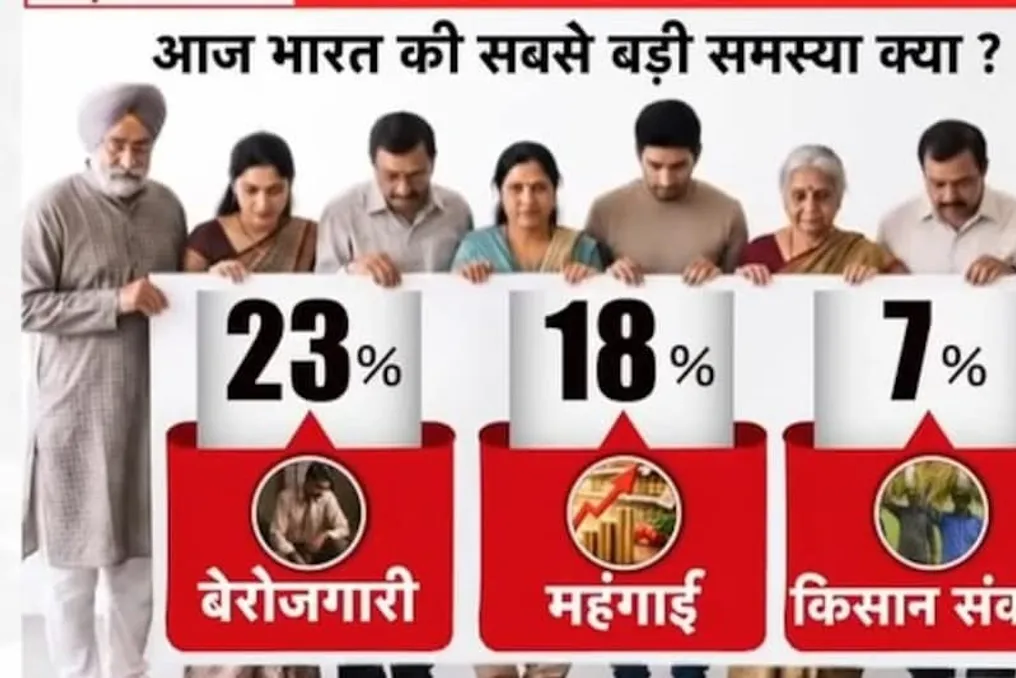
As part of this survey, several important questions were asked regarding the current situation and upcoming elections. The results indicated that unemployment was recognized as the most serious problem in the country. According to the survey data, 23% of respondents named unemployment as the primary issue currently.

Inflation ranked second among the main problems, garnering 18% of the votes. Furthermore, 7% of participants pointed to the farmers' crisis as the most significant problem in the country. These statistics suggest that economic issues related to employment and daily expenses remain a focus for the population.

Similar stories

MOTN survey showed assessment of Narendra Modi's work as Prime Minister
Read more
www.aajtak.in

MOTN survey showed assessment of Narendra Modi's work as Prime Minister

As part of the 'Mood of the Nation' survey by India Today and C-Voter, Indian citizens were asked questions regarding political and social issues. One of the questions concerned the quality of Narendra Modi's work as Prime Minister.

According to the results of this survey, 51 percent of respondents rated the Prime Minister's work as good, while 17 percent gave an average rating.

According to the National Planning Council report, only 8.25% of graduates find jobs in their field
Read more
www.aajtak.in

According to the National Planning Council report, only 8.25% of graduates find jobs in their field

Despite the fact that more and more young people are graduating from colleges every year, many of them have no idea about the labor market. They often assume that a good degree will automatically secure them a high-paying job, but reality is different.

According to a new report published by the National Planning Commission (NITI Aayog) in August, although the number of students pursuing higher education in India is growing, the country lags in converting these degrees into jobs where students can apply their knowledge and skills. According to NITI Aayog, the problem is not only unemployment but also a significant mismatch between the education system, skills, and the labor market.

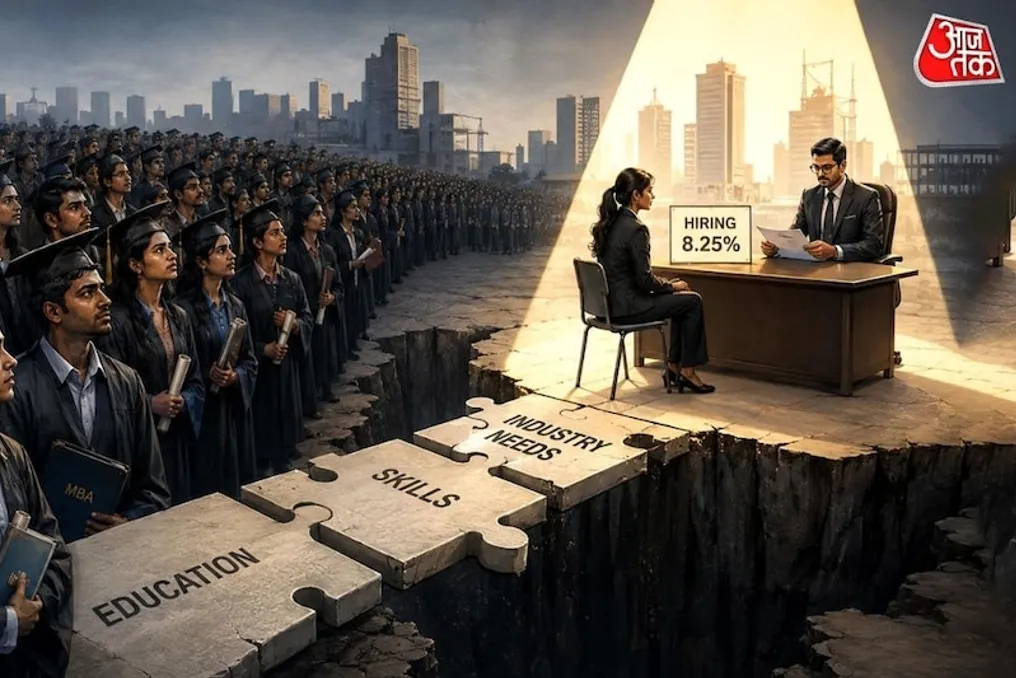
The report, titled 'Vision for Skill Development for Developed India by 2047,' indicates that only 8.25% of graduates work in positions corresponding to their qualifications. This figure is based on economic review data for 2024–25.

The report clearly points out that millions of young people, after spending many years studying and earning a degree, cannot find a clear career path related to their education. Although the number of students pursuing higher education has increased, the demand for them in the labor market does not match this growth entirely. Currently, about 34 million students are enrolled in undergraduate programs in India.

According to the report, curricula in many institutions are outdated and do not meet the changing needs of industry. This leads to unequal chances of employment after obtaining any degree, diploma, or certificate. The situation is exacerbated by the fact that a large number of students opt for general courses of study.

Of the 34 million undergraduate students in the country, about 11.3 million study literature (BA). Furthermore, over 20 million students enroll in BA, BSc, and B.Com programs. The report notes that the connection of these general programs to employment is weak. Many students choose such degrees to qualify for civil service examinations.

Finance Minister Nirmala Sitharaman noted that students studying economics or political science often pursue further education by getting a second degree. However, if they do not enter scientific or academic circles after postgraduate studies, there is no clear professional path for them. This does not mean that a BA, B.Com, or BSc degree is worthless. The problem is that it is often unclear from the degree what practical skills the student possesses, and employers also cannot easily understand what this person can do at work.

NITI Aayog emphasized that general degrees like BA, B.Com, and BSc are difficult to translate into direct employment. Even entry-level positions may require additional work skills, such as Tally or office applications.

The problems described in the NITI Aayog report are visible not only in employment statistics but also in the statements of the students themselves. Students pointed out gaps in their education. According to the report, 34% of students consider the lack of skills a serious problem during their studies, while 18% consider insufficient interview preparation to be the main problem.

The report also mentions a shortage of digital and communication skills among the working population. Most importantly, 80% of students cited the lack of practical experience and industry connections as the main weakness of their education. This indicates a serious deficiency in the education system. Until now, success was mainly measured by the number of enrolled students, passing exams, and receiving a degree, while less attention was paid to whether students found jobs after graduation or possessed the necessary job skills.

The significant gap between classroom subjects and job requirements explains the high competition for government positions in India. According to NITI Aayog, from November 2024 to July 2025, 1.86 million applications were received for only 55,000 vacancies. This demonstrates a huge gap between the demand for public service and the available number of positions.

This figure reflects a large disparity between the expectations generated by the Indian education system and the limited number of stable and secure jobs in the public sector. Finance Minister Nirmala Sitharaman stated that solving this problem requires not only increasing the number of government positions. The education system must prepare youth for multiple paths: job searching, starting their own business, self-employment, and developing family businesses.

According to Sitharaman, in developed countries, young people have the opportunity to pursue higher education in subjects that interest them or attend technical institutions where they receive specialized training in specific skills. They are also taught how to apply these skills.

Young South Africans Face High Unemployment in Labor Market
Read more
iol.co.za

Young South Africans Face High Unemployment in Labor Market

For young residents of South Africa, job searching is complicated by a high unemployment rate, which recently stood at 47.4%. This figure is not just a statistical indicator but a daily reality associated with rejected applications, financial pressure, and uncertainty about the future.

Youth Unemployment Crisis in South Africa

Christopher Naidu, a 25-year-old resident of Yellowwood Park, noted that the high proportion of unemployed youth was not a surprise to him. He reported that he has been applying for various vacancies since January but has not succeeded. Naidu emphasized that the problem is relevant even for those with higher education, as employers today often require experience that graduates do not have. He is frustrated by the lack of feedback on applications, not even notification of rejection, which causes demotivation.

Naidu, who graduated from Stellenbosch University with a Bachelor of Journalism last year, has lost count of the number of applications submitted this year. Although he would like to work in media, he is now willing to accept any job, including retail, to start building his life. He believes that the lack of financial freedom limits his opportunities and negatively affects his mental health and self-confidence, especially after sending a CV without confirmation of receipt.

He stated that the government needs to expand opportunities to solve the youth unemployment problem. Naidu acknowledges the existence of programs such as internships and apprenticeships but believes they are insufficient and are often only available in specific regions, requiring broader coverage to ensure equal chances.

Brynn Jade Govinsamy, a 25-year-old resident of Chatsworth with qualifications in manufacturing technology, has been looking for suitable work for over two years. She is interested in the automotive manufacturing sector, specifically in positions such as press operator, stamping line operator, or production operator. Like others, she faces difficulties finding stable employment because some companies do not provide feedback, while others require previous experience even for entry-level vacancies.

Govinsamy has considered options for further education, apprenticeships, internships, and vocational training. She is confident in the endless possibilities of learning and is ready to continue self-education by acquiring new skills through any suitable programs. She believes that the government does not help unemployed youth enough, as many young people cannot access programs or find permanent work after them. Govinsamy insists on the need to create more sustainable jobs, especially for those without experience, and calls on the government to collaborate more closely with industrial enterprises to provide initial experience.

Unemployment, according to Govinsamy, makes it difficult to cover personal needs and support family, and it also negatively affects her motivation and self-confidence. Nevertheless, she tries not to let these difficulties define her personality, remaining optimistic and continuing to improve her skills.

Mesholen Runganathan Reddy, a 19-year-old resident of Avoki, pointed out that statistics hide the stories of young people striving to build a career and provide for themselves and their families. In his experience, there is a gap between the desire of youth to work and the available opportunities. Reddy, a first-year law student at the University of South Africa, has been looking for work for 18 months. He regularly sends about 10–15 applications per week for administrative assistant or data entry operator positions to gain practical experience. He faces the same problem: he often receives no response, and positions advertised as entry-level still require previous experience, creating a vicious cycle.

Reddy also noted that unemployment hinders achieving financial independence, creating pressure as he wants to help his family and cover his expenses. He sees unemployment not as the end of the road, but as a difficult stage that must be overcome to achieve a stable and successful career and complete his studies.

Popular