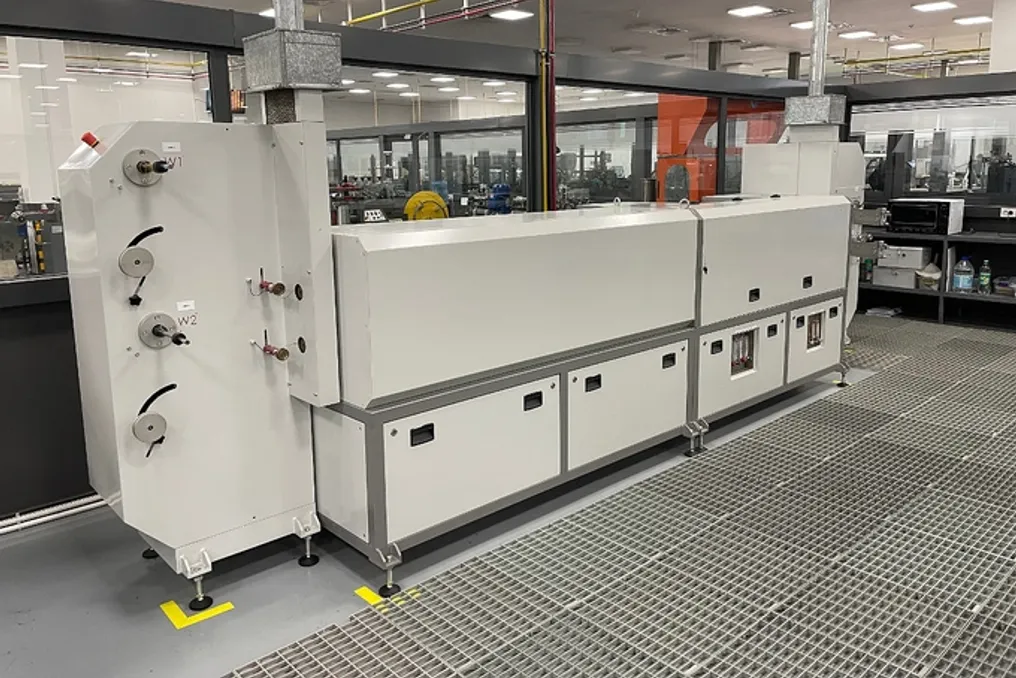
State stake in Fonon jewelry plant in Tashkent put up for sale for 316.7 billion soums
Read more
Gazeta.uz
gazeta.uz

State stake in Fonon jewelry plant in Tashkent put up for sale for 316.7 billion soums

The State Assets Management Agency has put 100% of the state stake in Gold Moon Tashkent, which owns the Fonon jewelry plant in Tashkent, up for open auction. The initial price for this asset is set at 316.67 billion soums, according to information provided by E-auksion.

The auction is scheduled for September 28th at 10:00 AM, with applications for participation open until 9:00 AM on the same day. The auction process will be conducted using a price increment method.

According to records from the Unified State Register of Enterprises and Organizations, Gold Moon Tashkent was officially registered in August 2019, and its main area of activity is the manufacturing of jewelry. The Fonon plant is located at Malaya Koltsevaya Doroga Street, 50, in the Chilkazar district of Tashkent, opposite the campus of the Uzbek State University of World Languages and near the Farhad Market.

E-auksion states that Gold Moon Tashkent possesses various buildings and structures on its balance sheet, but these real estate assets are subject to restrictions imposed by a commercial bank.

Buyers are offered the option to pay for the acquisition in installments. Since the asset's value exceeds 20 thousand basic calculation units, legislation allows repayment over no more than 36 months after signing the purchase agreement. If the initial down payment for purchasing the state asset in installments is less than 35%, interest will be charged on the remaining amount at a rate corresponding to the Central Bank's key rate. If at least 35% of the cost is paid in a lump sum, the acquired state asset can be used as collateral for a loan.

Furthermore, if the full cost is paid within one month of concluding the deal, the buyer receives a discount calculated based on the Central Bank's annual rate. This discount is not applied if the state asset was sold after the initial price was reduced.

According to data posted in the asset card on E-auksion, Gold Moon Tashkent employs 309 staff members. The company's charter capital amounts to 444.5 billion soums. The enterprise owns a land plot of 2.56 hectares and a complex of buildings and structures totaling 11.37 thousand square meters, and it is equipped with all necessary utilities.

Financial results show that in 2025, Gold Moon Tashkent's revenue was 413.8 billion soums, slightly less than the previous year's figure of 417.9 billion soums. The company ended the reporting period with a loss for the second consecutive year: net loss decreased from 12.3 billion soums in 2024 to 7.8 billion soums in 2025.

However, in the first half of 2026, the company generated income of 281.9 billion soums and achieved profitability for the first time in the period under review—33.4 billion soums. As of mid-2026, Gold Moon Tashkent's assets were valued at 443 billion soums, while liabilities amounted to 550.3 billion soums, resulting in negative net assets of minus 107.3 billion soums. This is an improvement compared to the negative net assets of 140.8 billion soums recorded at the end of 2025. Accounts receivable increased to 13.2 billion soums by mid-2026, up from 11.5 billion soums at the end of 2025.

Similar stories

Tashkent aims to attract $9 billion in investments by 2026
Read more
uzdaily.uz

Tashkent aims to attract $9 billion in investments by 2026

The Mayor of Tashkent, Shavkat Umurzakov, announced that by the end of 2026, the capital of Uzbekistan plans to attract $9 billion in investments and increase export volume to $4 billion. These statements were made during the opening ceremony of new urban projects together with President Shavkat Mirziyoyev.

In the first eight months of 2026, the capital has already secured $5.6 billion in investments. For comparison, Tashkent attracted $2.7 billion in 2024. Umurzakov explained the acceleration of targets due to high-tech projects and the development of high value-added production.

President Mirziyoyev emphasized the scale of the capital's investment strategy, noting that Tashkent should become a model of regional development for all of Uzbekistan.

Central Initiative in Expansion Strategy

A key element of the capital's expansion strategy is the multimodal logistics complex, which is being developed in partnership with DP World from Dubai. The management of the Emirati company invited President Mirziyoyev to the groundbreaking ceremony scheduled for October. This terminal is designed to handle up to 120 million tons of cargo and 150,000 containers.

Fourteen upcoming projects were presented during the ceremony, including four industrial enterprises and two tourist attractions. It is projected that after reaching full capacity in about three years, these facilities will produce goods worth $3 billion annually and contribute $1.5 billion to export volumes.

Progress was also presented on the special industrial zone, opened by the president in November 2024. Municipal authorities intend to launch another 22 projects worth $500 million in this zone by the end of 2026. The total project portfolio of the zone has reached $1.2 billion across 26 initiatives, ten of which are set to start before the end of the current year.

Details of the Logistics Hub Project

The DP World project involves the construction of a multimodal logistics hub worth over $288 million through a joint venture, DP World Tashkent. This enterprise is established between DP World (85%) and the municipal entity Tashkent Invest (15%). The complex covers 82 hectares in the Yangi Avlod Special Industrial Zone, which is managed by CAMCE from China.

The planned infrastructure includes a dry port connected to the railway, customs facilities under customs control, Class A warehouses, vehicle storage areas, and cargo handling terminals. The first phase of the logistics hub focuses on a railway terminal with an annual capacity of 150,000 TEU and a warehouse area of 63,000 square meters.

This hub is intended to strengthen trade ties between Central Asia, the Middle East, and Europe through direct integration into Uzbekistan's railway system, main road networks, and Tashkent International Airport.

Umurzakov also noted that the global management firm Boston Consulting Group (BCG) included Tashkent among the top three fastest-growing cities in the world, alongside Shenzhen and Riyadh. The reason cited for this recognition is the ongoing structural reforms and economic modernization.

Tashkent authorities confiscated a large batch of smuggled goods
Read more
uzdaily.uz

Tashkent authorities confiscated a large batch of smuggled goods

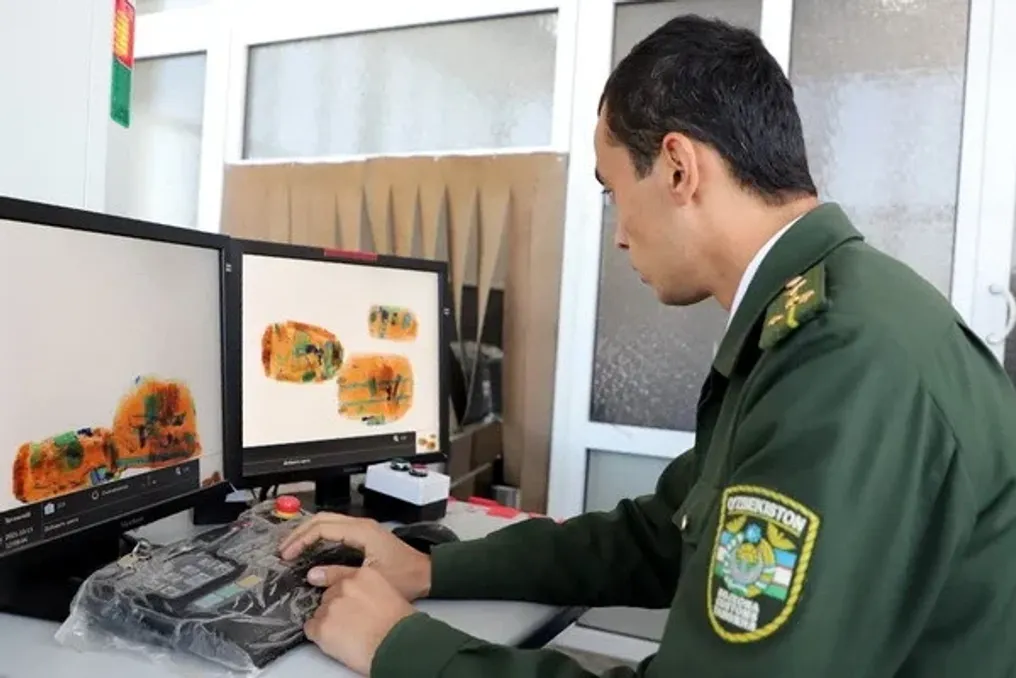
The State Security Service of Uzbekistan reported the discovery of a large batch of goods allegedly illegally imported into the country. This find was made by employees of the State Security Service and the Customs Committee of Uzbekistan.

The truck contained cigarettes, other tobacco products, medicines, medical devices, mobile phones, and other goods whose details did not match the transit declaration and accompanying documents.

The truck, which arrived from Bukhara region and had previously attracted the attention of law enforcement agencies, was inspected at a customs warehouse in the Chilnazar district of Tashkent. During the inspection, 2,500 medical devices, 13,800 packages of medicine, and 880 dietary supplements were found.

Additionally, the truck held 273,400 packs of cigarettes and other tobacco products, 3,100 e-cigarettes, about 8,600 mobile phones, 19 tablets, and 52 items of perfumery. Law enforcement officers also discovered over 72,500 units of construction tools and equipment, the actual quantity and characteristics of which did not correspond to the data in the accompanying documents.

According to the State Security Service, the owner of the truck and two residents of Tashkent imported these goods from a neighboring country using forged customs documents. A criminal case has been initiated against the three individuals under Part 2 of Article 182 of the Criminal Code of Uzbekistan, concerning violations of customs legislation on a particularly large scale. This article provides for a maximum prison term of up to eight years. The investigation is ongoing.

Popular