Across Africa, there are markets that range from vast shopping centers to historic produce halls and evening squares transformed into open kitchens. These five markets are places worth planning a trip for.
For instance, in Kumasi, the scale of the Kejetia market demonstrates the significance of food trade to the Ashanti people's life. In Dakar, the Kermel market supplies fresh seafood and groceries to the city center, while Mercato in Addis Ababa offers insight into the rich culture of Ethiopian ingredients.
In Antananarivo, rice and highland produce predominate, whereas Marrakech offers one of the best gastronomic experiences after dark.
Kumasi: Kejetia Market
The Kejetia Market in Kumasi is not just a place for a quick visit, but rather a space where you can spend hours trying to grasp its essence. This enormous trading hub is one of the key commercial spaces of the Ashanti capital, where besides food, clothing, textiles, and household goods are sold. The trade here reflects the region's agricultural wealth.
Among the traded goods, you can find plantains, cassava, yams, corn, coconuts, tomatoes, and chili peppers, linking Kumasi to the farming areas outside the city. The market also serves as a dining spot; prepared local dishes and street food, including fufu, waakye, jollof rice, fried fish, and fried yam, are served in the eating areas.
Visitors are advised to come with an appetite, but also to set aside time just to observe the trade. Mountains of produce tell their own story: huge yams, bunches of plantains, sacks of cassava, and brightly colored peppers. Fufu with soup is one dish worth trying to get acquainted with the foundation of Ashanti cuisine. Kelewele—spicy fried plantain—is another excellent way to experience Ghanaian flavors, especially as a quick snack.
Kejetia reminds us that food markets are not always created as tourist attractions; primarily, it is an active market, and tourists are guests in an established commercial ecosystem. It is best suited for understanding the scale and energy of Ghanaian food trade.
Dakar: Kermel Market
In Dakar, food and the sea are inseparable. The Marche Kermel market, located in the Plateau district, provides an accessible introduction to this connection. This historic market dates back to the 19th century and occupies a characteristic domed building that was restored after a fire. Inside the stalls, fresh produce, meat, and seafood are sold, while vendors outside add color and movement.
Fish holds special significance. Depending on the season and supply, buyers can find species such as thiof, dorade, shrimp, and squid alongside fruits and vegetables. Although Kermel is often visited for its architecture and crafts, it is the food that makes it particularly interesting for travelers wishing to understand Dakar.
When browsing, pay attention not only to what catches the eye but also to what is being sold. Fresh fish, vegetables, fruits, spices, and other ingredients offer clues about the city's cuisine. Senegalese cuisine is built on combinations of rice, fish, vegetables, and intensely seasoned sauces, and Kermel allows one to see these ingredients before they turn into lunch or dinner. It is recommended to visit the market in the morning when it is freshest and liveliest, and to allow time for strolling rather than rushing between stalls. It is ideal for getting acquainted with seafood, fresh produce, and understanding Dakar's connection to the Atlantic.
Addis Ababa: Mercato
Mercato stretches through the Addis Ketema district and, according to modern sources for travelers in Ethiopia, is considered one of the largest open-air markets in Africa. Its narrow passages combine food, coffee, spices, textiles, and handicrafts, making it simultaneously a window into the daily life of Addis Ababa and a place for shopping.
For food-oriented travelers, the sections where ingredients take center stage are the most interesting. Coffee is obviously a starting point, as the coffee culture in Ethiopia is deeply rooted in daily life, and the market offers a chance to see how beans and other ingredients are bought and exchanged, not just in finished form in cafes.
Spices are also highly significant. One should look for colorful piles of dried ingredients and components of unique Ethiopian spice blends, such as berbere. Visiting Mercato is best done by viewing it as an ingredient safari. The size of the market also reflects the diversity of Ethiopia, gathering traders and goods from all over the country. It is ideal for getting acquainted with coffee, spices, and understanding the ingredients of Ethiopian cuisine.
Antananarivo: Analakely Market
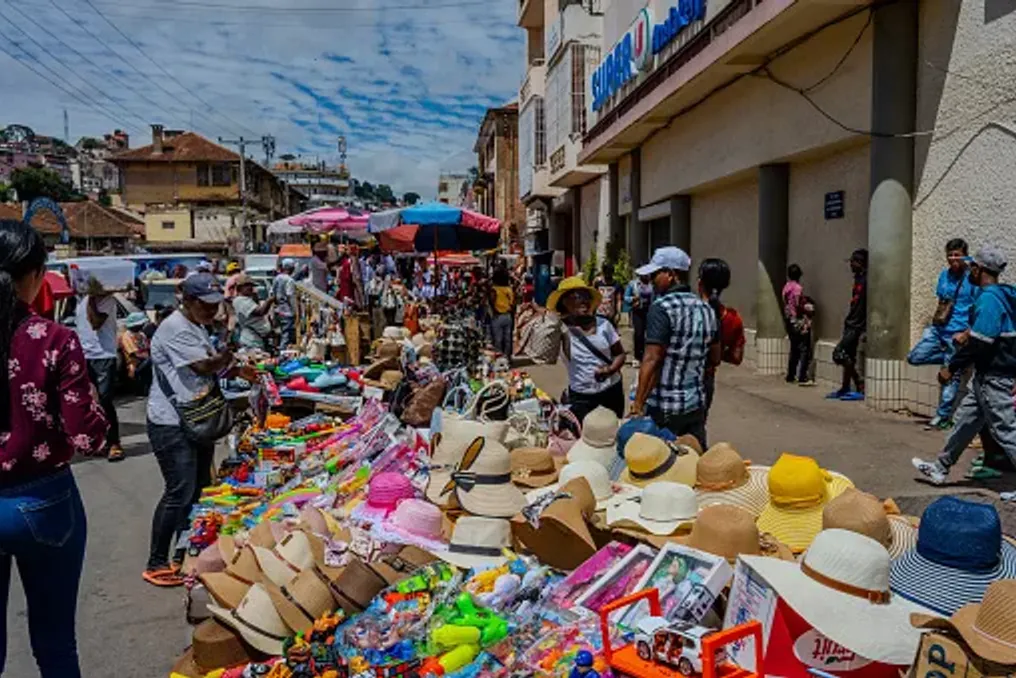
The Analakely Market in Antananarivo offers a more intimate market experience compared to the giant shopping hall of Kumasi or Addis Ababa, but it provides something equally valuable: the opportunity to closely examine what the residents of Madagascar's capital are actually buying and eating. The market is in the city center and has long been associated with food trade and daily commerce. Fresh fruits, vegetables, and rice remain central elements of this experience.
Historical accounts of Analakely describe farmers arriving early with produce from the surroundings, maintaining the market's role as a meeting place between rural producers and urban buyers. Rice is fundamental to Malagasy dietary culture, and its presence cannot be ignored. However, one should not stop there. Attention should be paid to local fruits and vegetables, dried fish, and ingredients used in everyday Malagasy cooking. If one desires something ready-made, one should look for snacks such as mofo gasy—rice flour pancakes traditionally made in small molds, or koba—a dense cake made from ingredients like rice flour, banana, and peanuts.
The market also reveals Madagascar's unusual position in the Indian Ocean. The island's food culture is shaped by African, Asian, Arab, and European influences, and this combination differs from many mainland African destinations. It is best suited for getting acquainted with rice, highland produce, and discovering Madagascar's unique culinary identity.
Marrakech: Jemaa el-Fna
Jemaa el-Fna in Marrakech is perhaps the most theatrical of the markets presented. During the day, this famous square is a venue for artists, juice sellers, and general activity. As evening approaches, food stalls appear, and the open space transforms into a massive outdoor dining area. This transformation is part of the experience itself.
Bonfires, smoke rising into the evening air, and communal tables filled with people under the lights—all create an atmosphere. The Moroccan National Tourism Office highlights the availability of freshly squeezed fruit juices, and the evening gastronomic scene of the square includes everything from grilled meat and harira to tagine and Moroccan sweets. This is a market worth visiting if you want food to feel like an event.
One can start with fresh orange or other fruit juice, and then look around before choosing a stall. Among the dishes associated with this square are grilled skewers, kefta, harira, and tagine. The best part is not necessarily finding one perfect dish, but observing how the square changes as Marrakech transitions from day to night, and how the food stalls turn the center of the medina into a giant open kitchen. It is ideal for experiencing Moroccan street food and the spectacle of dining in one of Africa's great public squares.
The appeal of African food markets lies in their ability to connect food with place. In Kejetia, yams and plantains tell the story of regional agriculture and trade. In Dakar, fish connects the market to the Atlantic. Mercato in Addis Ababa reveals the ingredients and trade networks behind Ethiopian cuisine, while Analakely introduces travelers to Madagascar's highland rice cuisine. And in Marrakech, food becomes theater. This is what makes these markets worth visiting. You go there not just to eat, but to immerse yourself in the part of the destination where food begins.
}, {