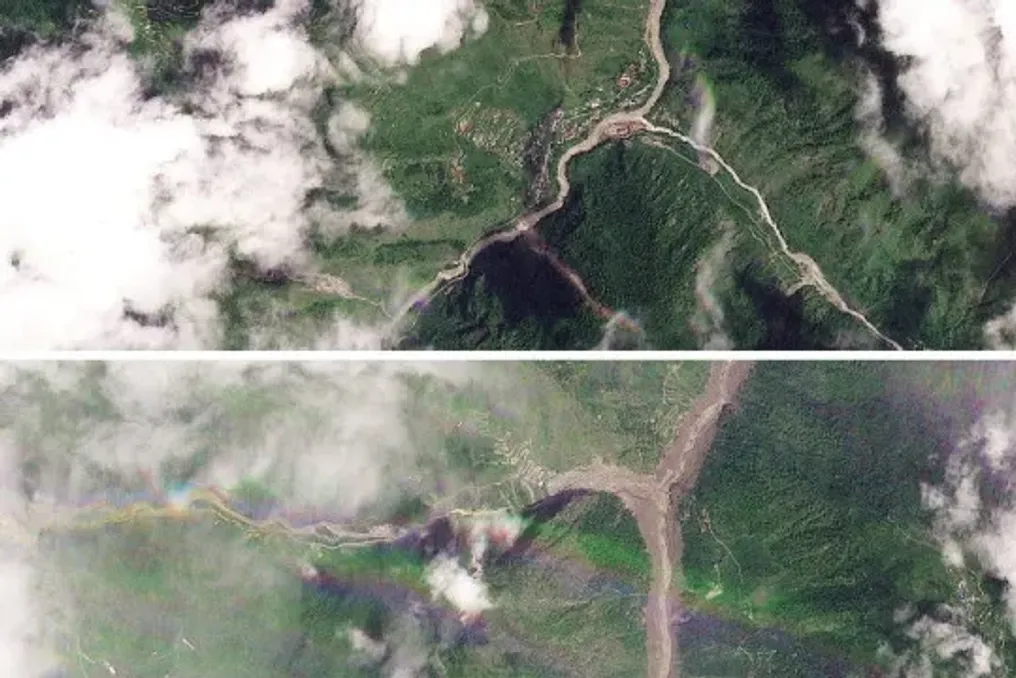
Satellite imagery reveals dramatic changes following the sudden flooding of the Bhote Koshi River in Nepal. A comparison of the images identified residential areas covered in mud and debris, as well as buildings partially submerged in water, alongside alterations to the riverbed due to the extreme weather.
Each composition includes two images: the first was taken on August 23, before the flood, and the second on August 26.
The Nepalese Army and security forces rescued 123 people, including 29 foreign nationals, who were cut off after the sudden overflow of the Bhote Koshi River in Rasuwa district, on the border with Tibet. According to the latest data from the National Disaster Risk Reduction and Management Authority of Nepal, military contingents airlifted 95 people from Timur to Dhunche, the district capital.
Nepalese police today increased the death toll to 177 following devastating flash floods on the border with Tibet, where security forces are conducting large-scale search operations after the Bhote Koshi River overflowed. Operations continue for the air evacuation of foreigners to Kathmandu, as well as the simultaneous rescue of a group of 21 Indian tourists in Timur and the extraction of several workers detained at the Haku hydroelectric power station.
The latest official report states that there are 826 missing persons in Nepal, including 466 foreigners. Additionally, 558 people are missing in Tibet, pending an official agreement between the two countries on data collection methods.
Sunil Sharma, spokesperson for the Nepal Tourism Board, reported that among the missing are 133 Indian citizens participating in a pilgrimage to Mount Kailash in Tibet, a sacred site for Hindus. Also missing are 47 US citizens, 34 Australians, 33 British citizens, and 24 Canadians. According to the Ministry of Foreign Affairs, there are at least two Portuguese citizens among those missing—a man and a woman.
According to the emergency management agency, the flooding damaged or destroyed 35 vehicular bridges, 45 suspension bridges, and 40 kilometers of paved roads, hindering access to affected areas. The sudden flow of water, mud, and stones also impacted the energy sector in the Bhote Koshi and Trishuli river corridor, where at least 12 hydropower projects sustained serious damage. Dozens of technical specialists and engineers at these facilities were put at risk due to isolation following tunnel and access infrastructure collapses.