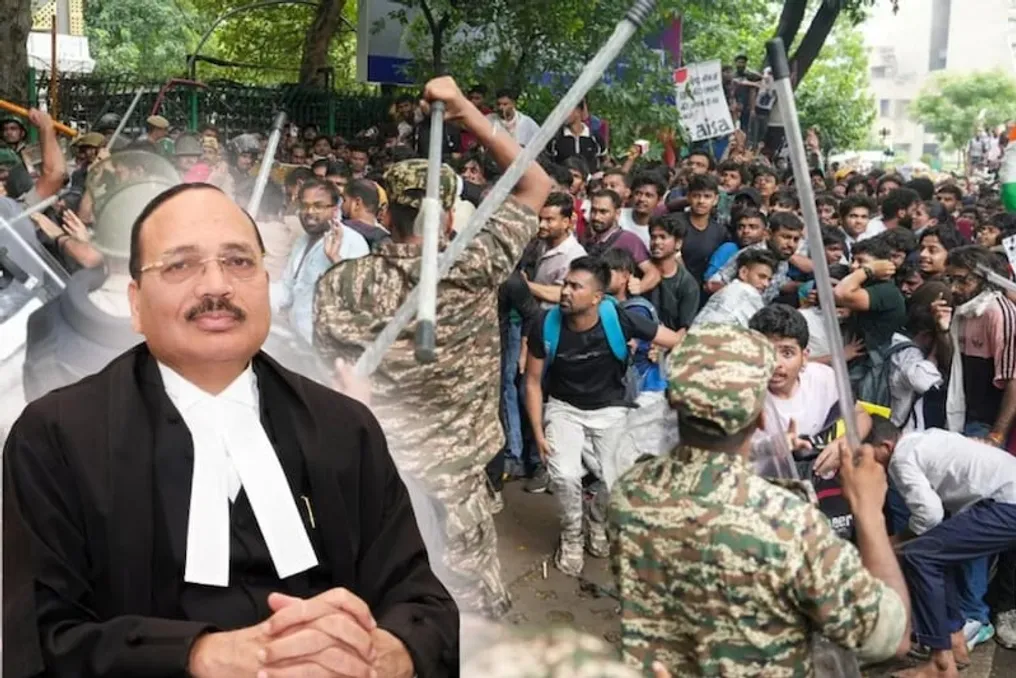
Typically, graduation ceremonies are considered one of the least controversial events on any university's calendar. Students dress formally, receive their diplomas, take photos, and move on to the next stage of life. However, this year, the choice of a guest of honor in several leading universities across the country has turned this ceremony into the epicenter of conflict.
The most recent and striking example is the National Law School of India University (NLSIU) in Bangalore, which canceled its 34th annual convocation scheduled for September 12, 2026. This decision followed strong opposition from students and graduates who objected to the alleged presence of the Chief Justice of India (CJI) Surya Kant and the Chairman of the Bar Council of India (BCI) Manan Kumar Mishra. The university stated that it could not hold the event due to insurmountable circumstances; instead, graduates will be awarded diplomas in absentia after obtaining the necessary permissions.
Cancellation of Ceremony at NLSIU
Previously, NLSIU had canceled its September 12 ceremony due to protests by over 700 students and graduates against the presence of CJI Surya Kant and BCI Chairman Manan Kumar Mishra. Following this, it was announced that graduates would receive their diplomas in absentia instead of attending the ceremony. NLSIU's decision is particularly noteworthy because the university canceled not only the change of the guest of honor but the entire ceremony itself.
Tata Institute of Social Sciences (TISS) initially postponed and then changed its guest of honor. TISS originally moved its 86th ceremony from August 2, citing 'indirect circumstances.' However, reports indicated concerns about potential student protests due to the presence of CJI Surya Kant. Consequently, the ceremony date was changed to August 22, and Dr. S.S. Pramesh, Director of Tata Memorial Hospital, was appointed as the guest of honor instead of the CJI. Unlike NLSIU, TISS ultimately held the ceremony, but after changes to both the date and the guest of honor.
Students at NALSAR opposed the invitation of CJI Surya Kant. Recently, hundreds of students at NALSAR University of Law expressed disagreement with the news of CJI Surya Kant's invitation as the guest of honor. Students voiced concerns regarding the comments and hearing procedures of the CJI during court proceedings related to demonstrations in Delhi. The conflict escalated when the BCI temporarily ordered that NALSAR 2026 graduates not be registered with the state bar councils. Although this order was later withdrawn, the CJI subsequently clarified that he never accepted the invitation. This dispute went beyond just a guest at the ceremony, raising serious questions about student protest, professional norms, and institutional autonomy.
O.P. Jindal Global University also altered its plans regarding the graduation ceremony. The university's stance was that CJI Surya Kant never accepted the invitation to preside over the ceremony. Instead of the CJI, Judge P.S. Narasimha presided over the ceremony. These events occurred concurrently with the disputes at NALSAR and TISS.
Why Are Graduation Ceremonies Becoming Centers of Campus Disputes?
The circumstances in these four cases are not identical. In the NALSAR case, the CJI stated that he never accepted the invitation. TISS cited unforeseen circumstances before changing the guest. Meanwhile, NLSIU went further and canceled the entire ceremony. Nevertheless, all these incidents point to significant shifts in campus politics. For students, the guest at a graduation ceremony is no longer merely a formal selection. In institutions preparing future lawyers, scholars, and civil servants, students view this guest as a symbol of their university's values and principles.
This is why the scene of the ceremony has ceased to be just a means of receiving a diploma; it is becoming a place where students decide whether they want to celebrate the institution's decisions, question them, or express protest. And at NLSIU, the consequence of this disagreement was that the graduation ceremony will not take place this year at all.