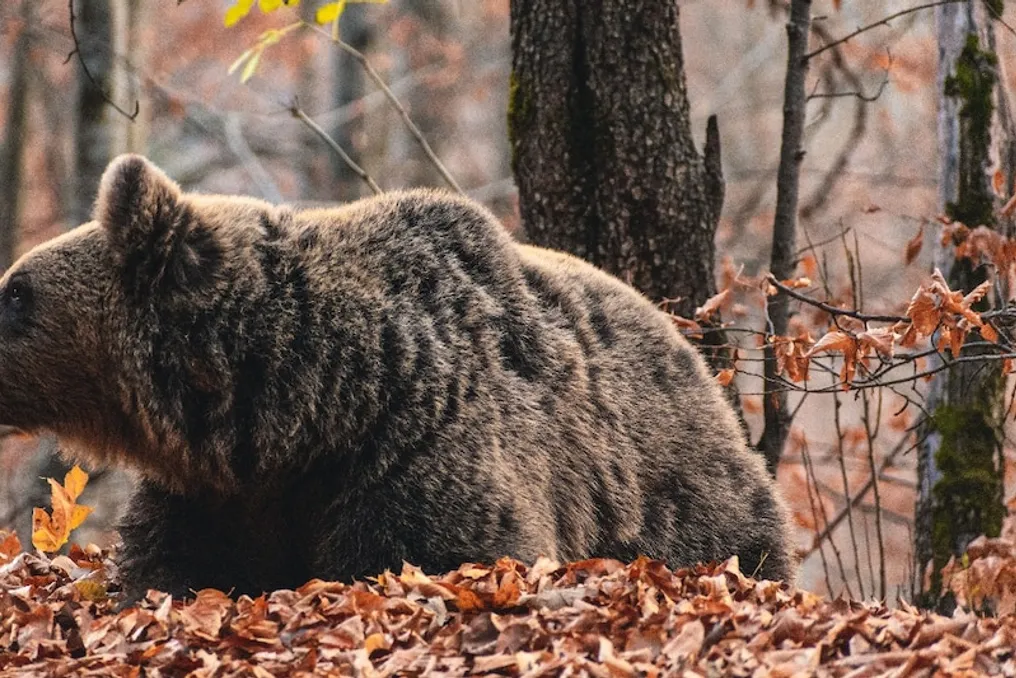
In the picturesque hills and dense forests of Japan, clashes between humans and bears are increasing. Bears, which previously inhabited only the forests, are now venturing into villages and residential areas in search of food. The situation has escalated to the point where the Japanese government has begun mass culling of bears. According to official data, over 14,000 bears were killed in Japan from April 2025 to January 2026.
However, the problem goes beyond simply counting casualties. Questions arise about the reasons for bears entering populated areas and whether mass extermination is the only solution to this problem.
The primary reason cited for conflicts between humans and bears in many regions of Japan is the scarcity of food sources in the forests. Bears actively feed on various fruits and seeds, such as nuts and acorns, in preparation for hibernation. Nevertheless, due to abnormal heat and climate change, the availability of these products in the forests has decreased.
As a result, hungry bears have started leaving the mountains and forests, heading towards villages and residential zones where they can easily access fruit trees, agricultural fields, and human food waste. Concurrently, there is a decline in population in rural areas of Japan, leading to many fields and gardens being abandoned and gradually turning into forest, thereby reducing the distance between bear habitats and human settlements.
The most alarming consequence of the growing confrontations was an event last year. In Japan, bears attacked more than 230 people, resulting in 13 deaths. This year has been the deadliest in recent years due to bear attacks in the country. Most of these incidents occurred in the northern mountainous regions of Japan—Akita and Iwate. In these areas, the impact of heat has negatively affected food sources in the forests, reducing natural food for bears. News of bear attacks has attracted attention not only in Japan but also in other countries; some nations, including the United Kingdom, have issued warnings to their citizens regarding the increasing threat of bears in Japan.
The level of concern regarding bears in Japan is demonstrated by various measures taken by local residents. Some farmers have installed robotic wolves with red eyes to scare away bears, while in other places, warning signs have been posted. One Japanese company has even started promoting special private shelters to protect against bear attacks. Insurance companies have also begun offering special 'bear insurance' to compensate for damage caused by bears. However, for the government, managing the bear population remained the most difficult task.
The Japanese government points to the shortage of qualified hunters as one of the reasons for the worsening bear problem. The number of licensed hunters in the country has decreased by more than half since 1975. Consequently, local administrations have faced limited capacity to control the growing population. In response, the government eased regulations on bear shooting in densely populated areas and set traps for their capture. This resulted in the killing of over 14,000 bears between April 2025 and January 2026. Of these, there were about 12,000 Asiatic black bears and approximately 2,000 brown bears.
But has the problem been solved? This is where the debate arises. Despite such massive bear culling, attacks on humans have not completely stopped. After April, cases of six deaths and injuries to more than 35 people have been registered in at least nine prefectures of Japan. This means that the problem persists even after thousands of bears have been killed. Because of this, conservation experts question the government's strategy. They argue that simply reducing the bear population will not end the conflict between humans and animals.
The Japanese government has set a goal to kill another 8,800 bears in the current fiscal year. At the same time, environmental groups fear that continued large-scale hunting could lead to the disappearance of local bear populations in some areas.
The main concern in Japan relates to the Asiatic black bear. The International Union for Conservation of Nature (IUCN) classifies it as a globally endangered species. Their global population is estimated to be less than 60,000 individuals, and the estimated population in Japan is around 42,000, although scientists admit that this figure may be inaccurate. The biggest difficulty lies in the lack of accurate data on the actual number of bears in Japan. In 2011, Japan attempted to estimate the population of Asiatic black bears, which was then estimated to be in the range of 13 to 21 thousand. Later, the estimate increased to 42,000, but no new comprehensive surveys have been conducted nationwide since then. Japan has now started a nationwide bear census to address this gap, which is predicted to take about three years.
In fact, how exactly the bear population increased is an interesting question related to...