The current situation in the South African automotive industry is characterized by dual development: on one hand, there is an increase in new car sales, while on the other, the market is shifting towards imports.
According to data, new vehicle sales increased by 15.7% in 2025, reaching 597,338 units. In the first half of 2026, growth rates continued, increasing by 12.9% compared to the previous year, exceeding 315,000 units, with June showing the best result in 19 years. However, as component manufacturer Metair warned, much of this growth is driven by imported metals, not local production.
Suzuki, which imports all its models from India, has become the second best-selling brand in South Africa. In the first four months of 2026 alone, Chery sold over 6,000 vehicles, and brands such as GWM, BYD, MG, Geely, and GAC are actively increasing their share. The Industrial Development Corporation calculated that Chinese imports contributed to an increase in the trade deficit with China by 140 billion rand in the first nine months of 2025 alone. India, mainly through Suzuki and Mahindra, is an even more significant source of this imbalance. Currently, imports account for about two-thirds of all new car sales in South Africa, a sharp change for a country that continues to manufacture cars for companies like BMW, Mercedes-Benz, Volkswagen, Toyota, Ford, and Isuzu.
The most obvious example of negative consequences is the Nissan factory in Rosslyn. Financial difficulties forced Nissan to sell the Chery plant at the beginning of this year. From 2027, this plant will be converted to produce Chery group vehicles, symbolizing the transfer of South Africa's manufacturing capacity from the old Japanese brand to the growing Chinese one.
South Africa's situation has a historical parallel that ended in two completely different scenarios. Thailand, known as the 'Detroit of Asia,' faced similar import pressure decades ago. It responded by implementing permanent local content rules, tax incentives tied to domestic production, and export-oriented industrial policy. Today, Thailand assembles about two million vehicles annually and forms the backbone of Southeast Asia's automotive supply chain.
Australia chose the opposite path. Unable to compete with cheaper imports and unwilling to endlessly subsidize local enterprises, Canberra allowed protective measures to expire. Between 2016 and 2017, Ford, Holden, and Toyota closed their Australian plants, completely ending a century of local automotive manufacturing. The Automotive Production and Development Programme of South Africa (APDP2) is essentially a bet on the Thai model, not the Australian one. According to naamsa, every rand of APDP support generates almost 4 rand in internal production volume and almost 8 rand in export revenue, supporting 137 billion rand in local added value in 2025. Critics, including some manufacturers, argue that the government is slow to review the program and cannot keep up with the aggressive support of its exporters from Beijing and New Delhi.
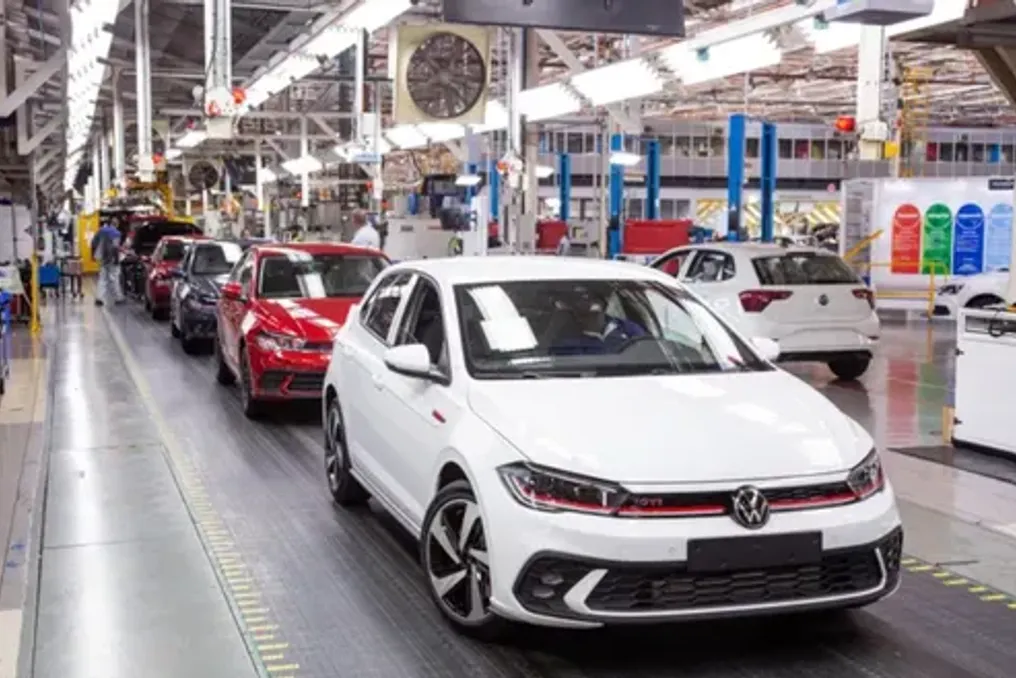
It is easy to perceive all this information as an inevitable managed decline, but the basic industrial structure remains very strong. Six Original Equipment Manufacturers (OEMs) in South Africa—Ford and BMW in Pretoria, Volkswagen in Kariega, Isuzu in Gqeberha, Mercedes-Benz in East London, and Toyota in Durban—provide over 115,000 direct jobs. Only the Volkswagen plant in Kariega provides 3,900 such jobs and remains the only plant in the world producing the Polo. The sector contributes 5.2% to GDP and accounts for 23.8% of total manufacturing value added, making it the largest category in the country. It is important to note that 70.5% of local passenger car production is exported, mainly to Europe due to long-term EU and UK free trade agreements, which brought in 182.8 billion rand in 2025.
The real risk is not that South Africa will stop making cars tomorrow, but rather the slow depletion of resources. Meanwhile, export power in production masks the shrinking share in the domestic market, constantly rising costs for importing components (which amounted to 151 billion rand in original parts in 2025 alone), and each year without APDP reforms makes the task for the next OEM, similar to what Nissan did, easier. New rules for the origin of goods in the African Continental Free Trade Area, adopted in February 2026, provide a real opportunity to reorient exports to the rest of the continent instead of relying solely on Europe. Whether South Africa becomes the 'Thailand' of this decade or 'Australia' will likely depend less on the production line and more on the speed of political decision-making.