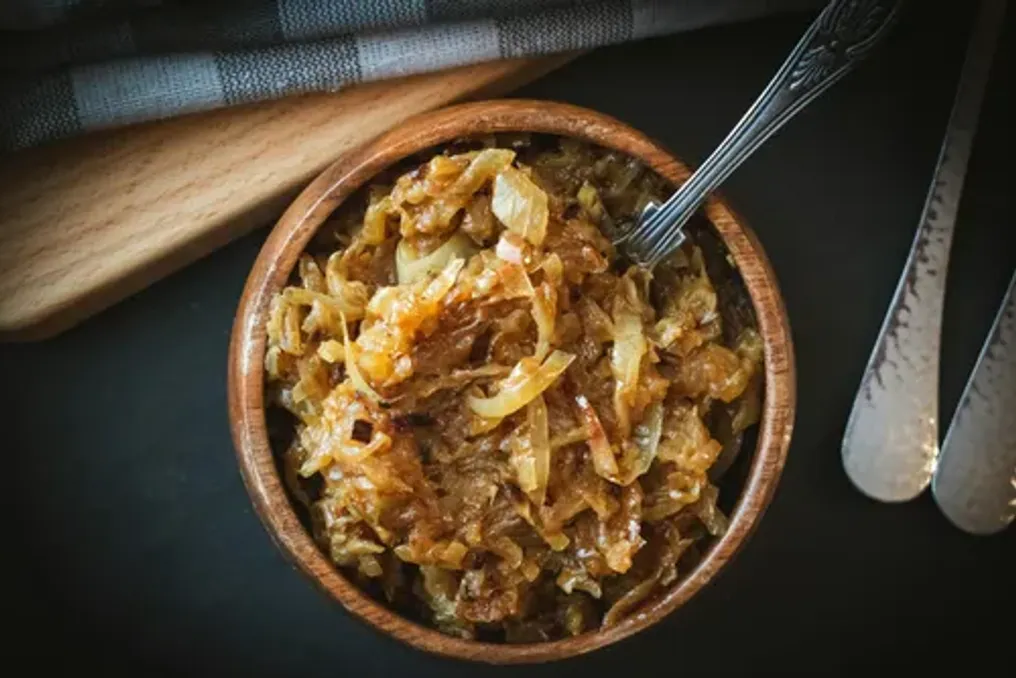
Making caramelized onions requires a significant amount of time, but the result is worth it. It is important to understand that this is not a dish you can make at the last minute.
If you have tried to speed up the process by increasing the heat and ended up with charred edges and onions that did not reach the desired softness and darkness, you are not alone. The secret lies in slow, low-temperature cooking.
Proper caramelization takes time because the onions must first soften and release moisture before they can develop a deep brown color and concentrated flavor. Many recipes call for a process lasting from 45 to 60 minutes, so it is best to start this culinary task while something else is cooking.
Caramelized Onion Recipe
Ingredients
You will need 4–5 small or medium yellow onions, thinly sliced; 3 tablespoons of olive oil; salt to taste.
Instructions
Add the olive oil, sliced onions, and a generous pinch of salt to a large skillet. Stir well to ensure the onions are evenly coated with oil and salt. Place the skillet on the lowest heat setting on the stove. Cook uncovered for 3 minutes, then cover with a lid.
Continue cooking over low heat for an hour, stirring approximately every 10 minutes. This helps prevent the onions from sticking or burning to the bottom. After an hour, the onions should be very soft, significantly reduced in volume, and light brown. Remove the lid and continue cooking over low heat for another 25–30 minutes, stirring approximately every 3 minutes, until the onions darken. When the onions are dark brown and soft, season with additional salt if necessary.
Why does caramelized onion take so long to cook?
The long cooking time is not a flaw in the recipe. Onions contain a lot of water, so much of the early process is dedicated to softening them and evaporating this moisture. Only after the moisture has reduced can the onions develop the deeper brown color characteristic of properly caramelized produce.
This is why increasing the temperature is not a good way to shorten the time. Higher heat can cause the onions to burn or darken on the bottom before the rest of the contents of the pan are cooked properly.
The easiest way to make caramelized onions
Since the process takes over an hour, it is reasonable to prepare a batch while you are already in the kitchen. You do not need to stand over the skillet constantly. During the first hour, it is enough to stir periodically every 10 minutes. Once the lid is removed and the onions begin to darken, you should stir more frequently, as there is less protective moisture, which increases the risk of sticking and burning.
If the onions start to stick to the bottom, lower the heat even more and gently stir them. A small amount of water can also help lift any burnt bits from the bottom of the pan. The best time to make caramelized onions is when you are already spending time in the kitchen.
Can caramelized onions be frozen?
Yes. Since the process is labor-intensive, making a large batch can save effort in the future. Let the onions cool, then divide them into portions and freeze them in ice cube trays. After freezing, transfer the individual portions to a suitable freezer container and use them as needed in soups, stews, sauces, or sandwiches. This means that the longest part of the work will already be done the next time the recipe calls for caramelized onions.