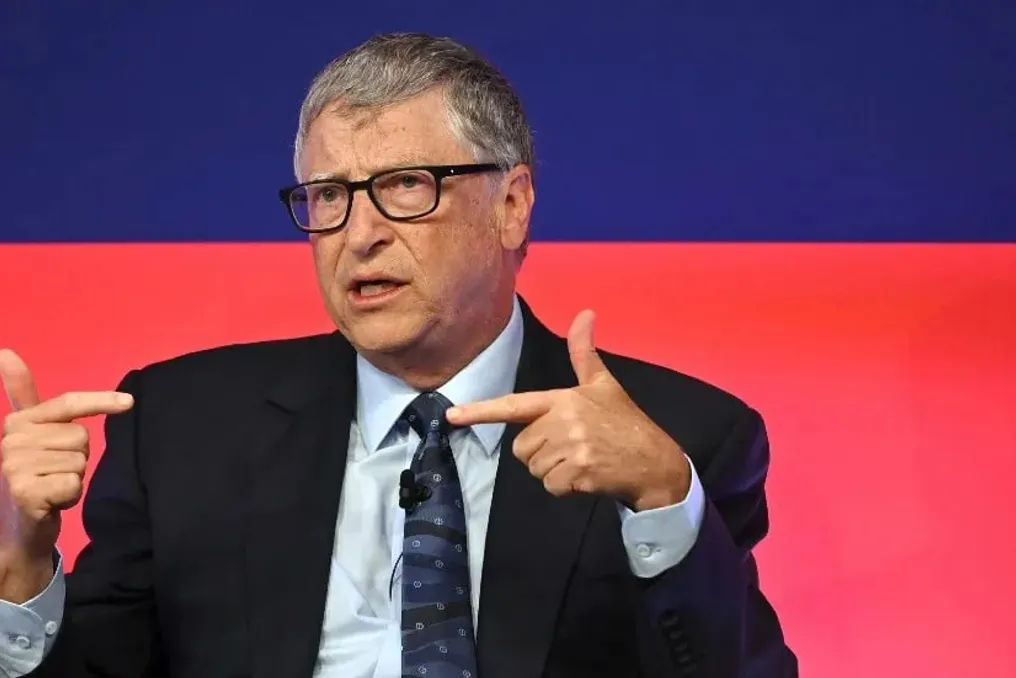
Microsoft co-founder Bill Gates has expressed serious concern regarding the rapid progress in artificial intelligence, predicting that this technology could trigger significant job losses and an increase in unemployment rates.
To mitigate potential negative consequences, Gates proposed introducing a specific tax on robots that replace human labor, as well as on the use of AI technologies themselves.
The Danger of Transitioning into the AI Era
In his essay published on his personal website, Gates characterized the transition to the AI era as one of the most turbulent periods in human history. He emphasized that modern systems have reached a level where they can not only perform individual tasks but also surpass humans in several intellectual processes. This threatens both office and manual employment.
The entrepreneur insists that world leaders must primarily focus on preparing for job reduction and the possible increase in social inequality. In his view, there is currently no comprehensive plan to smooth this technological transition, and too abrupt changes could deprive workers of their livelihoods and sense of control over their lives.
Proposals for Tax System Changes
One of the mechanisms proposed by Gates is the transformation of tax legislation. He notes that the current system gives companies a financial advantage when replacing personnel with machines: employers pay taxes on employee salaries, whereas the cost of purchasing a robot is often written off as commercial expenses. Consequently, Gates suggests introducing taxes on the use of robots that replace people, as well as on so-called AI tokens used by companies to account for and pay for AI work.
According to Gates, such measures should serve a dual function: slowing down the excessively rapid shift from manual labor to automation while simultaneously forming a financial base for workforce retraining programs and strengthening social guarantees. He advocates for a selective approach that should not hinder the application of AI in areas where it provides clear benefits, such as medicine and education.
Furthermore, Gates suggested preserving certain areas of activity for humans where human qualities such as empathy and direct involvement are critically important, including caregiving, mental health work, and some medical specialties.
Expert Opinions and Regional Initiatives
However, not all specialists agree with the solution proposed by Gates. Oren Etzioni, a computer science professor at the University of Washington, expressed agreement with Gates' concerns in an interview with ABC News but criticized the idea of a tax on AI tokens. According to his calculations, the number of tokens only reflects the volume of technology use but does not provide information about the number of jobs replaced by artificial intelligence.
The expert also warned that introducing taxes on AI could negatively affect the competitiveness of the US. If American technologies become more expensive due to the tax burden, companies may start using foreign equivalents, including Chinese ones. Therefore, Etzioni believes that regulation must be both pragmatic and timely so as not to slow down technological development where it is necessary.
Gates, in turn, acknowledges that a tax cannot be the sole solution to problems related to AI. He strongly urges governments to prepare in advance for the consequences of automation, as waiting for large-scale changes in the labor market will be too late.
It is also worth noting that Uzbekistan was previously reported to have plans to allocate at least $100 million for the development of artificial intelligence in the business sector. As part of this state program, companies will be compensated for half of the costs of implementing digital solutions, and free access to a supercomputing cluster will be provided.