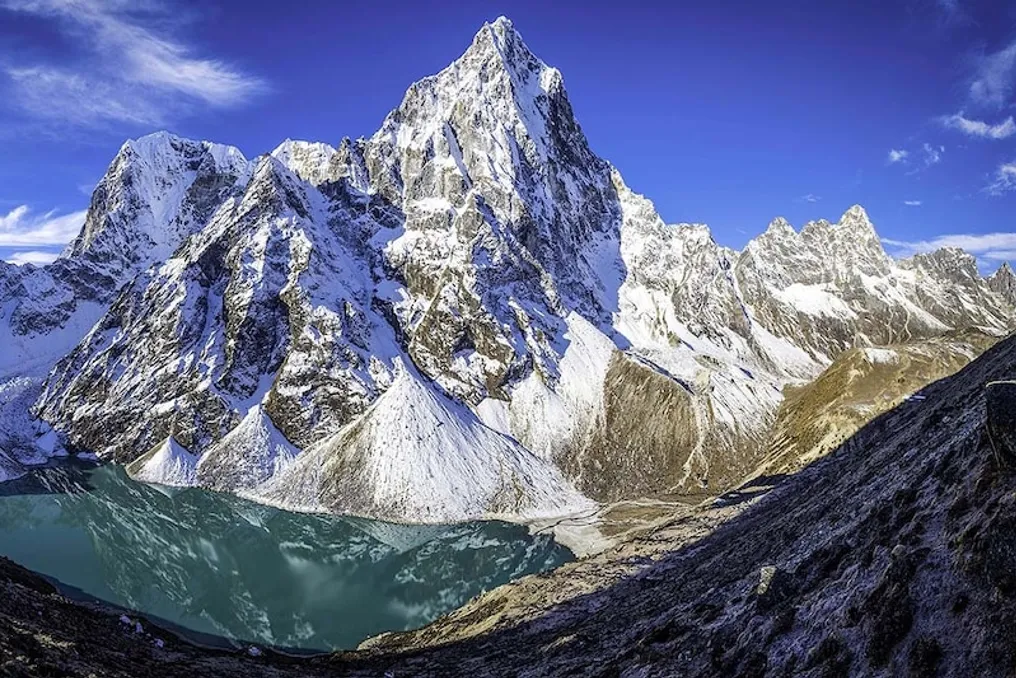
Recent devastating floods on the border of Nepal and Tibet have once again drawn attention to the fragile Himalayan ecosystem. The incident began on the slopes of Langtang Lirung mountain, where a large part of the glacier collapsed, creating a temporary dam, after which a strong flow of water rushed into the Trishuli River.
This raises questions about the number of glacial lakes in this region, whether they pose a danger, and the probability of similar events in the future. Answers based on scientific research raise serious concerns. The Langtang Valley and the Trishuli River basin are a sensitive part of the border between Nepal and China, where high-altitude glaciers are melting at an accelerated rate.
Glacial lakes form where water accumulates before or above melting glaciers. These include supraglacial (small lakes on the glacier) and proglacial (large lakes in front of the glacier). Although the recent event was mainly related to avalanches and debris flows, experts note that the bursting of glacial lakes or the sudden release of accumulated water is becoming an increasingly common phenomenon in such areas. Risks are amplified by rivers originating from Tibet and the steep valleys of Nepal.
According to reports from the International Centre for Integrated Mountain Development (ICIMOD) and the United Nations Development Programme (UNDP), approximately 3624 glacial lakes have been registered in the Koshi, Gandaki, and Karnali basins. Of these, about 2070 are in Nepal, 1509 are in Tibet, China, and 45 are in India. Among them, 14 lakes are so large that their breach could cause flooding. The most important indicator is that 47 lakes are classified as potentially dangerous glacial lakes. These lakes are located in 21 cases in Nepal, 25 in Tibet (transboundary), and one in India. Most of them are concentrated in the Koshi basin.
Specific studies of transboundary basins, such as Gyirong-Trishuli and Pokku-Bhotekoshi, have identified dozens of lakes as being in a high-risk zone. Some reports indicate that the total number of glacial lakes in Nepal exceeds two thousand, and this figure is constantly growing. Over the last two decades, there has been a significant increase in both the number and area of lakes in areas like Langtang.
Scientists unanimously agree that such disasters may become more frequent in the future. Due to global warming, glaciers are retreating rapidly, new lakes are forming, and old ones are expanding. Moraines (natural dams of mud and rock left by glaciers) are weakening due to permafrost thaw. Heavy rains during the monsoon season, earthquakes, and avalanches can trigger these lakes.
Some studies suggest that the risk of glacial outburst floods in high-altitude Asia could increase almost threefold by the end of the century. The China-Nepal border region is particularly vulnerable because many lakes are located north of the border, and their floods reach Nepal within minutes. Past events in Bhotekoshi, Melamchi, and Sikkim confirm this threat.
Scientific reports constantly warn about the need for monitoring, early warning systems, and cross-border cooperation. Although attempts have previously been made to reduce the water level in some dangerous lakes, in the context of rapidly changing climate, focusing only on a couple of lakes is insufficient. Nepal, as a mountainous country, needs to pay special attention to international cooperation, local preparedness, and the protection of hydropower projects. The recent flood proved that the danger is not limited to large lakes but can also arise from glacier instability, moraine collapse, and temporary blockages. Overall, the Nepal-Tibet border region is saturated with glacial lakes, and scientific data clearly indicates the probability of even more devastating events due to climate change; timely preparation can ensure the safety of people and property.