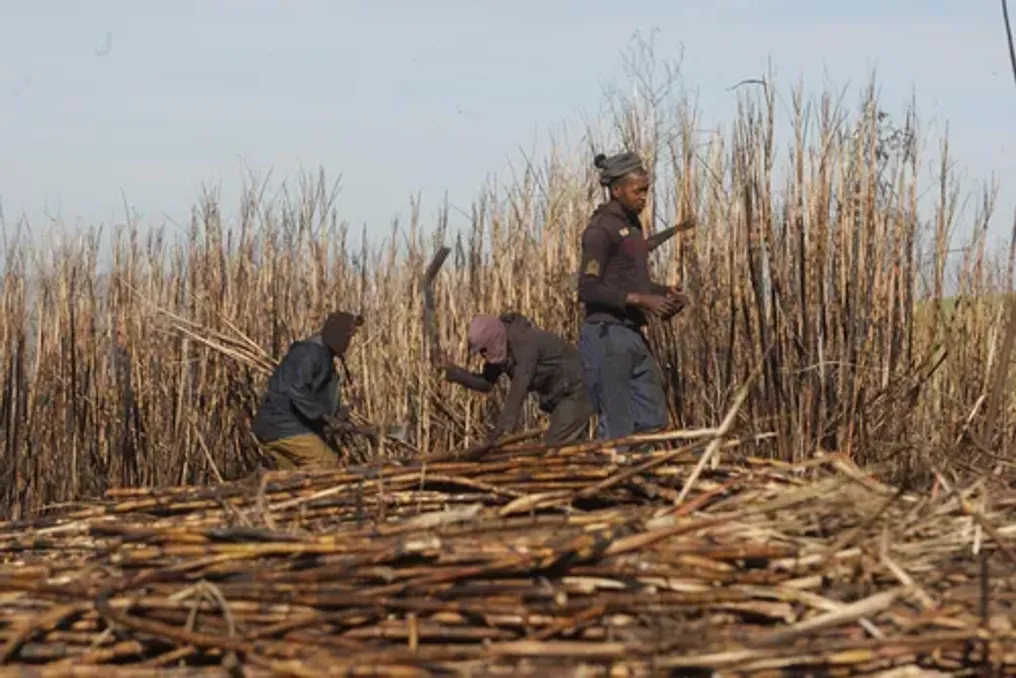
Sugar producers in South Africa are urgently calling on the government to approve revised tariff benchmarks, as rising imports threaten the stability of the industry and local jobs. Trade unions have also supported the need for stronger protection for this sector, given that increased imports reduce local sales and jeopardize employment in the KwaZulu-Natal and Mpumalanga provinces.
This call followed the completion of a tariff mechanism review by the International Trade Administration Commission of South Africa (ITAC). However, the Department of Trade, Industry and Competition (DTIC) stated that further steps are required to implement the findings.
The South African Sugar Association applied to ITAC in October 2024, demanding that the Dollar Based Reference Price (DBRP) be raised from $680 to $905 per ton. This benchmark is used to calculate duties on imported sugar when the international price falls below the established level, thereby helping to protect local producers from cheaper imports.
A DTIC ministerial representative, Kamil Ali, confirmed that the ministry is giving this matter top priority, but the details of the proposed adjustment cannot be disclosed until its official publication. Ali explained that the ministry is consulting with the National Treasury, as their consent is required before publication, and that the details will be presented in an official bulletin.
Illovo Sugar South Africa noted that the delay exacerbates uncertainty in an industry already facing rising raw material costs, inflation, and increased competition from imported sugar. The company estimated that in the 2024/25 season, South Africa imported 213,322 tons of sugar from outside the Southern African Customs Union. The company calculated that the substitution of local sugar led to a decrease in farmers' income of approximately 1 billion rand and processors' income of approximately 500 million rand.
Illovo Sugar South Africa CEO, Ricky Govender, stated that 'the sugar industry has constructively and diligently participated in the entire review process. Urgent action is now needed to implement the outcomes of this process.' He added that 'every day of delay weakens an industry that supports hundreds of thousands of livelihoods and contributes significantly to the rural economy.'
SA Canegrowers CEO, Thomas Funke, reported that the volume of duty-paid imports between January and June increased from 1,619 tons in 2022 to 124,594 tons in 2026, representing an increase of more than seventy times over four years. The association estimated that in 2025 alone, import substitution cost producers 733 million rand. It was noted that local sugar sales fell by approximately 188,000 tons, or 35%, over three seasons, while the share of local sugar sold at lower prices in export markets increased from 22% to 37%.
Funke warned that 'every additional month with the existing DBRP increases the risk of further factory closures, job losses, and permanent departure of farmers from the industry,' emphasizing that such losses cannot simply be compensated for by subsequent tariff adjustments.
Illovo reported that the local sugar value chain supports about 65,000 direct and 270,000 indirect jobs, including farmers, mill workers, transporters, contractors, and community enterprises involved in sugarcane cultivation.
Parliamentary coordinator Cosatu Matthew Parks stated that any response must balance the protection of local producers with consideration for the costs faced by beverage and food manufacturers. He called for more decisive action from the South African Revenue Service against illegal imports and fraudulent repackaging of imported sugar as local product. Parks also strongly recommended that the government address issues related to electricity, diesel, irrigation, and logistics costs, and relaunch a campaign encouraging consumers and businesses to buy local sugar.
Illovo asked the government to consider implementing temporary protective measures, speeding up future tariff reviews, and developing a system capable of responding more quickly to import surges. Ali added that DTIC continues to work closely with the industry under the Sugar Management Plan, and its Executive Oversight Committee provides stakeholders with a platform to propose sector support measures.