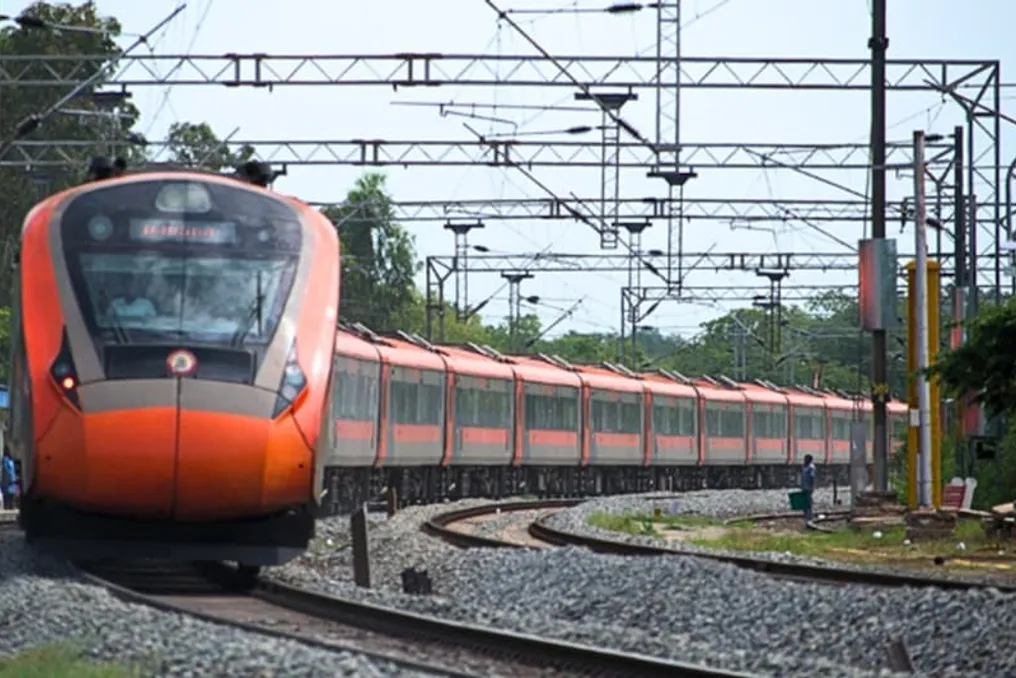
Indian Railways is preparing to modernize approximately 11,000 kilometers of its high-traffic railway network by converting it into a four-lane system. The goal of this initiative is to increase capacity on the country's busiest rail lines, reduce congestion, and decrease the accumulation of passenger trains and freight wagons. This plan has been developed considering the projected growth in both passenger and freight transport volumes in the future.
Railways Minister Ashwini Vaishnaw stated on Wednesday that there are seven high-traffic railway routes in the country that handle a significant portion of the rail traffic. The total length of these routes is approximately 11,000 kilometers, yet they account for about 41 percent of the country's total rail traffic, while their share in the entire rail sector is only about 16 percent. Vaishnaw also noted that developing rail transport benefits both the environment and the economy.
According to railway data, creating additional lines on these busy corridors will significantly simplify train operations and reduce pressure on existing tracks. These seven key high-traffic routes connect major cities and primary industrial zones across the country, where intensive movement of both passenger and freight trains is observed. Adding extra tracks will help increase capacity for both types of trains.
The direct advantage of transforming a high-traffic network into a four-lane one is the creation of additional capacity for moving a greater number of trains along the same route. This will allow for more efficient management of freight trains alongside passenger services. The presence of extra tracks minimizes the need for trains to wait extensively behind each other. Furthermore, such infrastructure provides the possibility of rerouting traffic onto other lines in case of technical failure or maintenance work.
The modernization of high-traffic routes includes not only increasing capacity but also upgrading train signaling and safety systems. In this regard, the domestic automatic train protection system Kavach 4.0 is being expanded. Railways Minister Ashwini Vaishnaw mentioned in a written reply presented in the Lok Sabha on July 22, 2026, that the Kavach 4.0 system has been commissioned over a total area of 2,490 route kilometers on the Delhi-Mumbai and Delhi-Howrah corridors.
The new version of Kavach 4.0 includes functions for more accurate train location tracking, providing improved signaling information at major railway stations, and inter-station interfaces via fiber optic cables. The system can also be directly integrated with the existing electronic interlocking system. On the Delhi-Mumbai route, 1,344 route kilometers of Kavach 4.0 were commissioned by July 13, 2026. This figure includes 1,248 route kilometers of the Tilak Bridge-Junction-Cabin-Palwal-Mathura-Nagda-Vadodara-Virar sector, excluding the Mangalamkhudi-Panchpillya section. Additionally, 96 route kilometers of the Vadodara-Ahmedabad sector were commissioned.
The Delhi-Howrah corridor received 1,146 route kilometers commissioned with Kavach 4.0. Among these, 563 route kilometers of the Chipayana-Tundla-Kanpur-Subedarganj sector, passing through Uttar Pradesh, were included. Additionally, 260 route kilometers of the Chhota Ambana-Barddhaman-Howrah sector, 159 route kilometers of Gaya-Sarmathan-Nimiya Ghat, 71 route kilometers of Kanpur-Lucknow, 50 route kilometers of DDY (FOC)-Bhabhua Road, and 43 route kilometers of Sasaram-Fesar were commissioned.