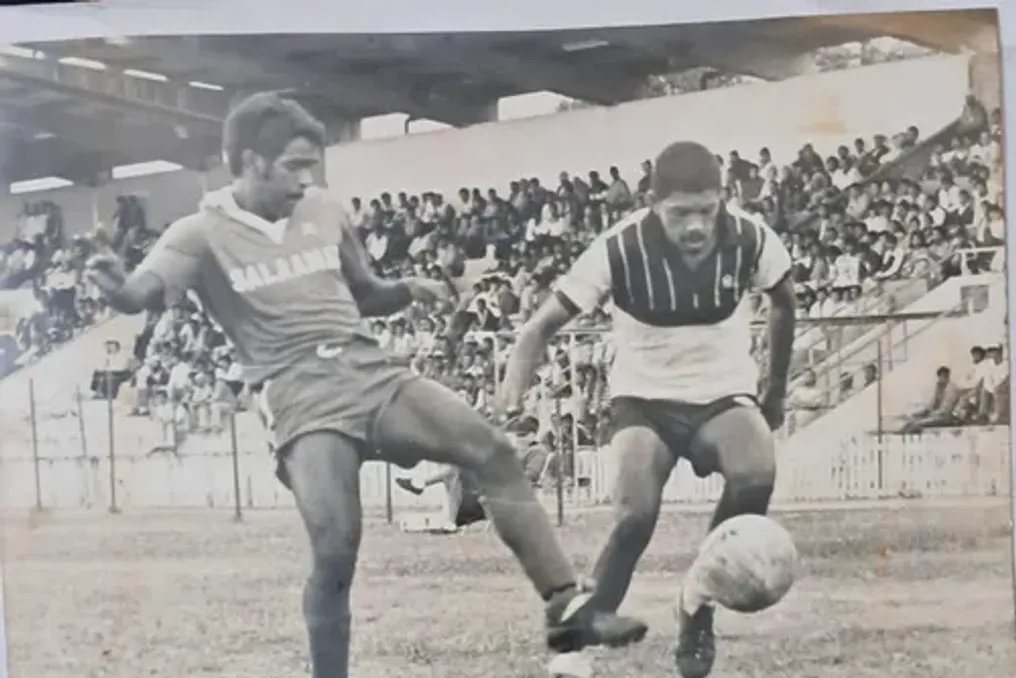
A book titled 'Untold Legends of Wentworth Football' by Lorraine Richards was recently presented at the Durban International Book Fair in the Umlanga area. This book is dedicated to forgotten football stories of players who possessed 'magic on the boots' but were denied a legitimate place in the history of South African football. These athletes achieved success despite the restrictions imposed by apartheid in the 1970s and 1980s, when the non-racial football movement in Durban used sport as a powerful tool of resistance.
Another book presentation event will take place on August 29th at The Blue Roof Wellness Centre in Wentworth.
During the 1970s and 1980s, Durban transformed into a major battleground for 'non-racial' sport. Anti-apartheid activists used football—the most popular sport in the townships—as an effective mechanism to violate segregation laws.
The most direct opposition came from local independent football associations, which refused to cooperate with government-sanctioned and racially segregated sports structures. In Durban, the Durban Central Football Association (DCFA) became a landmark center of resistance. Following the principles of the South African Council of Sport (SACOS), DCFA openly invited players of all races—African, Indian, and Coloured—to participate in one league.
These clubs completely ignored the Group Areas Act, which determined where people of different races could live and socialize. Venues such as Curries Fountain and fields in Merebank and Wentworth became zones of freedom. Every Sunday, thousands of fans filled the stands to watch integrated teams, creating a vibrant multiracial counterculture right before the state's eyes.
Because police and housing inspectors regularly raided matches looking for players who were technically 'illegal' in a certain area, clubs and players had to be inventive to keep non-racial football alive. Administrator Archibald Hallie was a co-founder of SACOS and one of the pioneers of education in Wentworth.
Teams often forged player registration cards. A township African player, such as Umlazi or Kwamashu, could be registered under a common or altered name to blend in with the documentation of the Indian or Coloured league, allowing him to step onto the field unnoticed by checking officials. To play for Lamontville Golden Arrows, Wellington Mes had to use the pseudonym Wellington Mathie.
Many players secretly played for two different clubs. During the day, they might play in the official, segregated league to remain inconspicuous, but on weekends, they could secretly go play for progressive, non-racial clubs in militant independent leagues.
It is impossible to discuss football resistance in Durban without mentioning the Curries Fountain stadium. It served not just as a sporting venue, but as a political incubator. Anti-apartheid organizations, such as the Natal Indian Congress (NIC), trade unions, and the Black Consciousness Movement, used football matches at Curries Fountain as cover for political organization. Under apartheid, political gatherings were strictly forbidden, and the Security Service brutally suppressed protests. However, it was difficult for the state to legally ban a football match.
Activists used halftime breaks, pre-match gatherings, and post-game crowds to distribute anti-apartheid leaflets, hold political speeches, and sing songs of liberation. The famous 'Frelimo Rally' of 1974 (celebrating Mozambique's independence) was organized under the guise of sporting events precisely in this area.