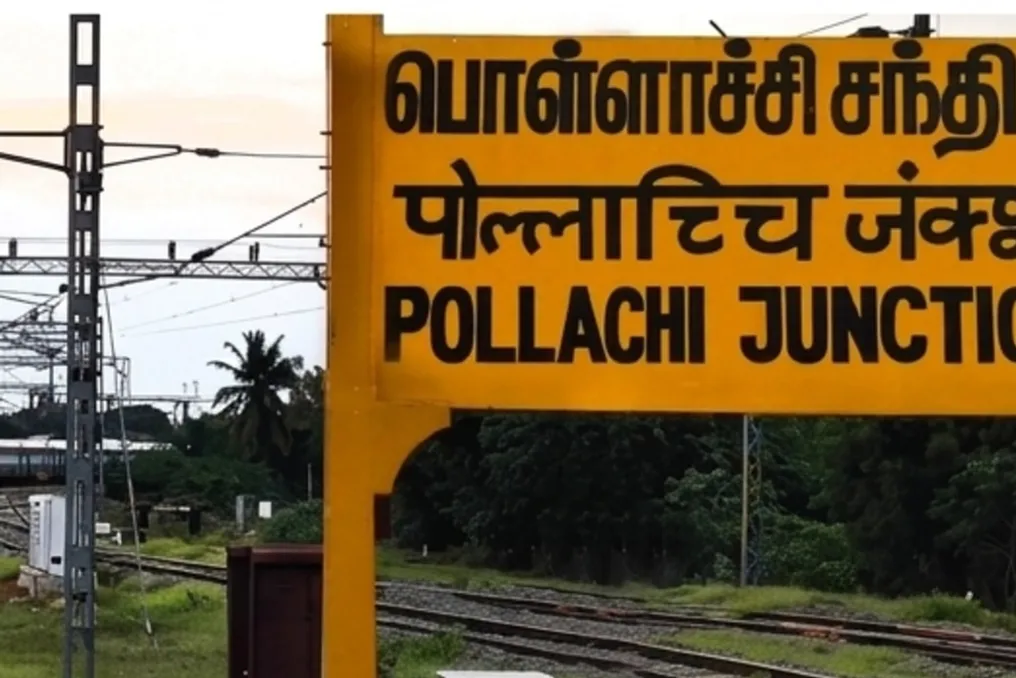
After purchasing a car, customers often ask about delivery times, but for the manufacturer, the more important question is how the car gets from the factory to the buyer's city—by road or by rail. This issue previously existed for the Palachi region in Tamil Nadu. However, Maruti found a solution: the company sent the first batch of 120 cars from Manesar by train to the Palachi terminal. This is the first automobile company in the country to deliver cars to this region via rail transport.
Although this may seem like a simple story about 120 vehicles, it hides the entire logistics of car supplies in South India. This batch is the first automotive freight shipment to the Palachi railway junction. The question arises as to why, despite the demand for cars in this area, companies could not previously deliver them directly by train, and what has changed in Palachi for Maruti Suzuki to begin a new chapter in railway logistics.
According to Maruti Suzuki's statement, the first batch of 120 cars was dispatched from the factory railway line in Manesar, Haryana, on August 18, 2026. This batch included models such as WagonR, Ertiga, Dzire, and Celerio. The convoy arrived at the Palachi terminal approximately a week later, on August 25.
It is important to note that the Palachi railway junction is of great significance not only for Maruti but also for other automakers. Prime Minister Narendra Modi inaugurated this station in March 2026, and the junction was re-modernized under the Amrit Bharat Station Yojana program. With the connection of this terminal, Maruti Suzuki's railway network in South India has expanded. The company already has a railway terminal in Coimbatore, and connecting Palachi will simplify car delivery to various parts of South India.
This shipment is expected to help meet the growing demand for cars in Kerala before the Onam festival. It is planned that around 70 automotive trains will run annually from the Palachi terminal in the future, allowing over 11,000 vehicles to be sent by rail each year. Maruti Suzuki began sending cars by rail back in 2014–2015.
Rail transport of vehicles has several advantages. The most significant is a substantial reduction in logistics costs. Furthermore, it helps avoid traffic jams that occur in cities. When batches of cars are transported by large trucks on roads between cities, it creates an unnecessary transportation problem. Moreover, by shipping by rail, a large amount of diesel fuel consumed by these trucks is saved, contributing to reduced carbon emissions.
Maruti Suzuki reports that in the financial year 2014–2015, the share of rail transport in the company's total shipments was only 5 percent. Now, in the financial year 2025–2026, this figure has risen to 26.5 percent. According to the company, more than 3.2 million vehicles have been delivered by rail to date. Connecting new terminals, such as Palachi, will help the company deliver more cars over longer distances with less fuel consumption. It will also ensure faster and easier delivery of new cars to customers in South India.
You might wonder why cars could not reach the Palachi terminal by rail before. Firstly, the mere existence of a railway station was not enough. Special terminal infrastructure is required for the safe unloading of cars from trains, their loading onto trailers, and subsequent delivery to the dealership network. The necessary infrastructure for large-scale railway shipment of cars was recently commissioned in Palachi.
The situation was not one of lacking demand for cars in the region, but rather the inability to unload cars directly from specialized automotive trains of the NMG/MMG type. Previously, cars destined for Palachi and its surroundings were unloaded at other railway terminals, such as Salem, Irur, or Madurai, and then transported to Palachi by truck. Thus, even when the car approached the market by rail, the final leg of the delivery had to be done by road.
Another interesting point is that the larger the batch of cars sent by rail, the greater the benefit. The cost of the first batch also shows that the advantages of this model become apparent with large volumes. According to railway services, the freight cost for a batch of 120 cars was about 3 million rupees, whereas for a batch of 260 cars, this amount is estimated at approximately 4.5 million rupees. This means that by sending a larger number of cars simultaneously, transportation costs can be significantly reduced.