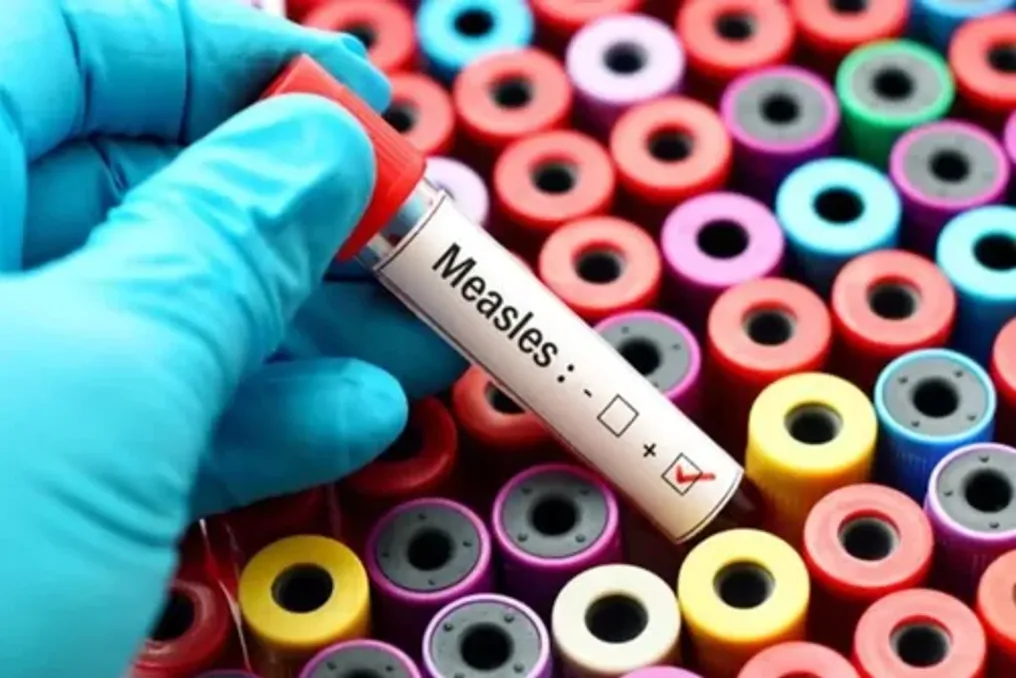
South Africa has registered 3,462 laboratory-confirmed cases of measles since January 2026. Most of these cases affect children aged one to fourteen years, as vaccination rates continue to decline.
The Ministry of Health released this information in a media statement on Wednesday. It strongly urged immediate action to halt the drop in immunization coverage and prevent outbreaks of vaccine-preventable diseases, which could negate decades of public health achievements, including significant reductions in infant and child mortality achieved since the mid-2000s.
Measles rise amid declining vaccination levels
A representative from the Ministry of Health, Foster Mohale, reported that the proportion of infants who have received no vaccinations—that is, children under one year old—has increased from 12.1% in 2017 to an alarming 36.3% between January and April 2026. He noted that this effectively triples the number of completely unvaccinated children, leaving hundreds of thousands of infants at risk of life-threatening diseases.
Mohale also stated that routine immunization coverage has sharply dropped across all 52 districts in the country. He specified that the first dose coverage among children under one year has decreased from 87% in 2021 to 67% in 2025, and hexavalent (6 in 1) vaccine coverage for infants has fallen from 87% to 60.5% over the same period.
According to Mohale, at current rates, South Africa is unlikely to reach the critical threshold of 90% childhood immunization coverage set by the World Health Organization. He advised parents and families to seek medical facilities for their unvaccinated children if urgent measures are not taken.
Consequences of declining coverage include the resurgence of serious vaccine-preventable diseases, weakening of herd or community immunity, and an increase in long-term disability and mortality among infants. Mohale emphasized that this is no longer a theoretical risk, as active outbreaks are occurring in several provinces of the country.
He reiterated that 3,462 laboratory-confirmed cases of measles have been registered in South Africa since the beginning of 2026, with outbreaks observed in the Western Cape, Free State, KwaZulu-Natal, and Northern Cape, as well as other provinces. Mohale added that the vast majority of cases (70.9%) affect children aged 1–14 years, which is directly linked to low immunization levels.
Other public health issues
The Ministry also highlighted the importance of protecting South Africans from polio, given the country's polio-free status. This occurs despite the recent detection of imported poliovirus strains in wastewater in Cape Town. Mohale reminded that South Africa has maintained its polio-free status since 2014.
Furthermore, sporadic cases of diphtheria—a serious bacterial infection of the nose and throat that can cause breathing difficulties—have been identified, mainly in the Western Cape, indicating gaps in booster coverage and surveillance. Cases of pertussis have also been found in several provinces, primarily affecting infants under six months, who are too young for full vaccination.
Mohale noted that this picture demonstrates the inability of herd immunity to protect the most vulnerable. Nearly 400 cases of rubella (German measles) have been registered, mostly among children aged 1–14 years in different parts of the country. This poses serious risks to pregnant women due to potential congenital rubella syndrome (CRS).
Call for coordinated action
Mohale concluded that the decline in routine immunization rates has triggered a public health emergency characterized by outbreaks of childhood diseases. He stated that solving this problem requires coordinated action from all sectors of society, with a special focus on engaging families and communities with the lowest vaccination rates.
He warned that unvaccinated children can endanger infants and immunocompromised individuals who cannot be vaccinated, and low coverage undermines early detection and rapid response to emerging threats. The Ministry of Health prioritizes an immediate, coordinated national response, including catch-up vaccination campaigns targeting children who missed doses and groups with insufficient immunization across all districts.
The public is strongly urged to use official government platforms for accurate vaccination information and to ignore unverified claims and disinformation spread on social media. The Ministry ensures adequate vaccine supplies and supports cold chain infrastructure nationwide so that no child is left without help due to access issues. All vaccines used in South Africa are evaluated and registered by the South African Health Products Regulatory Authority (SAHPRA), confirming their safety and efficacy.
Parents, guardians, and communities are strongly urged to protect their children from vaccine-preventable diseases by visiting the nearest healthcare facility or service provider for routine and catch-up immunization. He added that disease outbreaks can disrupt children's early development due to prolonged absence from school and reduced access to structured learning, which can negatively affect mental well-being. Furthermore, families bear a significant burden: parents may be forced to stay home when children are excluded from school or ill, leading to loss of wages and employment instability. He concluded by stating that protecting every child is a collective responsibility.