
Nepal Floods Remind of Films Depicting Nature's Destructive Power
Read more
Aaj Tak
www.aajtak.in

Nepal Floods Remind of Films Depicting Nature's Destructive Power

The floods in Nepal have once again demonstrated how insignificant human strength is in the face of nature's fury. Films dedicated to natural disasters—be it floods, earthquakes, tsunamis, or wildfires—show humanity's struggle, its fears, relationships, and the drive to survive amidst destruction.

In light of the flooding in Nepal, we will look at films that make natural disasters a central part of their narrative.

Kedarnath (2018):

The story of 'Kedarnath' starring Sushant Singh Rajput and Sara Ali Khan is based on the 2013 tragedy in Uttarakhand. Although the film tells a love story between a Muslim Pittu and an Hindu girl, the key turning point occurs during the devastating floods in Uttarakhand. The film depicts the wrath of nature in the mountains, showing fear, pain, and separation.

Tum Mile (2009):

The plot of 'Tum Mile' with Imran Hashmi and Sohail Ali Khan unfolds against the backdrop of the 2005 Mumbai floods. After heavy rains, the streets and life in Mumbai come to a standstill. In the midst of this catastrophe, the couple finds themselves trapped, revealing love, old grievances, and the true test of their relationship; outside, the water rages, and inside, there is an emotional storm.

Kai Po Che! (2013):

To understand 'Kai Po Che!' only as a story of friendship and dreams would be incomplete. In the film, the 2001 Gujarat earthquake serves as a major plot twist. The lives of three friends move toward their dreams, but the earthquake changes the surrounding world. Along with the disaster, the film raises themes of friendship, ambition, and the complexities of relationships.

The Impossible (2012):

When discussing the most heartbreaking films about natural disasters, one cannot overlook 'The Impossible'. This story is inspired by a real event—the 2004 Indian Ocean tsunami. A family on vacation suddenly finds itself caught in the deadly waves of the ocean. Family members get separated, and their fight begins to find each other and survive.

The Perfect Storm (2000):

The story of 'The Perfect Storm' also demonstrates the dangerous side of nature. The film tells the story of a commercial fishing vessel and its crew, who find themselves in extremely adverse weather conditions in the Atlantic Ocean. The collision of three different weather systems creates a storm that presents the sailors with the main task of saving lives. The film is based on real events.

Titanic (1997):

Although James Cameron's 'Titanic' is known worldwide for the love story of Jack and Rose, it is underpinned by a real maritime tragedy. In 1912, the RMS Titanic sank after colliding with an iceberg. The film portrays this accident on screen alongside romance, fear, and destruction. While the love story unfolds, the giant ship slowly sinks into the sea.

Only the Brave (2017):

'Only the Brave' shows another dangerous form of natural disaster—a severe wildfire. This film is based on the real story of the Granite Mountain Hotshots team, which fought the Yarnell Hill wildfire in Arizona, USA. These firefighters risk their lives to stop the fire and save people. The film emphasizes the greatness of the courage of those who stand against nature's wrath.

All these films share a common thread: whether it is the floods in Nepal, the floods in Uttarakhand, the earthquake in Gujarat, or the tsunami in the ocean—the stories are different, but one thing remains constant. When nature changes its behavior, a true test begins for humanity. In some places, people fight to save loved ones; in others, they realize the true value of relationships; and in some, they risk their lives to save others.
Similar stories

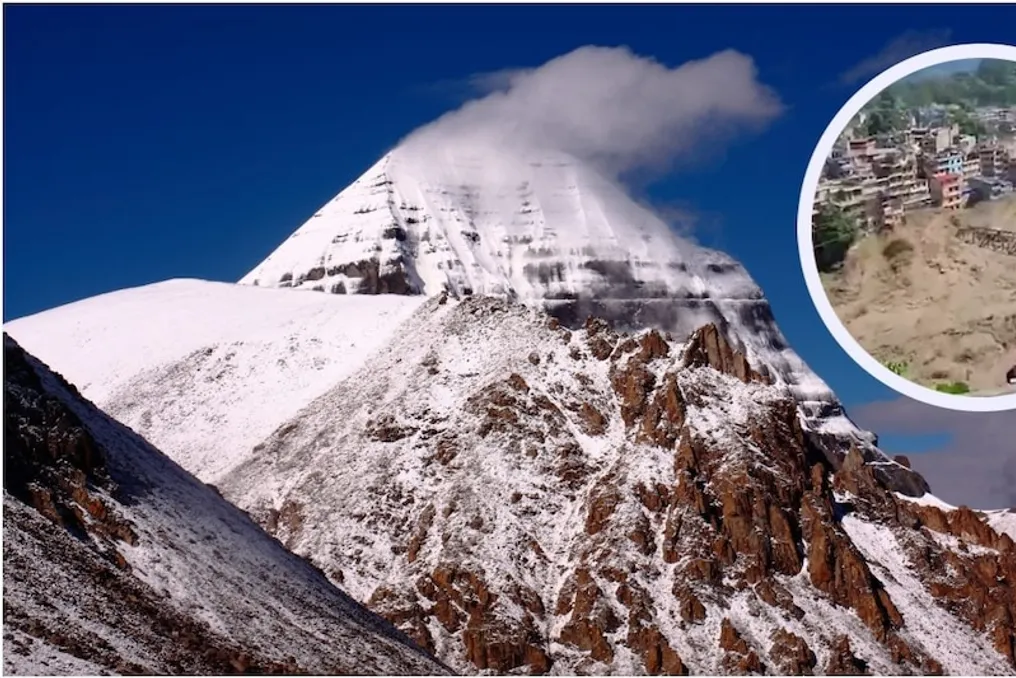
Flooding in Nepal affects Kailash Mansarovar pilgrimage; tourists missing
Read more
www.aajtak.in

Flooding in Nepal affects Kailash Mansarovar pilgrimage; tourists missing

A severe flash flood occurred in the Rasuwa area of Nepal, causing significant destruction and the disappearance of 400 people, including 133 Indian citizens. According to Kathmandu Post, approximately 400 pilgrims heading to the Kailash Mansarovar pilgrimage lost contact after the sudden flooding in Rasuwagharhi. This event also affected the key Rasuwagharhi-Kerung corridor, which is used for transit between Nepal and China on the way to Kailash Mansarovar.

It was planned that 390 pilgrims would cross the border on Wednesday, including 93 Nepalis and people from various countries. These pilgrims are clients of various travel agencies. Among them were 71 clients of Samrat Tours and Travels, 55 clients of Leaf Holidays, 17 clients of Kathmandu Holidays, 31 clients of Kailash Journey, 7 clients of Explore Vacation, 92 clients of Trekkers Society, 12 clients of Richa Tours, 27 clients of Fishtail Tour and Travels, 62 clients of Himalayan Glacier, and 16 clients of Alpine Eco Trek.

There are three main routes for the Kailash Mansarovar trip from India. Two of these, passing through Pitorgarh in Uttarakhand and the Natu La pass in Sikkim, are organized by the Government of India. However, there is another route passing through Nepal, which people take with the help of travel agents.

It is important to note that various tour operators in Nepal also organize trips to Kailash Mansarovar via different routes. One of the routes originating from Nepal differs from the official Kailash Mansarovar trip organized by the Government of India. Typically, private tour operators transport tourists to Tibet via the Rasuwagharhi-Kerung route, which includes Kathmandu-Syafrubeshi-Timur-Rasuwagharhi-Kerung/Gyerong-Saga-Mansarovar-Darchan-Kailash. The border between Nepal and Tibet is crossed at this location.

Another route is the Hills-Yari route. The second major path to Kailash from Nepal passes through western Nepal. This route includes Kathmandu-Nepalganj-Simikot-Hilsa-Yari Border-Purang/Taklakot-Mansarovar-Darchan-Kailash. An initial domestic flight within Nepal is taken to Nepalganj and Simikot, followed by a helicopter ride to Hilsa, where the border between Nepal and Tibet is crossed, entering the Tibetan region of China.

The flooding of the Bhotekoshi River has impacted the Kailash Mansarovar pilgrimage, particularly the first route—Rasuwagharhi-Kerung. The sudden rush of water affected the border area, including Syafrubeshi and Timur. Roads and bridges were damaged, which may disrupt cross-border movement through Rasuwagharhi. Consequently, the route people were traveling along was severely affected.

The journey is considered one of the most dangerous due to the altitude, reaching from 14,000 to 19,500 feet above sea level, complex trails, and adverse weather conditions. At such an altitude, the oxygen content in the air is extremely low, causing breathing difficulties, headaches, and dizziness (altitude sickness). Furthermore, the external pilgrimage trek around Mount Kailash is about 52 kilometers long and takes three days of walking. The trail consists of rocky, uneven, and steep terrain, placing a heavy strain on joints and legs.

Midway along the journey is Dolma La Pass, crossing which is the most challenging part. It involves a completely straight and snowy ascent, accompanied by extremely low temperatures and rapid energy depletion. Moreover, the weather changes every minute here: strong cold winds, snowfall, and sharp drops in temperature below zero create difficulties for pilgrims.

Currently, 22 people have died as a result of the flooding in Nepal. Prime Minister Narendra Modi spoke by phone with the Prime Minister of Nepal, Balen Shah, expressing condolences over the human casualties from the floods in Nepal. Prime Minister Modi also assured Nepal of any possible humanitarian aid and assistance in disaster relief. Following the devastation caused by the severe flooding of the Bhotekoshi River in Nepal, India is preparing to send urgent necessities to those affected.

Popular