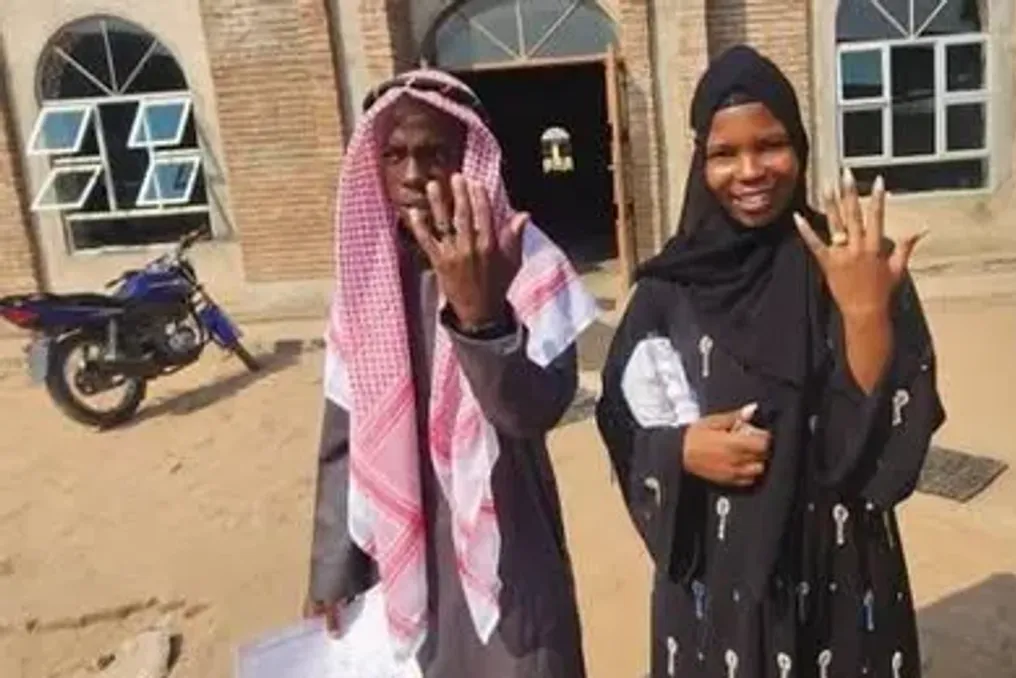
Nokwazi Ncuku, who was previously among Malawian citizens residing near Sherwood Hall in Durban, became a South East African citizen after fleeing the country with her partner due to anti-immigrant violence. This couple subsequently tied the knot in a Nikah ceremony in Mangochi.
Fleeing Anti-Immigrant Violence
Ncuku was part of a group of Malawians living outside Sherwood Hall in Durban before the establishment of a 'deadline' of June 30th for undocumented migrants who were required to leave South Africa. This deadline was set by anti-law groups. Ncuku stated that she preferred to leave everything for her man, and she followed this decision. She held the Nikah ceremony in Mangochi with her partner Rashid.
She shared, 'Here is the money for the dowry; we will send it home tomorrow. I will make a video so you stop taking me for granted; I am now Rashid's wife.' Thousands of Malawians seeking asylum at Sherwood Hall in Durban found themselves involved in a growing humanitarian crisis as the number of people at the site reached approximately 10,000.
Many arrived hoping to receive assistance, but instead faced overcrowding, limited access to basic necessities, and uncertainty about the time of return home. This hall turned into a temporary shelter for families and individuals desperately needing safety and support, highlighting the complex circumstances of people caught between two countries.
As conditions worsened in Sherwood, KwaZulu-Natal Premier Thembi Ntuli called for an urgent coordinated response involving provincial and national government departments, as well as humanitarian organizations. Authorities worked to manage the growing crisis while organizing the process for processing and repatriating Malawian citizens wishing to return home, as well as making efforts to address immigration and deportation issues.
Recently, the Interdepartmental Migration Committee (IMC) reported that the Musina Temporary Repatriation Centre in Limpopo processed 48,948 migrants before its closure in August. Of these, 46,744 people (95.5%) were classified as cross-border, while 2,204 people (4.5%) passed through the entry point. This centre was officially established on June 26th as a temporary measure to alleviate growing migration pressure and support the legal, orderly, and dignified processing of undocumented migrants requiring assistance with repatriation.