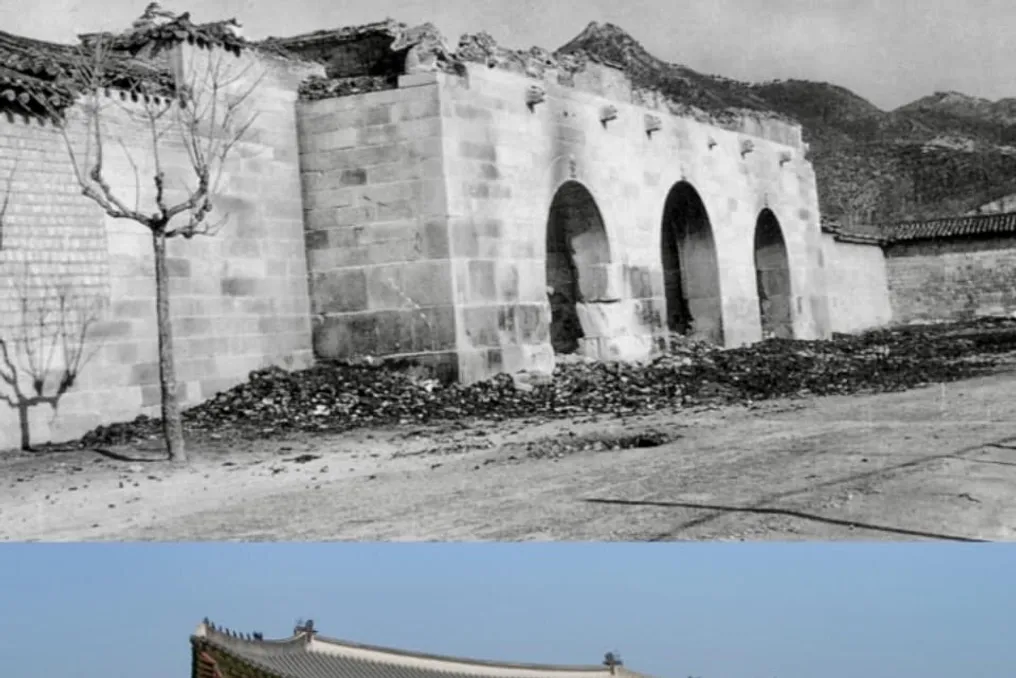
Historical monuments are not merely symbols of national identity but also testaments to the nation's resilience in the face of historical upheavals and chroniclers of past experiences. Despite the fact that in recent years, especially after the two World Wars, historical sites have received international protection obligating warring parties to preserve these places on each other's territories, the destructive nature of war and its goals aimed at destroying the enemy and consequently erasing or weakening its identity have not spared this sector from the negative consequences of military destruction.
Studying South Korea's approach to cultural heritage management and the restoration of historical identity can serve as an example for anyone facing similar difficulties. This document is presented as a strategic report by the Iran-South Korea Joint Chamber of Commerce, aiming to study and optimize this country's successful experience in overcoming the consequences of war.
The restoration of cultural heritage implies maintaining a connection with history to restore the collective confidence of society and preserve a unified thread for social cohesion, despite ethnic, cultural, linguistic, and even religious diversity within society.
During the Korean War (1950–1953), no less than 351 Buddhist temples were damaged, 240 of which were completely destroyed, and dozens of palaces, historic gates, and royal tombs were affected. Nevertheless, seventy years later, South Korea has not only restored the vast majority of this heritage but has also transformed the preservation of cultural heritage into an independent economic sector, valued at 9.05 trillion won in 2025, with a target of 100 trillion won by 2030.
This report analyzes South Korea's strategy along five main directions: preventive documentation, engineering diagnostics before restoration, intergenerational transmission through technology, economic revitalization of ruins, and selective preservation of military traces. The analysis is conducted within the context of the institutional structure, public-private financing models, and the overall concept of the South Korean Ministry of Culture, 'Culture-K 2030'. This experience is then compared with the new reality faced by Iran's cultural heritage this year: damage from the recent conflict between the US and Israel against Iran has affected more than 140 historical sites and monuments, including at least five UNESCO World Heritage sites. The report concludes with six specific and adaptable lessons for policy, financing, and the economic revitalization of cultural heritage in Iran.
It should be noted that this document is the fifth strategic report published by the Iran-South Korea Joint Chamber of Commerce and is available to the public for the benefit of experts, researchers, policymakers, and other interested parties.